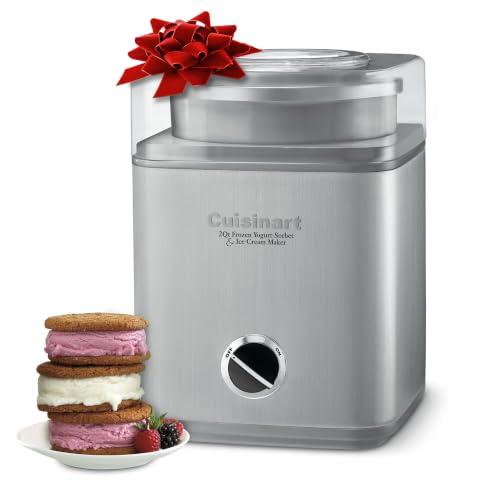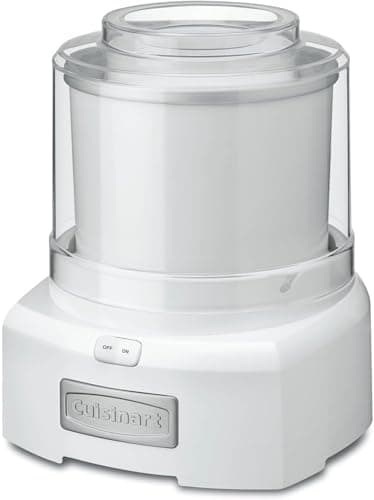
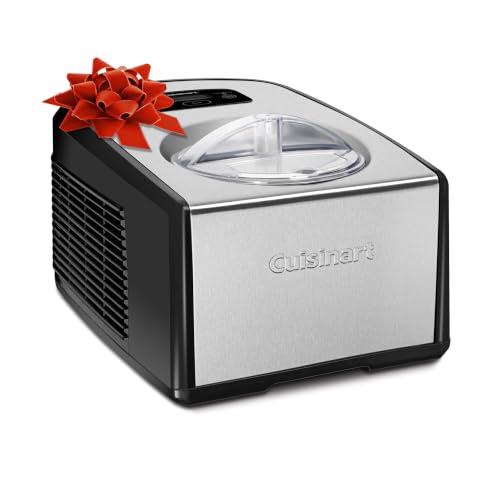
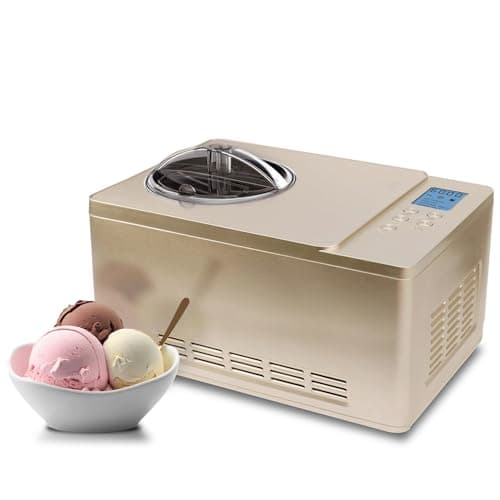
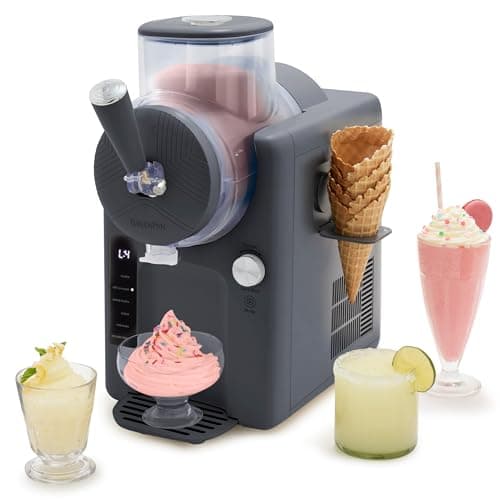
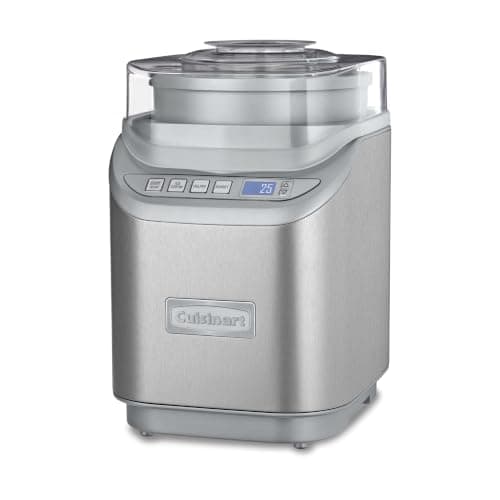
Buy the Cuisinart ICE-100 if you want the best machine under $300, and the GreenPan Frost Classic if you want refrigeration for the least money. Both remove the step that stops most people making ice cream twice: the 16-to-24-hour wait for something to freeze. The ICE-100 does it with a 1.5-quart bowl, two paddles and the longest warranty in the category. The GreenPan does it with two quarts and a spout, and no testing lab we can read has rated it.
The reason this band deserves its own page is that the band directly below it does not contain a single compressor. We said so plainly in the under-$200 roundup: under that line you are only choosing which kind of waiting you accept. Add a hundred dollars and the choice changes shape entirely. At the time of writing, three self-refrigerating machines in our registry carry a live Amazon price under $300, and the cheapest of them sits closer to the $200 line than to the ceiling.
What the extra hundred dollars actually buys
One thing, and it is the only upgrade in this category we think most buyers should pay for: the machine makes its own cold. Everything else follows from that.
- No pre-freeze, so ice cream stops being a tomorrow decision. A canister machine needs its bowl in the freezer 16 to 24 hours ahead. A pint machine needs the dessert itself frozen solid overnight. A compressor needs neither: you chill the base, pour it in and churn. That is the whole argument, and it is worked through in compressor versus freezer bowl.
- Back-to-back batches. Two flavors in one evening is impossible with one canister bowl and trivial with a compressor. For a household that actually wants two, this removes the only real argument for a second freezer bowl.
- Your freezer back. A 2-quart canister or a KitchenAid bowl occupies a shelf permanently if you want to stay ready. A compressor occupies counter instead, which you can at least see.
- Real capacity without a bucket. The largest no-pre-freeze batch under the line is 2.1 quarts, from the Whynter. Below $200 the only route to that volume is ice and rock salt.
What it does not buy: better texture than a good canister machine. That is worth saying because the price ladder implies otherwise. America's Test Kitchen's best canister-style pick in June 2026 was a $70 machine, and Ice Cream Science's best measured canister result on this site comes from the ICE-70P1, which prices in the middle of the band below. Refrigeration is a convenience purchase. Freeze speed - the thing that genuinely makes smaller ice crystals - starts costing money well above $300, as budget versus premium ice cream makers sets out.
How we ranked them
Five tests, applied in this order. They are deliberately not the tests we use under $200, because the question changes the moment refrigeration becomes affordable.
- It has to carry a live Amazon price under $300 at our check. Not a list price, not a price we remember, not a sale we expect. Prices on this page come from Amazon's own data and are date-stamped next to each button; read that date and carry it with the number. If a machine has drifted above the line by the time you look, the button tells you before we do.
- Refrigeration outranks features. A compressor machine beats a non-compressor machine at the same money unless the non-compressor does something the compressor physically cannot. That is why a spin machine with eleven programs sits below a dispensing machine with six.
- Usable capacity, not rated capacity. Rated volume is the bowl; usable volume is about two thirds of it, because ice cream expands as air goes in. What size ice cream maker you need does that arithmetic.
- Published third-party testing beats a manufacturer spec sheet. We do not test machines - our methodology says so - so where a named lab has a verdict it moves a machine up, and where nobody has rated it we say so in the entry rather than filling the gap with adjectives.
- We do not rank on the size of the discount. One machine on this page is under $300 because of a deep current markdown rather than because it is a sub-$300 machine. It is still ranked on what it does, and its entry says plainly which one it is.
The $300 ceiling cuts through the middle of the compressor shelf, so check the number on the day
Compressor machines in this registry carry list prices between roughly $350 and $400, and they trade well below those lists for much of the year. That makes membership of this band genuinely volatile: a machine comfortably inside it this week can be outside it next week, and the reverse happens just as often. Two machines we would otherwise rank here - America's Test Kitchen's own best self-refrigerating pick among them - were sitting just over the line at our last check. The compressor roundup ranks that shelf with no price ceiling, which is the better page if your budget is soft.
1. Cuisinart ICE-100: the best machine under $300
The ICE-100 is the cheapest compressor machine we would recommend without caveats, and under $300 it is the best thing you can buy. It is a 1.5-quart self-refrigerating machine at 288 watts, with a 60-minute countdown timer, a 10-minute Keep Cool cycle that holds texture after the churn finishes, and - the detail that actually separates it from everything else here - two paddles.
The second paddle is a low-air gelato blade, and it is the only in-box accessory in this category that changes the dessert rather than the workflow. Less air means a denser, colder, more intensely flavored scoop; that is the real difference between gelato and ice cream, not the country of origin. If you want to understand why one blade does that, read overrun explained, then can you make gelato in an ice cream maker for the method.
The evidence behind it is the strongest on this page. America's Test Kitchen Recommended it in June 2026 at a listed $343 - above this band, which is precisely the point: the machine is priced into the band by discounting, not designed down to it. Dream Scoops calls it the best value alternative to a several-hundred-dollar Italian machine. Cuisinart covers it for three years in the US, where Breville covers a $600 machine for one. Full detail in the ICE-100 review.
The honest cons. It is still only 1.5 quarts, which is one dessert for four people, despite being the size and weight of a small microwave. At 28 pounds and 16.73 inches deep it lives on the counter permanently or it does not get used at all. Compressors are loud for the whole batch rather than for twenty minutes. And if you will make ice cream three times a summer, a $70 canister machine and a little planning is the better buy - we would rather you heard that here than discovered it in a cupboard.
2. Whynter ICM-220CGY: the biggest no-wait batch under the line
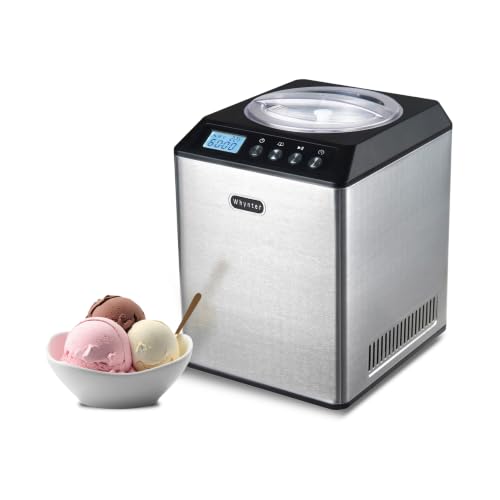
2.1 quarts with no pre-freeze is the most useful capacity-to-convenience ratio in the category, and this is the cheaper of the two Whynters that offer it. 180 watts, a cooling range Whynter publishes as -0.4 F to -31 F, a removable stainless steel bowl, a rated 55 dBA - the quietest published figure anywhere in our noise rankings - and motor protection that stops the paddle when the mix gets too thick.
It also does something no other machine here does: it incubates yogurt at 104 to 110 F and then churns it frozen in the same bowl. If frozen yogurt from scratch is a real part of why you are buying a machine, this is the only answer under $300 and arguably the only answer at any price. Whynter is also the only manufacturer in this registry that publishes a blade material for any machine - a BPA-free churn blade on this model - which is why it leads the stainless steel roundup. Full specs in the ICM-220CGY review.
The honest cons. No testing lab we can read has rated this exact model - ATK rated its sibling the ICM-201SB, and we will not transfer a verdict across a shared spec sheet. At 16.75 inches wide it is the widest compressor machine we cover, and at 24.25 pounds it is not going in a cupboard. The warranty is one year limited, against three on the ICE-100. The yogurt function is genuinely useful to only a minority of buyers and you pay for it either way. And there is no gelato paddle; spare bowls and blades are sold separately rather than included.
3. GreenPan Frost Classic: the cheapest refrigeration on the page
This is the machine that makes the band interesting. It is a compressor machine with a 64-ounce working capacity that needs no pre-freeze, reaches serving consistency in as little as 15 minutes by GreenPan's own figure, and dispenses through a push-to-close spout instead of asking you to scoop a bowl. Six modes - slushie, soft ice cream, spiked slushie, sorbet, milkshake and an extrude/clean cycle - plus seven texture settings and a Simple Clean cycle with dishwasher-safe removable parts.
Be clear about why it is this cheap. Its list price sits well above this band; it is inside the band at our check because of a very large markdown, which is exactly the kind of thing the Black Friday page exists to put in context. Read the dated price on the button before you treat the position as permanent. What is not temporary is the hardware: two quarts of frozen dessert on fifteen minutes' notice is more than any compressor machine ATK rated can do, and nothing else under $300 dispenses.
The honest cons. No independent testing lab we can read has rated it, so there is no third-party texture verdict at all - on a page where the top two machines both have one, that is a real gap. GreenPan publishes no wattage, no dimensions and no weight for it. GreenPan's own store listed it Temporarily Out of Stock on October 12, 2026, so supply has been uneven. And dispensed soft serve is served at soft-serve temperature: it is not hard-scoop ice cream and it will not become it in the tub. See the GreenPan Frost review, or GreenPan Frost versus Ninja Swirl if the dispenser is the part you care about.
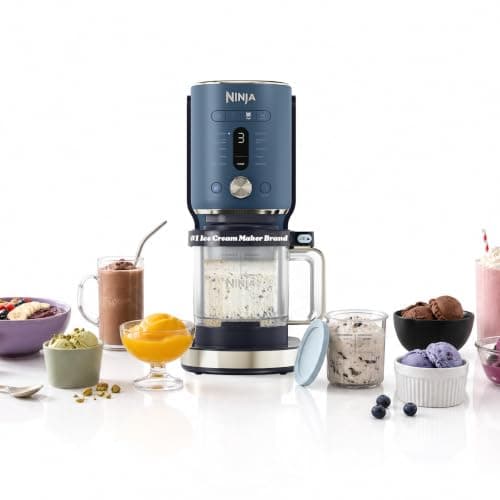
4. Ninja CREAMi XL Deluxe Gen 2 (NC601): the best spin machine under $300
A different mechanism with a different bargain. A CREAMi does not churn: it shaves a frozen-solid tub into ice cream at high speed, which is why it handles high-protein, low-sugar and dairy-free bases that stall a churning machine. The Gen 2 XL Deluxe takes two 24-ounce CREAMi XL tubs with storage lids, three cups each, and publishes 11 named programs including CreamiFit and a dedicated dairy-free setting. It measures 12.63 by 8.25 by 16.75 inches and weighs 15.43 pounds.
It ranks fourth rather than first because it does not solve the problem this band exists to solve. The tub still has to freeze overnight, so the planning is identical to a canister machine - you have simply moved the thing that waits. What you get instead is a stocked freezer and dessert in three minutes from a tub you made on Sunday, which for a lot of households is the better shape. The honest framing of that trade is in CREAMi versus a traditional ice cream maker, and the model detail is in the NC601 review.
The honest cons. No lab we can read has rated the NC601, and Ninja does not publish a wattage for it where the previous XL Deluxe spec sheet gave 800 W. One tub per spin, so four people means four tubs frozen in advance and four spins. It is a pound heavier than the machine it follows. And the 24-ounce XL tubs are a different part from the standard 16-ounce pints, so an accessory drawer does not carry over between CREAMi families - which is the point Deluxe alternatives is built around.
5. Cuisinart ICE-70P1: the best texture evidence, for a lot less
Included because the most useful thing a price-band page can do is tell you when not to spend to the ceiling. The ICE-70P1 is a 2-quart freezer-bowl machine with an LCD countdown timer, auto shut-off and three texture programs for ice cream, gelato and sorbet. Ice Cream Science measured a 28 minute 30 second churn on it and rated the output excellent: smooth and creamy with very few coarse bits, which is the best measured canister result cited anywhere on this site.
It prices in the middle of the band below, so buying it leaves most of the $300 in your pocket. The timer matters more than it sounds: over-churning is one of the two commonest ways a first batch goes wrong, and a machine that stops itself removes the guesswork. Compare it directly against the compressor above it in ICE-100 versus ICE-70.
The honest cons. The bowl needs 16 to 24 hours in the freezer, so everything the top three machines fix, this one keeps. Ice Cream Science puts optimal fill around 900 ml, well under the 2-quart headline. Its measured churn is notably slower than the cheaper ICE-21. There are more controls to learn than on a one-switch machine. And no back-to-back batches without buying a second bowl.
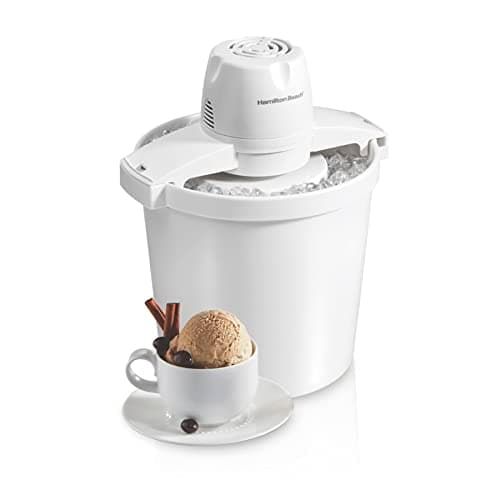
6. Hamilton Beach 68330N: the budget pick, and the volume king
The cheapest machine on this page by a wide margin and the only one that makes four quarts in a single batch. An 80 W motor over an ice-and-salt bucket, no bowl to pre-freeze and no freezer space required, and it stops itself when the mixture stiffens. Per quart produced it is the cheapest ice cream in the category, which is why it leads best for the money on cost per usable quart.
It is on a $300 page because a reader in this band often has a specific problem - feeding ten people at a lake house - that none of the machines above can solve at any price under $400. If that is your problem, buy this and spend the rest on cream. See the big-batch roundup for the context, and how much salt you need before the first batch.
The honest cons. Ice and rock salt for every single batch, bought on the day, which is a running cost nothing else here has. Salt water in the bucket makes it a messy process best done near a sink or outdoors. It churns for 20 to 40 minutes and the result still wants hours in the freezer to harden. It is bulky to store for a machine most households use a few times a year. And Hamilton Beach publishes no material for the canister or the paddle.
The machines just over the line, and why we did not stretch
Price ceilings create a bad incentive - to quietly include something at $310 and hope nobody checks - so here is what sits immediately above the band and what you would be buying.
- Whynter ICM-201SB. America's Test Kitchen's best self-refrigerating pick, listed at $310 in June 2026, and at our check still a little over our ceiling. It is the same 2.1-quart platform as the ICM-220CGY in a body 4.25 inches narrower, without the yogurt incubator. If your $300 is really $330, buy it instead of the 220CGY - ICM-201SB versus ICM-220CGY is that whole decision in one page.
- Ninja CREAMi Scoop & Swirl (NC701). Sold as Ninja Swirl by CREAMi, and the only countertop machine at consumer prices that extrudes real soft serve. It hovers right at the ceiling, so check the button. If the dispenser is what you want and the price is not, Ninja Swirl alternatives splits that decision properly.
- Lello 4080 Musso Lussino. The fastest measured freeze in the category at 17 minutes 30 seconds per Ice Cream Science, and in a different financial universe - and at our check its Amazon listing carried no live price at all, which is normal for it. Mentioned so you know what the top of the category looks like, not as a suggestion.
- Breville Smart Scoop BCI600XL. Twelve hardness settings, at double the ceiling of this page. Also the most contested machine we cover: ATK recommends it, Dream Scoops advises against it on texture. We report the disagreement in the Smart Scoop review rather than resolving it.
The decision in six lines
- You want the best machine under $300: Cuisinart ICE-100. Compressor, two paddles, three-year warranty, an ATK verdict.
- You want the biggest no-wait batch: Whynter ICM-220CGY at 2.1 quarts - and the only yogurt incubator in the band.
- You want refrigeration for the least money: GreenPan Frost Classic, with the markdown and the missing lab verdict both understood.
- You want protein, dairy-free or made-ahead pints: Ninja CREAMi XL Deluxe Gen 2. Different mechanism, different bargain.
- You do not actually need the compressor: Cuisinart ICE-70P1, and keep the difference.
- You are feeding a crowd: Hamilton Beach 68330N. Four quarts, ice and rock salt.
If the ceiling is firmer than the shopping list, the best machines under $200 works the band below and is honest about what it cannot give you. If it is softer, the compressor roundup ranks the self-refrigerating shelf with no price limit at all. And if you have not settled on a machine type yet, the beginner roundup is a better place to start than any price band.
If the ceiling can move, the next band up changes what is possible again: the under-$500 roundup is where the largest self-refrigerating batches live. And if a dispensed swirl is the goal, the soft serve machines under $300 are a different three machines entirely.