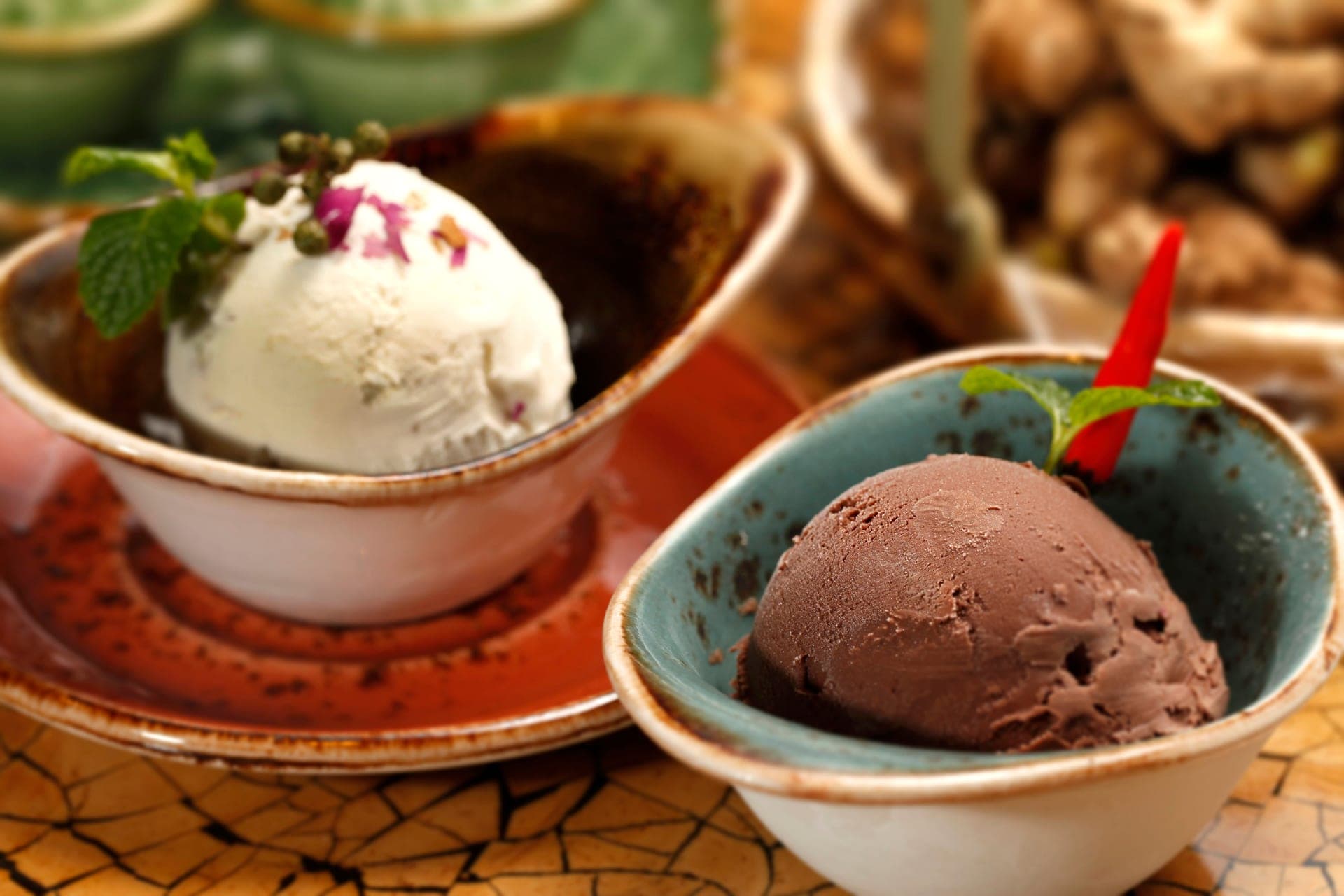
Buy the ICE-21P1 unless you genuinely run out of ice cream at your table. America's Test Kitchen's June 2026 review listed the ICE-21P1 at $70 and gave it the best canister-style award; the ICE-30BCP1 was Recommended at $100. The extra $30 buys half a quart of capacity and nothing else that matters.
Side by side
| Spec |  | |
|---|---|---|
| ATK June 2026 | Best canister-style, $70 | Recommended, $100 |
| Capacity | 1.5 qt | 2 qt (1.89 L) |
| Usable batch | About 1 qt | About 1.3 qt |
| Pre-freeze | 16-24 hours | 16-24 hours |
| Churn time | 15-20 min (Dream Scoops) | About 20-25 min |
| Power | 60 W | Comparable small motor |
| Housing | White plastic | Brushed stainless |
| Freezer space | Smaller bowl | Larger bowl |
| Long-term data | ATK + Dream Scoops | ~7 years use (Ice Cream Science) |
| Price |
What is identical
The mechanism. Both are double-walled gel bowls that you freeze solid, with a small motor turning a paddle. Both need 16 to 24 hours of pre-freeze. Neither can run a second batch until the bowl refreezes. Neither has a timer, texture programs or hardness sensing.
So the decision is not about ice cream quality or convenience. It is purely about volume, and the volume difference is smaller than the specification suggests.
The usable-capacity arithmetic
Rated capacity is the point at which the expanding mixture climbs out of the bowl, so the practical fill is roughly two thirds. That makes the real comparison about a quart against about 1.3 quarts, not 1.5 against 2. Ice Cream Science records the ICE-30 as 1.89 liters, and puts the optimal fill for the 2-quart ICE-70P1 at 900 milliliters, which tells you how conservatively these figures should be read.
When the ICE-30 is the right buy
Two cases, and they are narrow.
You regularly serve six or more people. A quart is four to six servings; 1.3 quarts is six to eight. If the ICE-21 would leave someone without seconds every time, the upgrade earns its money.
You want the stainless housing. Cosmetic, and it does wear better than white plastic. If the machine is going to live on the counter permanently, that is not a frivolous consideration.
When the ICE-21 is the right buy, which is most of the time
Smaller freezer footprint. A 1.5-quart bowl takes less space than a 2-quart one, and the winning habit with any canister machine is keeping the bowl in the freezer permanently so the pre-freeze wait disappears. The smaller bowl makes that habit easier to sustain.
Slightly faster churn. Dream Scoops measured the ICE-21 at 15 to 20 minutes and describes it as one of the fastest machines. More base on a similar cold budget takes longer, which is also why Ice Cream Science notes minor icy bits in the ICE-30's output while rating the ICE-70P1 higher.
The award. ATK tested both and picked the cheaper one. That is the clearest signal available.
A better use of the $30
Buy a second freezer bowl for the ICE-21 instead. That gets you something the ICE-30 cannot do at any price: two flavors in one day, or a second batch in an evening. A canister machine's real limitation is not capacity, it is that the bowl spends its cold, and a spare bowl is the direct fix.
Alternatively, put it into cream. A richer base is a more noticeable improvement than 0.3 quarts of extra volume — see custard versus Philadelphia bases.
The third option worth knowing about
If you are stepping up from the ICE-21 for any reason, consider the ICE-70P1 rather than the ICE-30. It is also a 2-quart canister machine, and it adds an LCD countdown timer, auto shut-off and three texture programs. Ice Cream Science rated its output as excellent with very few coarse bits, better than their assessment of the ICE-30.
If you are paying more than $70 anyway, paying for texture and control is a better use of the money than paying for half a quart.
Verdict
Buy the ICE-21P1 and a spare bowl. Buy the ICE-30BCP1 if you serve six or more people regularly. Buy the ICE-70P1 if you want the 2 quarts and better texture — the full picture is in the freezer-bowl roundup.