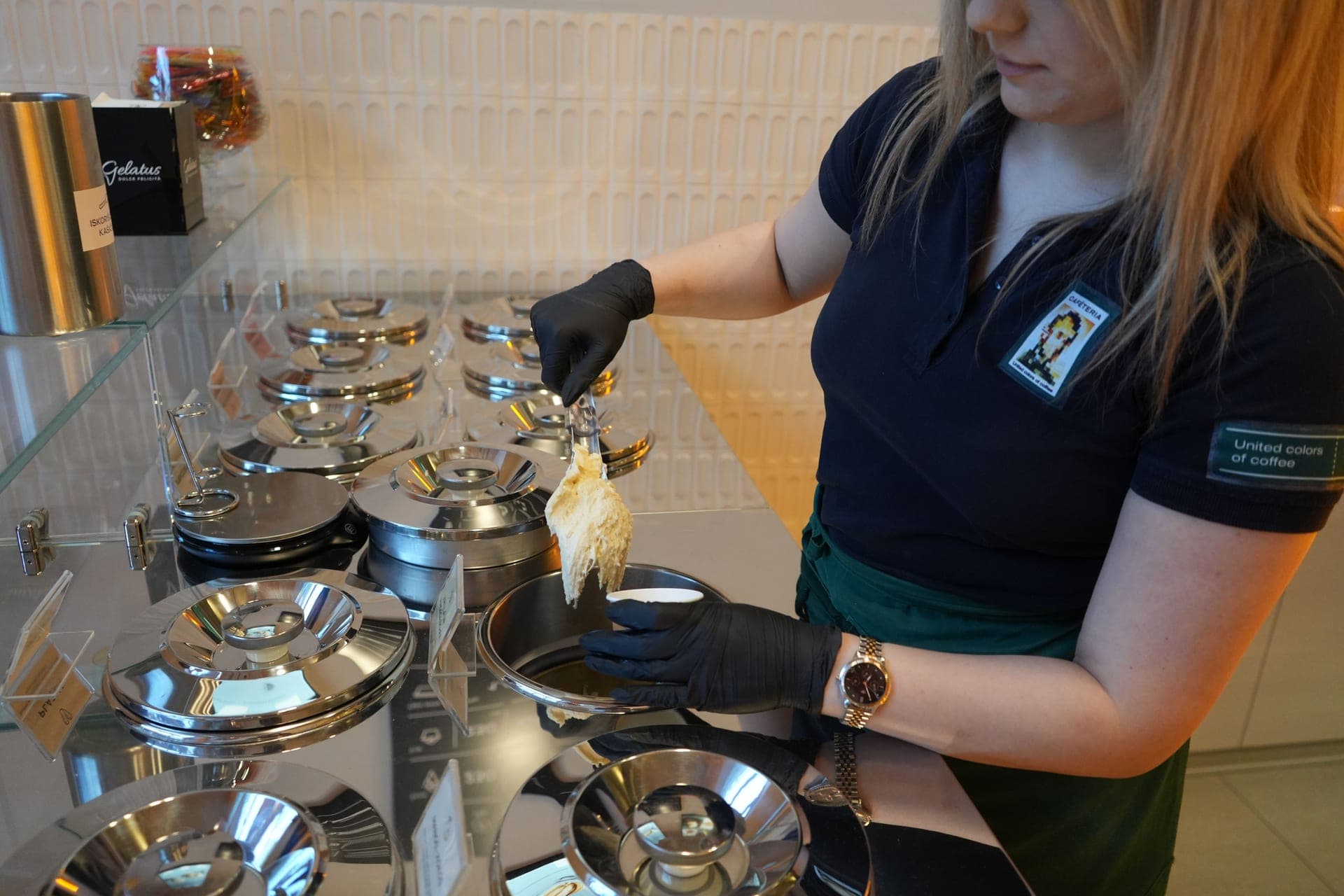
Yes — every machine on this site can make gelato, because gelato is a base recipe and a churn length, not a separate appliance. Change three things and the same machine that makes ice cream makes gelato: use more milk and less cream, add a little more sugar, and stop the churn earlier so less air goes in. A machine with a gelato paddle or a gelato program makes the third change easier; nothing makes it mandatory.
What the machine cannot change is serving temperature, and that is the one real limitation. Gelato is served roughly 10 to 15 degrees Fahrenheit warmer than American ice cream, which is warmer than a domestic freezer holds, so a gelateria scoop is soft and silky where yours comes out firm. The food-science difference is in gelato versus ice cream; this page is about getting it out of the machine you own.
The three changes, in order of effect
- 1. Less air. This is the defining difference. The air whipped into a frozen dessert is called overrun, American-style ice cream runs high on it and gelato runs low, which is why a gelato scoop is dense and tastes markedly stronger: there is more dairy and more flavoring per spoonful. In practice: churn to a thick, dense, slow-moving texture and stop, rather than waiting for it to climb and look fluffy. The full mechanism is in overrun explained.
- 2. Less cream, more milk. Gelato bases run leaner than ice cream bases. A lower fat content is part of why the flavor reads more clearly, and it also freezes harder, which is why the sugar matters.
- 3. A little more sugar. Sugar depresses the freezing point, so a slightly sweeter base stays softer at the same temperature. On a lean, low-fat base this is what keeps the result scoopable instead of solid. Our base guide covers how fat, sugar and egg interact.
The step most people skip
Chill the base thoroughly before churning — properly cold, not fridge-cool. A gelato base is leaner than an ice cream base, so it has less fat buffering it against slow freezing, and a warm start is where graininess comes from. Timings are in how long to chill ice cream base.
What makes a machine better at gelato
Three things, and only the first is specific to gelato.
- A paddle or program that folds in less air. A gelato paddle moves the mixture differently, scraping and folding rather than whipping. A gelato program changes speed and run time toward the same end.
- Freeze speed. A lean base freezes harder and grains more easily, so the faster a machine pulls heat out, the smoother the result. This is why compressor machines suit gelato better than canister machines, not because of any gelato-specific feature.
- Control over when it stops. Gelato is defined by stopping earlier than you would for ice cream. A timer, or simply a machine you can watch, matters more than any badge.
The one machine with a real gelato tool
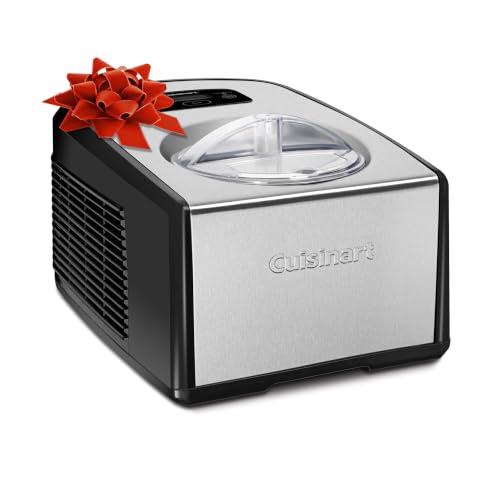
The Cuisinart ICE-100 ships with two paddles, one for ice cream and one for gelato, and it is the only machine recommended on this site that does. That is a genuine mechanical difference rather than a software one: a differently shaped paddle moves a given base differently and folds in measurably less air. It also has no pre-freeze, runs batches back to back, carries a 60-minute countdown with a 10-minute Keep Cool, and ATK recommended it at $343 in June 2026 with three years of US cover.
If gelato is the main reason you are buying, that paddle is the feature to buy. The cost is 28 pounds and 16.73 inches of counter depth for 1.5 quarts. See the ICE-100 review.
Gelato programs, and what they are worth
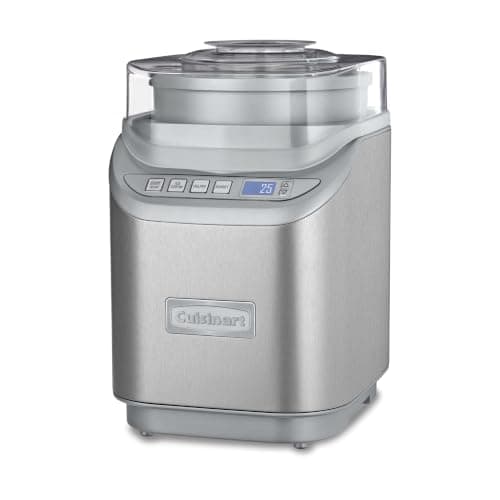
The Cuisinart ICE-70P1 has three texture programs — ice cream, gelato and sorbet — on a 2-quart canister machine, with an LCD countdown and auto shut-off. Ice Cream Science rates its output excellent, smooth and creamy with very few coarse bits, which is the strongest texture verdict any canister machine has from a source we can read. It measured the churn at 28 minutes 30 seconds and puts the optimal fill at around 900 ml.
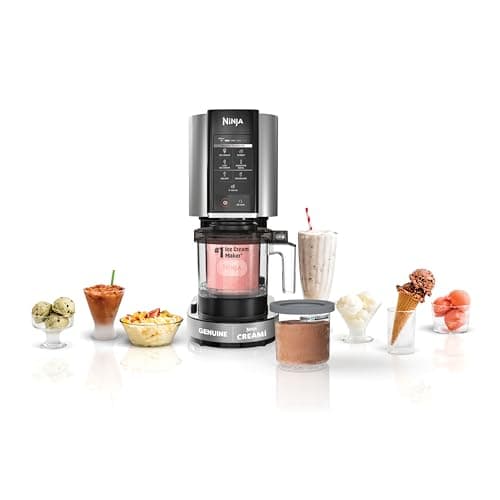
The Ninja CREAMi NC301 lists gelato among its seven one-touch programs, run on a pint frozen solid overnight rather than a churned liquid. It is a legitimate gelato-textured result and an 800-watt motor handles lean bases without stalling, but it is 16 ounces per spin and 18.39 inches tall. Both approaches are honest; neither is the same thing as a differently shaped paddle. More in ICE-30 versus ICE-70 and how the Ninja CREAMi actually works.
If you want gelateria texture, this is what it takes
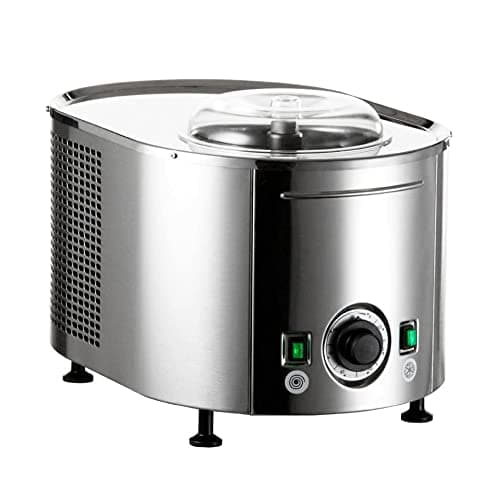
The Lello 4080 Musso Lussino is where the texture argument ends. Ice Cream Science measured it freezing a batch in 17 minutes 30 seconds, the fastest cited anywhere on this site, and reports extremely smooth, dense, creamy output after seven months of use. Dream Scoops names it the best overall compressor machine. Dense is exactly what gelato wants.
It is 38 pounds, all stainless with a fixed bowl you clean in place, has no timer or programs at all, and Ice Cream Science puts its optimal fill at 700 ml against a 1.5-quart rating. This is a machine for someone who churns constantly, not a first purchase. Everything in this tier is ranked in best gelato makers for home.
What will not work, stated plainly
Nothing on this page makes gelato that behaves like gelateria gelato out of your own freezer, because the serving temperature is set by the freezer rather than the machine. Take it out 10 to 15 minutes before serving and you will get much closer; expect it to firm up hard once stored.
Also: do not expect a gelato program to rescue an ice cream base. If you churn a rich, cream-heavy mixture on a gelato setting you get slightly denser ice cream, not gelato. The base is the first change, the churn is the third, and they are not interchangeable. If your results are coming out grainy rather than dense, that is a different problem and grainy or crumbly ice cream diagnoses it.