There are five ways a home machine turns a liquid into ice cream. They cost very different amounts, and the differences between them are not mostly about quality — they are about what the machine demands from you before it will produce anything. Shop by mechanism first and the price bands make sense afterwards.
1. Freezer bowl (canister)
How it gets cold: a double-walled bowl with a gel sealed between the layers. You freeze it solid, the gel stores a fixed quantity of cold, and a small motor turns a paddle inside while that cold transfers into your base.
What it asks: 16 to 24 hours of freezer time, and a permanent freezer shelf if you want to be ready. One batch per bowl, because the cold is spent.
What it costs: the cheapest real machines. America's Test Kitchen's best canister-style pick, the Cuisinart ICE-21P1, was $70 in June 2026.
Who it suits: almost everybody. Dream Scoops measured the ICE-21 churning in 15 to 20 minutes, and Ice Cream Science rates canister output as smooth and creamy. The only real drawback is the planning, and keeping the bowl in the freezer permanently removes it. Full detail in the freezer-bowl roundup.
2. Compressor (self-refrigerating)
How it gets cold: a real refrigeration unit inside the machine chills the bowl continuously while it churns. It is a small fridge with a paddle in it.
What it asks: money, and permanent counter space. These weigh 24 to 38 pounds and are 10 to 18 inches deep. They are not stored between batches.
What it costs: four to eight times a canister machine. ATK's self-refrigerating pick, the Whynter ICM-201SB, was $310; the Cuisinart ICE-100 was $343; the Breville Smart Scoop was $600.
Who it suits: people who will not plan a day ahead, and people who want consecutive batches. Nothing else can make ice cream on the evening you decide to have it. See the compressor roundup.
The comparison that matters most
Freezer bowl versus compressor is the fork nearly every buyer is standing at, and it is a decision about your habits rather than about ice cream quality. The published testing does not show a night-and-day texture gap between a good canister machine and a good compressor. The direct comparison is here.
3. Spin / blade (the Creami type)
How it gets cold: it does not. You freeze a pint of base solid in your own freezer, and an 800-watt blade planes the frozen block into shavings fine enough to read as ice cream. Texture is created mechanically after freezing rather than during it.
What it asks: an overnight freeze per pint, one pint per spin, and a tall footprint — the Ninja NC301 is 18.39 inches high, which will not fit under most wall cabinets.
What it costs: in between. ATK listed the NC301 at $207 in June 2026, in Recommended with Reservations.
Who it suits: one or two people wanting made-ahead single portions, and anyone making high-protein or low-sugar ice cream, which stalls a churning machine. This mechanism is genuinely the right tool for lean bases. How a spin machine works explains why.
4. Ice-and-salt bucket
How it gets cold: a canister of base sits in a bucket packed with ice and rock salt. The salt lowers the meltwater's freezing point, producing a brine far colder than ice alone, and a motor turns the canister or a dasher.
What it asks: ice and rock salt every single batch, somewhere to drain salt water, and storage for a large bucket.
What it costs: the lowest cost per quart in the category. The Hamilton Beach 68330N makes 4 quarts from an 80-watt motor for less than most 1.5-quart machines.
Who it suits: anyone feeding eight or more people, and anyone who wants the ritual. It is also the only cheap mechanism with no pre-freeze requirement at all — buy ice, make ice cream. See the bucket and hand-crank roundup.
5. Stand mixer attachment
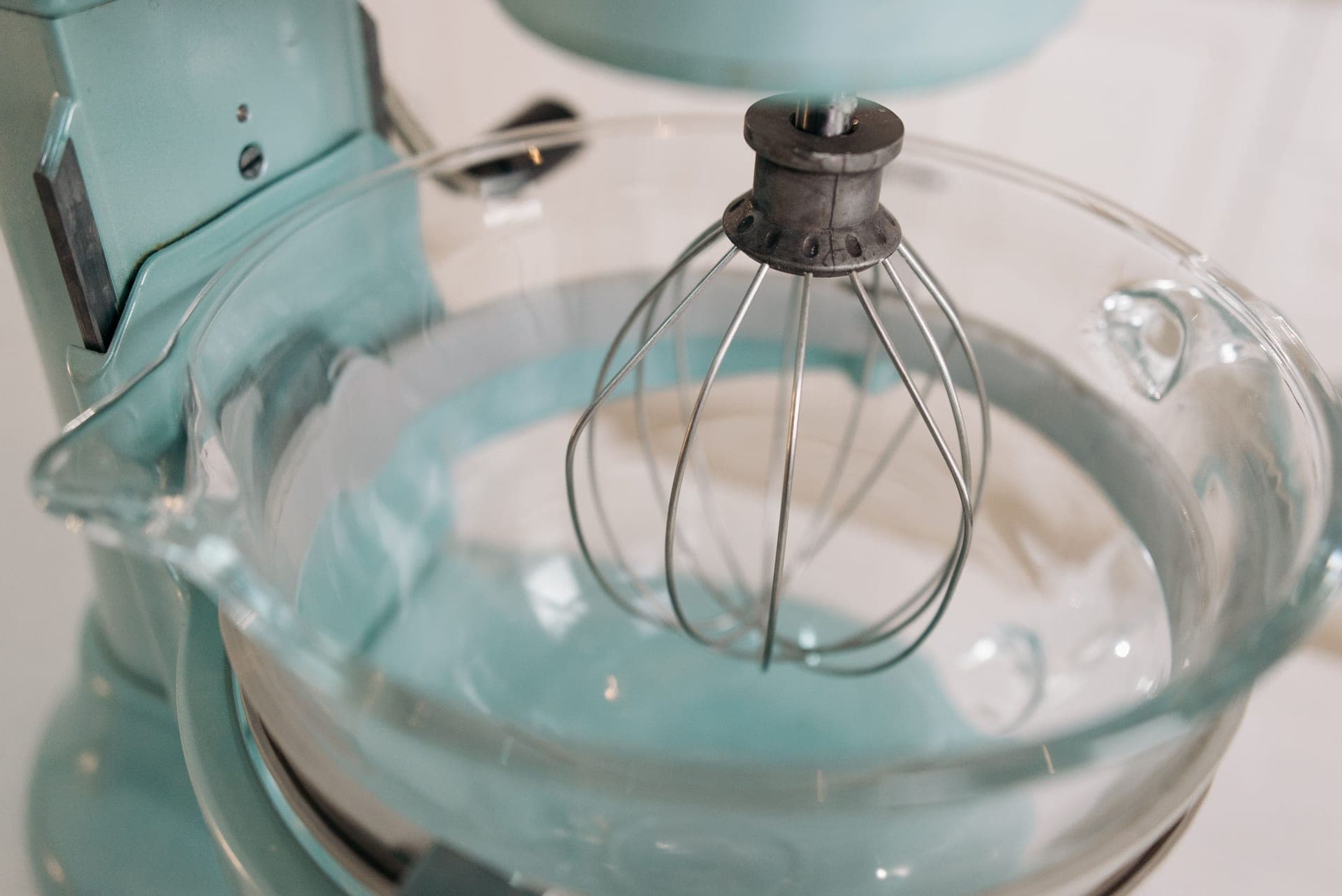
How it gets cold: the same gel bowl principle as a canister machine, driven by your stand mixer's motor instead of a built-in one.
What it asks: at least 24 hours of bowl freezing per KitchenAid, an 11-inch freezer shelf, and a compatible mixer. It fits all current KitchenAid models except the Artisan Mini 3.5 quart, and some tilt-head models need the adapter ring.
What it costs: less than a standalone 2-quart machine, because you already paid for the expensive part.
Who it suits: people who already own the mixer, and nobody else. Buying a stand mixer to get the attachment is the most expensive route to 2 quarts available — the reasoning is in attachment versus standalone.
The five in one table
If you remember one thing from each:
- Freezer bowl: cheapest good ice cream, needs a day of notice.
- Compressor: no notice needed, costs and weighs the most.
- Spin: single pints made ahead, handles lean bases nothing else can.
- Bucket: four to six quarts cheaply, with consumables and mess.
- Attachment: free capacity if the mixer is already yours, worthless if not.
Now work through how to choose an ice cream maker, which turns this into a four-question decision.