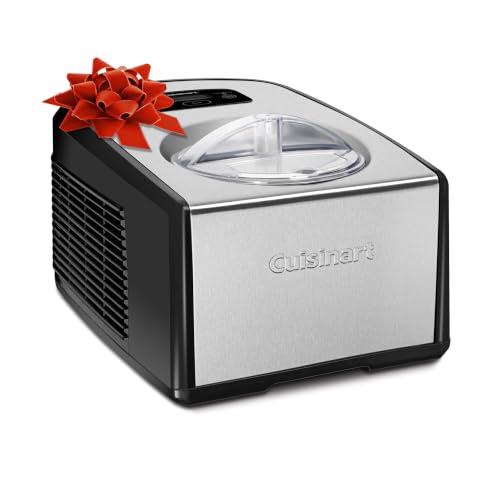
Buy the Whynter ICM-220CGY for one reason: it is the only machine we cover that makes the yogurt and then freezes it. Whynter's incubator holds the mixture at 104 to 110 F to culture it, and the same removable stainless bowl then churns it frozen on a compressor that needs no pre-freeze at all. Everything else on this site with a “frozen yogurt” program is freezing a tub you bought at the store.
Do not buy it if you buy your yogurt. Strip the incubator out and what is left is a wider, less-reviewed version of the ICM-201SB, which America's Test Kitchen named its best self-refrigerating machine at $310 in June 2026. The 220CGY was not in that rated set, so there is no independent verdict on its output at all.
The published numbers
Read off Whynter's own product page, re-checked on October 26, 2026:
- Capacity: 2.1 quarts.
- Power: 180 W, max 1.2 A, 110/120 V at 60 Hz.
- Rated noise: 55 dBA.
- Ice cream cooling range: -0.4 F to -31 F.
- Yogurt heating range: 104 F to 110 F.
- Dimensions: 16.75 inches wide, 11.25 deep, 10.25 high.
- Weight: 24.25 pounds net.
- Bowl: removable stainless steel, with a BPA-free plastic churn blade.
- Housing: Champagne Gold stainless steel.
- Controls: LCD with an audible timer, motor protection that stops the blade when the mixture thickens, and an Extended Cooling phase that holds texture after the churn.
- Warranty: one year limited.
Two of those matter more than the rest. 55 dBA is the quietest rating any compressor machine on this site publishes — the ICM-201SB is rated at 60 dBA or less, and compressor noise is the most common complaint about the whole machine type. If you churn in an open-plan kitchen, that five-decibel gap is worth more than it reads. Our quietest machines roundup sets out why published decibel figures are the only ones worth comparing here.
And one year is the figure to weigh against the price. Cuisinart covers the ICE-100 for three years in the US. On a machine with a refrigeration circuit — the most expensive thing in the box to fail — a one-year term is a real cost, not a footnote.
No independent testing exists for this model
America's Test Kitchen's June 2026 ice cream maker review does not include the ICM-220CGY, and Ice Cream Science's machine reviews do not cover it. Nobody we are willing to cite has measured its texture, its churn time or how well the incubator actually cultures. Every figure on this page is Whynter's own published specification, labeled as such, and our methodology explains why the texture score is held where it is. Dream Scoops did rate a different, smaller Whynter model poorly on build quality, which is worth knowing and is not the same as a verdict on this one.
What the yogurt function actually does
Frozen yogurt is not ice cream with a different label. It is cultured milk — live bacteria fed on lactose for hours at body temperature, which is what produces the acidity and the tang — and then frozen. Most machines can only do the second half. The 220CGY does both, in sequence, in one bowl: heat and hold at 104 to 110 F to culture, then drop the same bowl to between -0.4 F and -31 F to churn it frozen.
That is genuinely useful if you care about the result, because culturing at home is where the flavor is decided. You choose the milk, the fat level and the culture, and you choose how long to leave it — longer incubation means more acid and a sharper finish. Buy a tub instead and all three of those decisions have been made for you. The food science is in frozen yogurt versus ice cream, and the machines that merely freeze yogurt are ranked in the frozen yogurt roundup.
The honest limit: Whynter does not publish an incubation time, so plan on the several hours that home yogurt normally takes and treat the machine as the vessel rather than a shortcut. The incubator saves you a warm oven or a dedicated yogurt maker; it does not make yogurt fast.
As an ice cream maker, ignoring the yogurt
It is a good one, on the same platform as a machine ATK actually liked. Whynter's FAQ puts a batch at 25 to 40 minutes depending on the recipe and the starting temperature, recommends chilling the base at least 4 hours first, and asks for a 5 to 10 minute rest between back-to-back batches. Mix-ins go in over the last 5 to 10 minutes. A new unit should stand upright for 24 hours before first use, which is normal for anything with a compressor and worth knowing before you plan a batch for the evening it arrives.
The removable stainless bowl is the feature that gets underrated. On a fixed-bowl compressor machine you clean a cold, sticky well in place on the counter; here you lift the bowl to the sink. That difference is the gap between using a machine weekly and using it in July, which is the argument running through the easiest-to-clean roundup.
Two caveats on the hardware. There is no gelato paddle. Low-air gelato wants a differently shaped blade, and only the ICE-100 ships one — see overrun explained for why that is a hardware problem rather than a program. And Whynter lists spare bowls, blades and a scoop as accessories sold separately, not in the box, so two-flavor evenings cost extra.
The footprint is the real trade
At 16.75 inches wide this is the widest compressor machine we cover, and it is a horizontal machine where the ICM-201SB is an upright one. Same 24.25 pounds, same 2.1 quarts, different shape:
Side by side
| Spec | 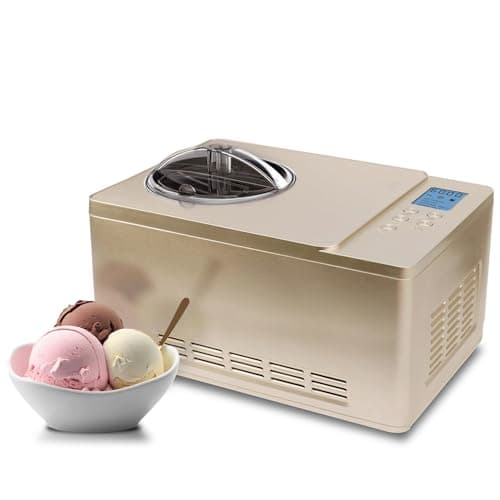 | 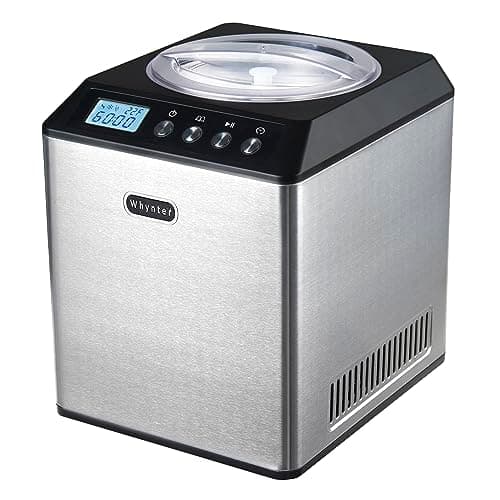 |
|---|---|---|
| Shape | Horizontal, 16.75" wide | Upright, 12.5" wide |
| Dimensions | 16.75" W x 11.25" D x 10.25" H | 12.5" W x 10.75" D x 14.25" H |
| Capacity | 2.1 qt | 2.1 qt |
| Power | 180 W | 180 W |
| Rated noise | 55 dBA | 60 dBA or less |
| Yogurt incubator | Yes, 104-110 F | No |
| Bowl | Removable stainless | Removable stainless |
| Weight | 24.25 lb | 24.25 lb |
| Warranty | 1 year limited | Whynter standard |
| ATK June 2026 | Not rated | Best self-refrigerating, listed $310 |
| Price |
Measure before you order. Four and a quarter extra inches of width is the difference between fitting beside a sink and not, and the 220CGY is only 10.25 inches tall, so it will clear a wall cabinet the upright model might not. Neither answer is better in the abstract; it depends entirely on which dimension your kitchen is short of. The full head-to-head is ICM-201SB versus ICM-220CGY.
Who should buy it
Someone who already makes yogurt, or has wanted to. The incubator replaces a separate appliance and a fussy warm-oven workaround, and it is the only one in this category. Someone who wants the quietest compressor rating published. And someone whose counter is wide and low rather than tall — the shape suits a specific kitchen very well.
Who should not
Anyone who buys yogurt in a tub. You would be paying for an incubator you never switch on, and the cheaper, narrower, ATK-recommended ICM-201SB does the ice cream half identically. Anyone who wants gelato, where the Cuisinart ICE-100 and its second paddle is the better tool despite holding 0.6 quarts less. Anyone who needs a long warranty on a compressor, where Cuisinart's three years beats Whynter's one. And anyone shopping on evidence rather than specification, because this machine has none we can cite — the compressor roundup ranks the alternatives that do.
Verdict
A single-purpose machine wearing a general-purpose price tag, and the purpose is excellent. If making your own yogurt and then freezing it is something you will actually do, nothing else in the category does it and the rest of the machine is a proven 2.1-quart compressor platform with the quietest published noise rating here and a removable stainless bowl.
If it is not, this is the wrong machine and the honest recommendation is the cheaper sibling. We would not buy it “in case” we start making yogurt: an incubator you never use is the most expensive kind of feature. Still weighing the mechanism itself? Compressor versus freezer bowl is the page that decides that, and is an ice cream maker worth it is the one to read before spending compressor money at all. It also leads the stainless steel roundup, because Whynter is the only manufacturer we have found that publishes a blade material as well as a bowl material.