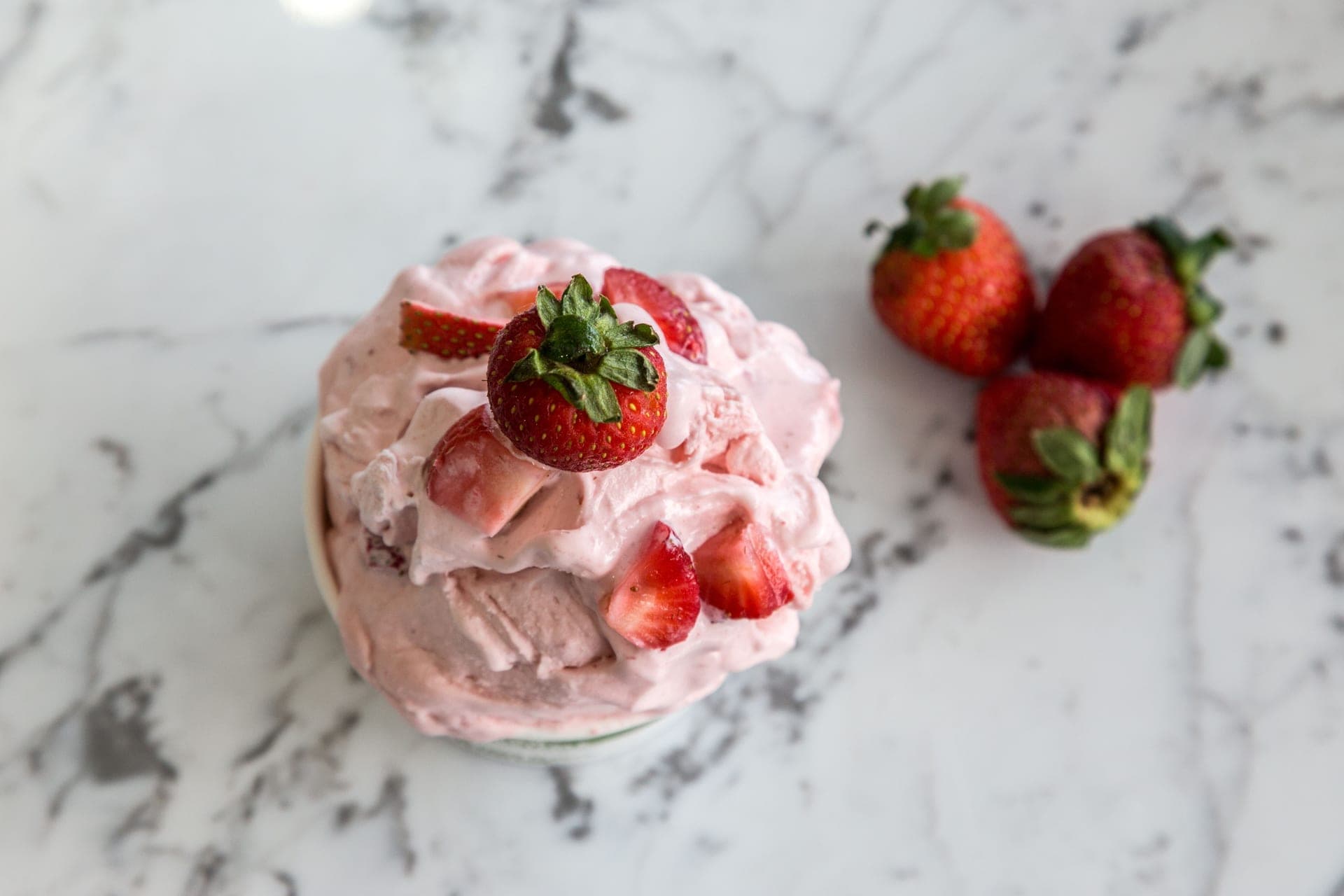
A conventional ice cream maker freezes a liquid while stirring air into it. The CREAMi does something mechanically different: it takes a base you have already frozen solid and drives a blade down through it under pressure, planing the block into shavings fine enough that your tongue reads them as ice cream rather than as ice.
Ninja calls the process Creamify. Once you have that picture, everything else about this machine follows logically — including the parts that feel like faults.
The physics, briefly
Ice cream feels smooth when the ice crystals in it are small enough that you cannot detect them individually. A churning machine achieves that by freezing quickly while agitating, so crystals never get a chance to grow large.
The CREAMi allows the crystals to grow as large as they like in your freezer, then destroys them mechanically. That is why the base has to be completely solid: the blade needs a rigid block to cut against. A partially frozen pint smears instead of shaving, and the result is closer to a milkshake.
How long the pint really needs
Ninja's instruction is to freeze overnight. In practice that means a flat, level pint in the coldest part of the freezer for at least 12 hours, and 24 is safer if your freezer is full or the door opens often. A pint that has been in for four hours will look frozen on top and will not spin properly.
Why a flat, level pint matters
An uneven frozen surface spins unevenly. The blade descends through the center first, so a pint that froze at an angle, or with a domed top, gets processed inconsistently: part powder, part untouched block.
Put the pint on a level shelf, not wedged against a bag of peas. Fill to the max line, not above it. These two habits eliminate a large share of the problems people attribute to the machine.
What the re-spin function is actually for
The re-spin is not a repair for a failed batch, it is part of the normal process on lean bases. Here is the sequence that works:
- Spin once on the appropriate program.
- If the result is powdery or crumbly — which is common on low-fat, low-sugar and high-protein bases — add a tablespoon or two of milk to the pint.
- Run the re-spin. The added liquid binds the shavings and the texture turns creamy.
That is the intended workflow, not a workaround. A first spin that looks like snow is telling you the base was very cold and very lean, which is information rather than failure. The full diagnosis is in Creami downsides and common problems.
What the programs actually change
Speed, pressure and duration — that is the whole variable set. There is no heating, no cooling and no clever chemistry inside the machine. The Ice Cream program uses a different speed-and-pressure profile from the Sorbet program because a fruit-and-sugar block cuts differently from a cream block.
Practically: pick the program that matches your base, not the dessert you want to end up with. A cream-based mixture spun on Sorbet will not behave well, and a fruit purée spun on Ice Cream often needs a re-spin.
What the mechanism cannot change
Two things, and both are consequences of the design rather than shortcomings of a particular model.
It cannot make dessert faster than your freezer can. The overnight freeze is the rate-limiting step and no program changes it. This is the single most misunderstood thing about the machine, and it is why the CREAMi is not the answer for someone who wants ice cream tonight. Only a compressor machine does that.
It cannot exceed one container per cycle. The blade processes the block in front of it. Sixteen ounces on the NC301 and NC701, 24 on the NC501 Deluxe, one at a time.
Why it handles bases other machines refuse
This is the mechanism's real advantage. Protein powder gels the base and low-sugar mixes freeze hard, both of which defeat a small churning motor trying to keep a liquid moving. The CREAMi starts from a solid block regardless, so stiffness is irrelevant, and it creates the texture mechanically after freezing rather than during it.
That is why the machine became the default for protein ice cream. Details in best machines for protein ice cream.
What the people who have used one report
Ice Cream Science spent ten weeks with an NC301 and came away positive, particularly on convenience and footprint. Taste of Home has published its own hands-on review of the range. Those are other people's experience, named and dated, because we have not used the machine ourselves — see how we pick.
Ready to make something? Start with CREAMi vanilla, which is built to freeze into an even pint and re-spin well.