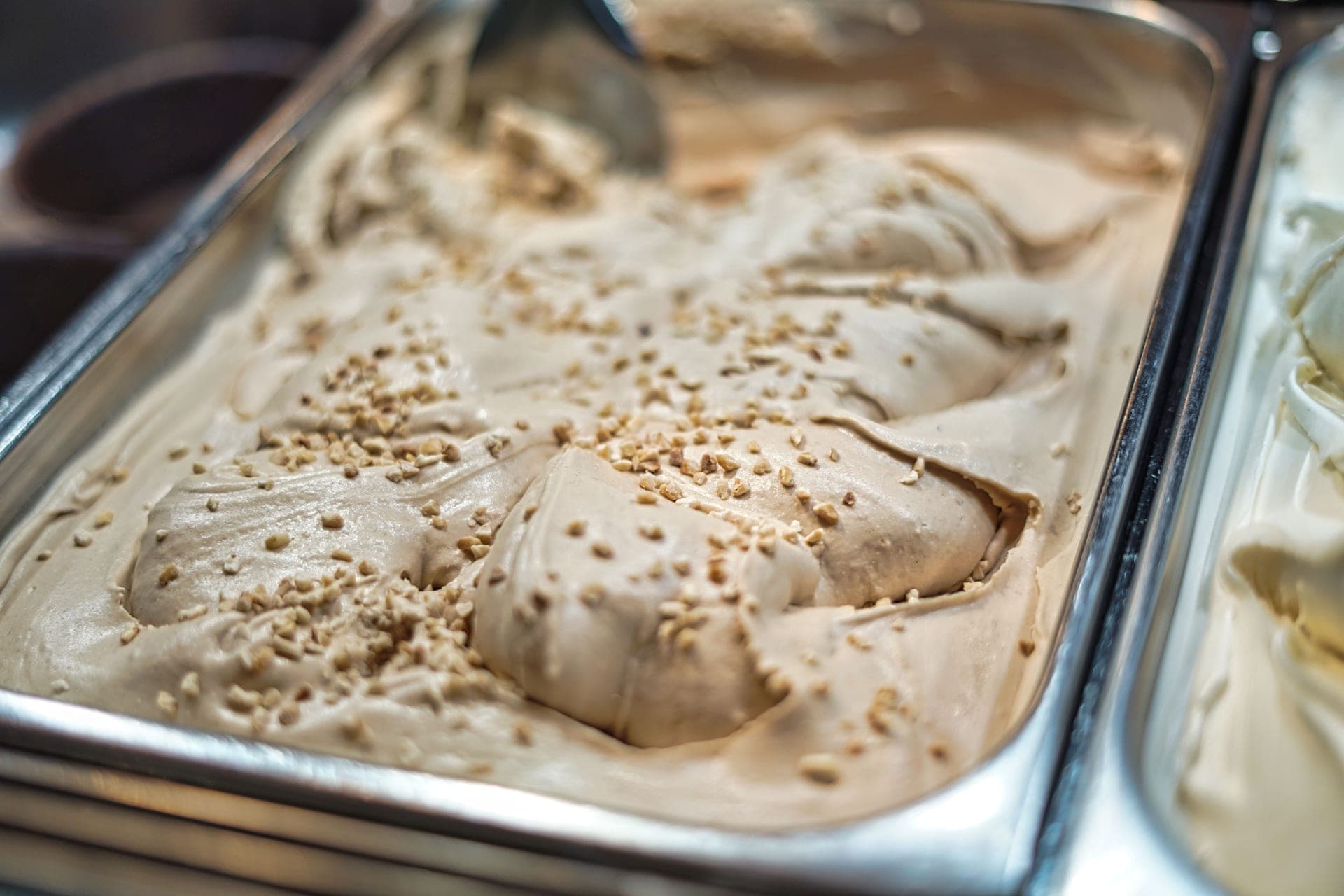
Most ice cream recipes are written as if every machine were the same, which is how people end up with a Ninja CREAMi pint that comes out crumbly or a freezer-bowl batch that never thickens. The mechanism changes the recipe. A churning machine wants a base that is cold, fairly liquid, and able to take on air. A spin machine wants a base that will freeze into an even block. A bucket machine wants volume and does not much care about finesse.
Start here, whatever you bought
Make the no-fail vanilla first. It is written to work in any machine, it uses four ingredients you can buy anywhere, and it gives you a baseline. Once you know what your machine does with a known-good base, every subsequent failure becomes diagnosable: you will know whether you changed the recipe or the machine is behaving differently.
If you do not have a machine yet and want to find out whether you enjoy this at all, make ice cream in a bag. It costs a sandwich bag and twenty minutes of shaking, it works, and it is the single best way to involve children. Or read ice cream without a machine for the no-churn route, which produces genuinely good results with a mixer and no special equipment.
The two base families, and why it matters
Custard (French) bases use egg yolks, which are cooked with the dairy into a thin custard. The yolks emulsify and hold water, which means a smoother, richer, more forgiving result that resists ice crystals. They take longer and involve a stove.
Philadelphia-style bases skip the eggs entirely: cream, milk, sugar, flavor, stirred cold. Faster, cleaner-tasting, and noticeably less forgiving, because nothing is holding the water in place. Both are covered in custard versus Philadelphia. For a first batch, Philadelphia is the shorter road and custard is the better ice cream.
Machine-specific recipes
Several recipes here are written for one machine on purpose, because the ratios genuinely differ. CREAMi vanilla is built to freeze into an even pint and re-spin well. CREAMi protein ice cream exists because protein powder wrecks a churned base and is fine in a spun one. Cuisinart recipes are sized to the 1.5-quart and 2-quart freezer bowls, which is not the same as “half a recipe.”
The mistake nearly everyone makes once
Not chilling the base. A base that goes into the machine at room temperature will churn for 40 minutes and still be soup, because the bowl spends its entire cold budget cooling the liquid instead of freezing it. Chill the base thoroughly — four hours in the fridge, or overnight — and the same recipe in the same machine will come out in twenty minutes.
The second most common: overfilling. Ice cream expands as air goes in. Fill a 1.5-quart bowl to the brim with base and it will climb out of the machine. Two-thirds full is the practical ceiling on almost every machine here.
If a batch has already gone wrong, the icy, rock hard and grainy or crumbly pages diagnose the three failures that account for nearly all of them.