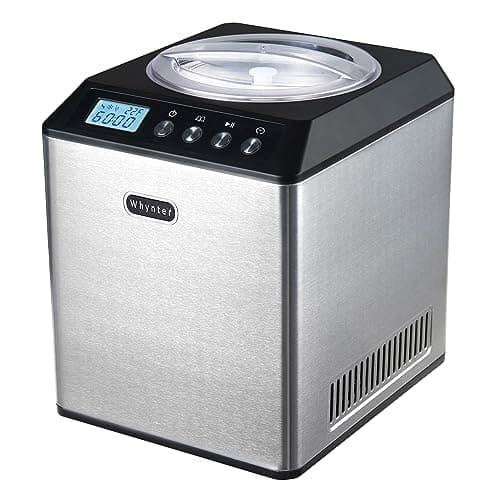
On published numbers the Whynter ICM-220CGY is the quietest ice cream maker you can buy, rated 55 dBA by the manufacturer, with the Whynter ICM-201SB next at 60 dBA or less. Those are the only two decibel ratings published by any maker in this category, and they belong to compressor machines — which is the opposite of what most people expect.
The honest caveat comes first, because the rest of this page depends on it: nobody tests ice cream makers for noise systematically. We found exactly one independent measurement in the whole category, and two manufacturer ratings. Everything else is unlabelled, and we will not invent a figure to fill a column.
What the numbers actually are, and what they are not
Measured, independently: Dream Scoops recorded the Cuisinart ICE-21 at 79 to 82 dB during a churn. Manufacturer ratings: Whynter publishes 55 dBA for the ICM-220CGY and 60 dBA or less for the ICM-201SB. Everything else on this site: not published. A manufacturer rating and a reviewer's measurement are not the same kind of number and are not strictly comparable — different conditions, different distances, different weighting. Treat the gap between 55 and 80 as real and the gap between 55 and 60 as noise, in both senses.
Why the compressors win a quietness page
It sounds wrong: a compressor machine contains a refrigeration unit, and refrigeration units hum. Two things explain it.
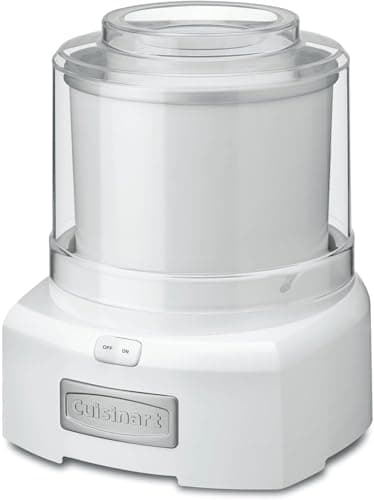
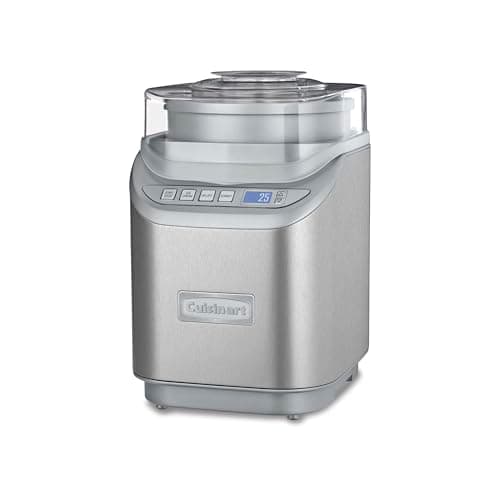
The first is mass. The Whynter machines weigh 24.25 pounds, the Cuisinart ICE-100 weighs 28, the Lello 4080 weighs 38. All that metal and insulation sits between the motor and your kitchen, and it damps vibration the way a heavy door closes quietly. A 1.5-quart canister machine is a light plastic shell around a small motor, which is a structure that rings. At 60 watts the ICE-21's motor is tiny; at 79 to 82 decibels measured, the housing is the problem rather than the power.
The second is what the motor is fighting. A canister machine's paddle meets mixture that gets stiffer every minute while the bowl gets warmer, so the motor labors hardest at the end. A compressor holds the freeze rate steady and the paddle load with it. If you want the full version of that mechanical difference, it is in compressor versus freezer bowl.
Duration matters more than peak, and this is where rankings flip
A decibel figure tells you how loud a machine is. It does not tell you how long you have to listen to it, and in a kitchen that is usually the number that decides whether an appliance is annoying.
- Spin machines: a couple of minutes per pint. Loud while they run — an 800-watt motor driving a blade through a frozen block is not subtle — and over before you have laid the table.
- Canister machines: roughly 15 to 30 minutes. The ICE-21 churns in about 15 to 20 minutes per Dream Scoops; Ice Cream Science measured the ICE-70P1 at 28 minutes 30 seconds. That is half an hour of 80 decibels in an open-plan room.
- Compressor machines: 20 to 40 minutes of churn, plus the compressor cycling before and after, including Keep Cool phases. Quieter per minute, more minutes.
- Bucket machines: 20 to 40 minutes, and the dominant sound is ice knocking around a bucket rather than the 50-to-80-watt motor. Nobody publishes a figure, and the mechanism means it changes as the ice melts.
Multiply it out and a spin machine is the quietest thing in this category in total noise, even though it is probably the loudest at peak. If what you actually want is to not wake a baby, two minutes beats thirty.
The genuinely quiet option nobody counts
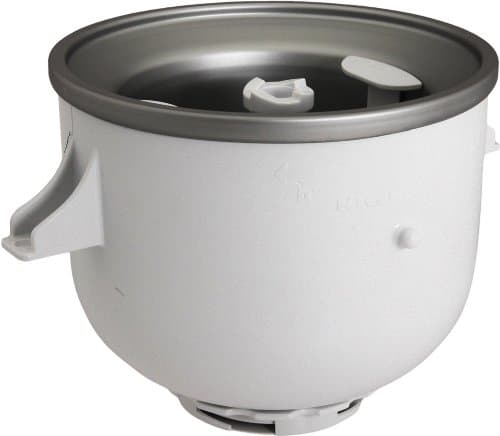
If a KitchenAid stand mixer is already on your counter, the KICA0WH attachment is the quietest 2 quarts on this site, and for a structural reason: you are not buying a motor at all. A stand mixer is a heavy cast housing with a geared motor designed to run for long periods at low speed, which is a far better-damped machine than any small plastic canister unit. KitchenAid does not publish a decibel figure for it either, so this is a mechanical argument rather than a measurement, and we are labelling it as such.
The trade-offs are the usual ones: at least 24 hours of pre-freeze per the manufacturer, a bowl that claims a full freezer shelf, the adapter ring on some tilt-head models, and no value at all if you do not own a compatible mixer. The comparison against a standalone machine is in attachment versus standalone.
The picks, with the gaps named
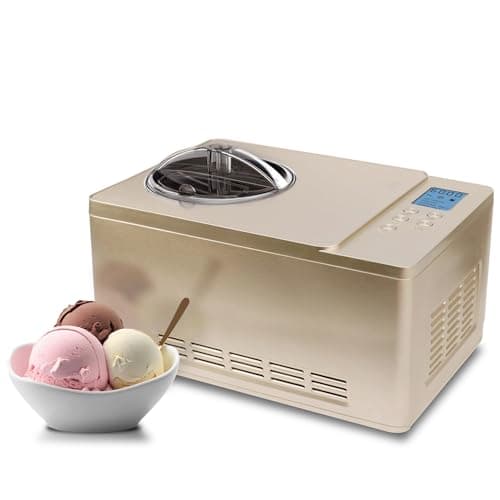
Whynter ICM-220CGY — the lowest published number. 55 dBA per Whynter, 2.1 quarts, no pre-freeze, 180 watts, plus a yogurt incubator that holds 104 to 110 F and then churns the result frozen in the same bowl. Motor protection stops the paddle automatically when the mix thickens. The honest problems: America's Test Kitchen did not rate this model, so there is no independent verdict on its output; it is 16.75 inches wide, the widest compressor here; it weighs 24.25 pounds; and the yogurt function is genuinely useful to a minority. Buy it for the quiet and the incubator, or buy the 201SB.
Whynter ICM-201SB — the quiet one with a verdict behind it. Rated 60 dBA or less, 2.1 quarts with no wait, a removable stainless bowl, and ATK's best self-refrigerating pick at $310 in June 2026. It is the one machine on this page where the quietness claim sits alongside independent praise for the ice cream. Problems: $310, 24.25 pounds, no gelato-specific paddle, and Dream Scoops rated a different and smaller Whynter poorly on build quality — worth knowing, even though it is not this model. The full write-up is in the ICM-201SB review.
KitchenAid KICA0WH — quietest by mechanism, if you qualify. See above. No published figure; the argument is the mixer's mass and gearing.
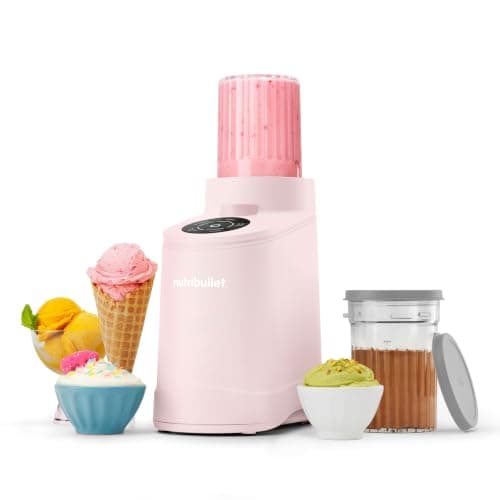
nutribullet Chill — the shortest noise. 10.49 pounds, 5.74 inches wide, five presets, top-rack dishwasher-safe parts, and a run measured in minutes rather than tens of minutes. nutribullet publishes no wattage and no decibel figure, and no lab we can read has rated it, so this pick is about duration and footprint, not about a measured sound level.
The loud ones, so you can avoid them deliberately
The only machine anyone has actually measured is also the loudest thing we can name: Dream Scoops put the Cuisinart ICE-21 at 79 to 82 dB. That is not a reason to avoid it — it is still ATK's best canister-style pick at $70 and the machine we recommend to most first-time buyers in the beginner roundup — but you should know that twenty minutes of it in a small kitchen is loud enough to interrupt a conversation.
Assume every other canister machine is in the same region, because the mechanism and the housing are the same. Assume bucket machines are loud in a different, clattery way. And assume a compressor machine is a background hum that runs longer than you expect, because it keeps cooling after the churn.
How to judge a machine when there is no number
Four proxies that are better than guessing, in rough order of usefulness.
- Weight. Heavier is almost always quieter in this category, because mass damps. 24 pounds of stainless beats 5 pounds of plastic.
- Housing material. Metal over plastic. Brushed stainless over a white shell.
- Run time. Peak loudness times minutes is the number you actually experience.
- Where it will live. A machine on a hard counter against a tiled wall is louder than the same machine on a wooden table. Under-filling helps too, because a stiffer over-filled mixture makes the motor labor; Ice Cream Science's optimal fill for the 2-quart ICE-70P1 is 900 milliliters, well under its rating, and how long to churn covers why.
And one thing not to do: do not choose a machine on noise alone. The figures that decide your ice cream are freeze speed and fill level, not decibels. If quiet matters because the kitchen is open to where people sleep, the real answer may be a spin machine that runs for two minutes — or churning in the afternoon. Start at how to choose an ice cream maker if noise is one of several constraints rather than the only one.