If you need four quarts or more, buy an ice-and-salt bucket machine — the Hamilton Beach 68330N for four quarts, the Nostalgia ICMP600WD for six. That is not a preference, it is arithmetic: the largest countertop machine on this site holds 2.1 quarts, and no amount of money buys more in that form factor.
The countertop ceiling, and why it exists
Every self-refrigerating machine we cover holds between 1.5 and 2.1 quarts. That is not manufacturers being unambitious; it is physics and price. A compressor has to pull enough heat out of the mixture to freeze it in a reasonable time, and the bigger the bowl, the bigger and more expensive the refrigeration unit. Past about two quarts, the machine stops being a countertop appliance.
Freezer-bowl machines hit the same wall from the other direction: a gel bowl holds a finite amount of cold, and a bowl big enough for four quarts would be too heavy and too slow to freeze.
What 2.1 quarts actually feeds
About six people, once, generously. It is not a week of dessert and it is not a party. If your mental picture involves a table of ten and second helpings, a 2.1-quart machine will disappoint you no matter how good it is.
How a bucket machine works, and what it costs
The mechanism is 150 years old and it still scales better than anything else. A metal canister of base sits in a bucket. You pack the space around it with ice and rock salt, which creates a brine much colder than plain ice water, and a small motor turns the canister or a dasher inside it. The Hamilton Beach 68330N does this with an 80-watt motor and stops itself when the mixture is stiff, in 20 to 40 minutes. The Nostalgia ICMP600WD uses a 50-watt motor and a 6-quart aluminum canister.
The costs are real and worth stating before you buy:
- Consumables every batch. Ice and rock salt. Cheap per quart, but it means a spontaneous batch needs a shop trip.
- Mess. Salt water in a bucket that has to go somewhere. This is a sink or an outdoor job, not a tidy kitchen-counter job.
- Hardening time. Bucket machines produce a soft result. It wants a few hours in the freezer before it scoops properly, so this is a make-in-the-afternoon, serve-in-the- evening process.
- Storage. A 6-quart bucket is a large object to keep for a machine used three times a year.
Six quarts of base is a lot of cream
Worth doing the sum before you commit. Six quarts of a cream-heavy base is a serious grocery order, and it is the single biggest cost in big-batch ice cream — far more than the machine, the ice or the salt. Using current published US average retail prices, the ingredients for a six-quart batch will comfortably exceed the price of the Nostalgia machine itself in a few uses. The arithmetic, with sources and dates, is in what homemade ice cream actually costs.
A practical consequence: for a big batch, lean the recipe toward a milk-heavier base rather than an all-cream one. It costs meaningfully less, and at six quarts nobody is comparing butterfat percentages.
The alternative nobody mentions: two batches
If you already own a compressor machine, you do not need a new machine to serve a crowd, you need to start earlier. A self-refrigerating machine can run back-to-back batches immediately, which no freezer-bowl machine can do. Two 2.1-quart batches from a Whynter ICM-201SB is 4.2 quarts with no ice, no salt and no bucket, and the first batch hardens in the freezer while the second churns.
That is genuinely the tidiest route to four quarts, and it is the reason the Whynter appears on a big-batch page despite holding half what the bucket machines do.
If you own a stand mixer
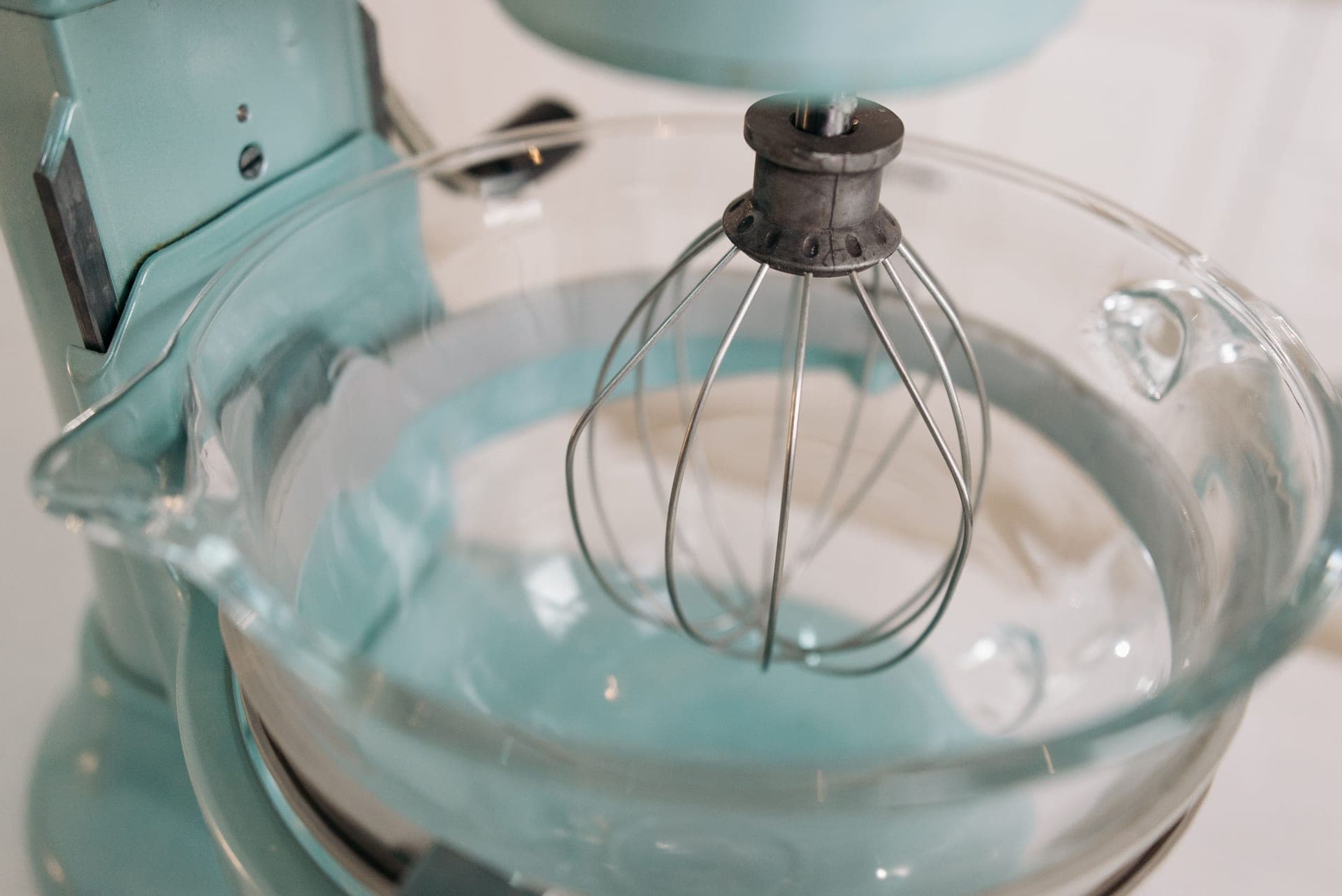
The KitchenAid KICA0WH attachment gives you 2 quarts at soft-serve consistency in 20 to 30 minutes, per KitchenAid, and the mixer's motor is far stronger than any standalone canister machine's, so a stiff big batch will not stall it. The bowl needs at least 24 hours in the freezer, and some tilt-head mixers require the adapter ring — check before ordering. It fits all current models except the Artisan Mini 3.5 quart.
Who should skip the big machines
Most people. If the big batch is a once-a-year reunion, borrowing or renting beats owning a 6-quart bucket that lives in the garage. And if the honest requirement is “enough for our family on a hot evening,” that is 1.5 quarts and the main roundup is the right page.
If the appeal is the ritual rather than the volume — children, a porch, a crank — read the hand-crank and bucket page instead. That is a different purchase with a different justification, and it is a perfectly good one.