Any ice cream maker will make ice cream, gelato, sorbet, sherbet and frozen yogurt, because all five are the same process with a different base. Soft serve, slushies and frozen cocktails are different: those need either a dispenser or a machine built to stop at a softer texture, and most machines have neither. The useful way to think about it is not what a machine is called but how much it is being asked to do.
The ranking below runs from the easiest thing you can churn to the hardest, because the difficulty is predictable: fat protects against a slow freeze, so the leaner the base, the better the machine has to be. Ice cream is forgiving. Sorbet, with no fat at all, is the hardest test in the category.
What each format asks of the machine
- Freeze speed. The lower the fat, the more it matters, because butterfat coats ice crystals and masks a slow freeze. This is why sorbet separates good machines from adequate ones.
- Control over the endpoint. Gelato means stopping earlier than you would for ice cream; soft serve means stopping earlier still and serving immediately. A timer or a program helps; a machine you can watch is enough.
- A dispenser. Genuine soft serve and slush come out of a spout. Only a handful of machines have one, and nothing retrofits it.
- Motor torque. High-protein, low-sugar and heavily fruited bases are stiff. A spin machine with a published 800-watt motor handles them; a 12-watt single-serve motor stalls.
The four that any machine will do
Ice cream. The default, and the most forgiving thing you can churn. The no-fail version is our vanilla recipe, which works in any machine.
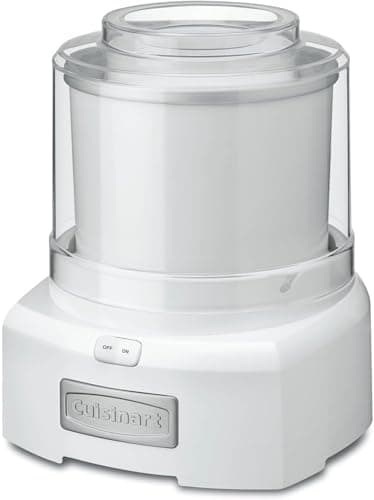
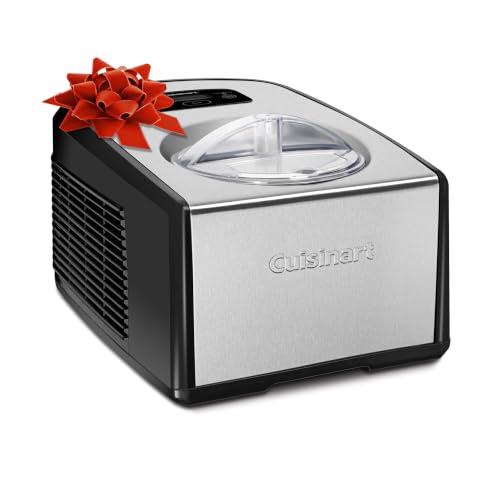
Gelato. Less cream, more milk, a little more sugar and a shorter churn so less air goes in. No special machine required, though the Cuisinart ICE-100 is the only one on this site with a separate gelato paddle. Full method in can you make gelato in an ice cream maker.
Frozen yogurt. Easier than ice cream in one respect — you can start from tubs of yogurt rather than cooking a custard — and harder in another, because yogurt is leaner than a cream base and sets firmer. The recipe is in frozen yogurt in an ice cream maker, the machines are in best frozen yogurt makers, and the food difference is in frozen yogurt versus ice cream.
Sherbet. A fruit base with a small amount of dairy, sitting between sorbet and ice cream. The distinctions are set out in sorbet versus sherbet versus ice cream.
One machine that goes a step further
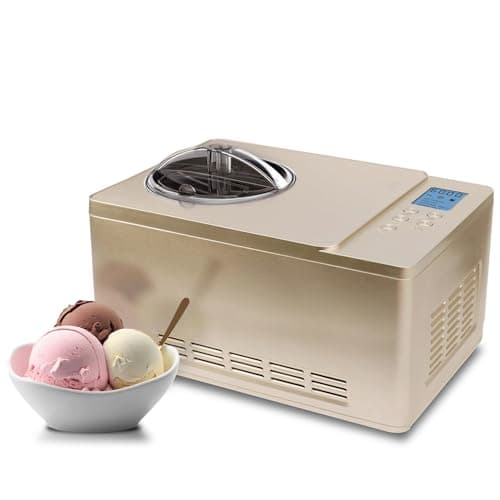
The Whynter ICM-220CGY incubates yogurt at 104 to 110 F and then churns it frozen in the same 2.1-quart bowl, which no other machine on this site does. It is the only one that makes the yogurt rather than starting from a tub. It is also 16.75 inches wide, the widest compressor here, and no lab we can read has rated its output.
Sorbet: the hardest thing in the category
Fruit, sugar, water and no fat at all. Nothing is coating the ice crystals, so every weakness in the freeze shows up as grittiness, which makes sorbet the real test of a machine rather than a casual extra. It also needs the sugar concentration roughly right, because sugar is the only thing keeping it scoopable.
The method, including the egg-float test for sugar concentration, is in sorbet in an ice cream maker, and the machines that handle it are ranked in best ice cream makers for sorbet. If your sorbet sets like a brick, that is a sugar problem rather than a machine fault.
Soft serve: possible, with a caveat
Every machine makes something soft-serve-textured if you stop the churn early and serve immediately — that is all soft serve is, ice cream served at a warmer temperature and a softer consistency. What most machines cannot do is dispense it, and the swirl is half the appeal.
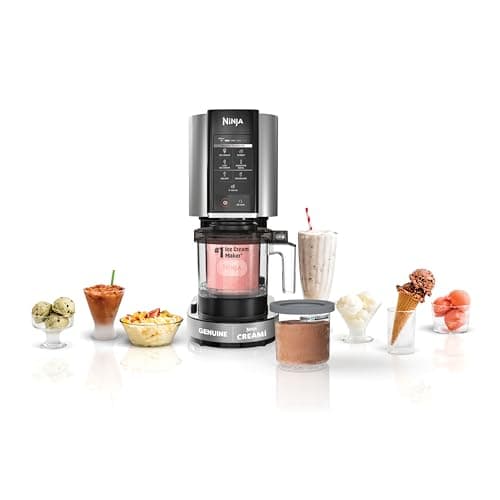
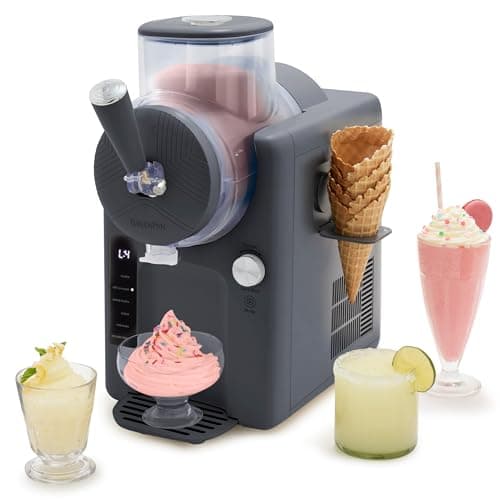
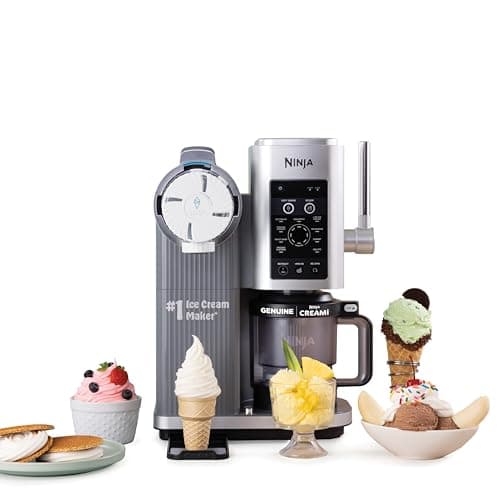
Two machines here have a real dispenser: the Ninja CREAMi Scoop & Swirl (NC701), with six soft-serve programs out of thirteen and a dispensing lever, and the GreenPan Frost Classic, which pushes 64 ounces through a push-to-close spout. The technique for everyone else is in how to make soft serve at home, the recipe is in our soft serve recipe, and the machines are ranked in best soft serve machines for home.
Milkshakes, slushies and frozen cocktails
Milkshakes are a program on most spin machines rather than a churn: the CREAMi NC301 lists one among its seven, and the Cuisinart FastFreeze machines include one too. A churning machine will not make a milkshake, because a milkshake is a blending job.
Slushies are harder than they look. A canister machine will produce something slush-adjacent from a sweet liquid, but the honest answer about what each machine type manages is in can you make slushies in an ice cream maker.
Frozen cocktails are the one format where a specific machine wins outright. The GreenPan Frost has a spiked slushie mode and dispenses it as a drink; nothing in the CREAMi range does. If frozen drinks are a real part of why you are buying, that narrows the field to one machine on this site — see Frost versus Ninja Swirl. The machines that cover a dessert and a drink from one body are ranked in the best 2-in-1 ice cream makers.
What will not work, stated plainly
Anything with much alcohol in it. A tablespoon or two in a 1.5-quart batch keeps the result softer. Much beyond that and the mixture will not set at all, which is the usual explanation when a batch stays liquid — rule it out before working through ice cream maker not freezing.
Whipped cream, dough, or anything that is not a freezing job. An ice cream maker is a cold bowl and a slow paddle. It is not a blender, and a blender is not an ice cream maker either, which is argued out in ice cream maker versus blender.
Hard-scoop ice cream from a soft-serve dispenser. Soft serve leaves the spout at serving temperature. Freezing it afterwards gives you a block, not a tub.