A blender cannot make ice cream, because ice cream requires freezing and agitating at the same time and a blender only agitates. What a blender makes is excellent frozen fruit dessert — often called nice cream — and a thick frozen smoothie. Both are good things. Neither has the texture of ice cream, and a 1,500-watt motor does not change that; it is a thermodynamic limitation, not a power one.
So the honest version of this comparison is not “which is better”. It is: find out which dessert you actually want, because one of these machines you probably already own.
Why simultaneous freezing is the whole trick
Ice cream is a frozen foam. As a mixture freezes, water turns to ice crystals, and the only way to keep those crystals small enough to feel smooth is to be constantly scraping and stirring while they form. That same agitation whips in air, which is what makes ice cream light rather than a solid block. An ice cream maker exists to do those two things at once for twenty minutes.
A blender agitates furiously and does not remove heat at all — in fact a powerful motor adds heat, which is why a long blend of frozen fruit starts to loosen and melt. So anything you make in a blender is either not frozen enough to be ice cream, or was already frozen before it went in. The underlying structure is explained in overrun explained.
The one-line test
Does the machine make the mixture colder? A freezer-bowl machine does, using stored cold. A compressor does, continuously. A spin machine works on something already frozen solid. A blender does none of those, so whatever comes out is as cold as what went in, minus whatever the motor added.
What a blender genuinely does well
Frozen banana nice cream. Freeze sliced ripe bananas, blend with a splash of milk, and you get a genuinely scoopable, creamy dessert. This works because banana is full of pectin and starch and freezes without forming coarse crystals. It is the one blender dessert that stands comparison with ice cream on texture, and it tastes emphatically of banana.
Thick frozen smoothies and sorbet-adjacent fruit purees. Frozen mango, strawberry or cherry with a little sugar and liquid blends to a dense, cold, spoonable thing that is very good indeed and is closer to a soft sorbet than to ice cream. A proper churned sorbet is smoother; the sugar arithmetic that makes the difference is in sorbet in an ice cream maker.
Milkshakes, which is a genuine win. For a milkshake, a blender is the right tool and an ice cream maker is irrelevant.
What a blender cannot do
It cannot produce a dairy custard ice cream. Blend a cold cream-and-egg base and you get cold liquid base; the only way forward is to freeze it, and freezing it without agitation gives you a solid icy block. The freeze-and-stir workaround — freezing in a tray and beating it every half hour — does work, and it is a chore; it is ranked against the alternatives in ice cream without a machine.
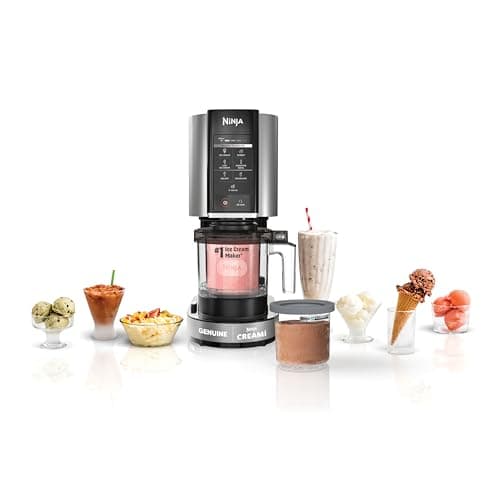
It also cannot process a solid frozen dairy block. This is the common misunderstanding about trying to use a high-powered blender as a Ninja CREAMi substitute: a CREAMi's blade is designed to shave a frozen cylinder from the top down, while a blender's blade needs material to circulate. A frozen pint in a blender jug either does not move or damages the blade. The alternatives that genuinely work are listed in Ninja Creami alternatives.
Frozen dessert programs on high-end blenders
Several premium blenders ship with a frozen-dessert setting, and it is not marketing nonsense — it is a tuned program for exactly the nice-cream and frozen-fruit use case above, usually with a tamper to push frozen chunks into the blades. If you own one, use it: you have a capable frozen dessert machine already.
What the program does not do is change the physics. It still requires the ingredients to arrive frozen, it still produces a fruit-forward dessert rather than a dairy ice cream, and the output is best eaten immediately because it is soft and will set into a hard block in the freezer. A churned base, by contrast, has air in it and stays scoopable.
And the hand mixer question
A hand mixer is not an alternative to either machine, but it is a useful tool in the no-churn method: whip cold heavy cream to soft peaks, fold in sweetened condensed milk, and freeze. You are building the air structure by hand before freezing rather than during it, which is genuinely clever and gives a soft, sweet, perfectly decent dessert with no machine at all. Our version is no-churn ice cream.
The machine that sits between a blender and a churn
If the appeal of the blender is the workflow — frozen thing in, dessert out, two minutes — then the machine to look at is a spin machine rather than a churning one. The Ninja CREAMi NC301 shaves a pint frozen solid in advance into something that genuinely reads as ice cream, in a couple of minutes, with 800 watts behind it. ATK placed it in Recommended with Reservations at $207 in June 2026, and Ice Cream Science ran one for ten weeks and came away positive on convenience.
It handles dairy bases a blender cannot touch, and it is also notably good with the lean, high-protein, low-sugar mixtures that stall a churning machine. The trade is planning: the pint has to be frozen overnight. The full comparison against a conventional machine is CREAMi versus a traditional ice cream maker.
The decision
- You want banana or fruit-based dessert: use the blender you own. Buy nothing.
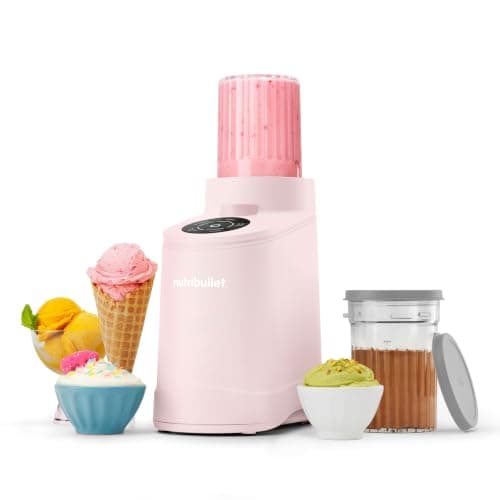
- You want dessert on demand from a stocked freezer: a spin machine — CREAMi NC301, or the nutribullet Chill if counter space is tight.
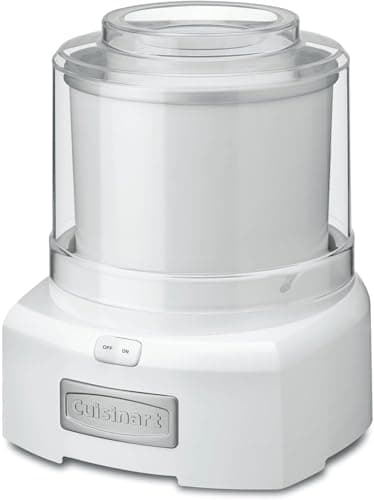
- You want actual custard ice cream: a churning machine. The Cuisinart ICE-21P1 at $70 per ATK in June 2026 is where to start, and Dream Scoops measured it churning in roughly 15 to 20 minutes.
If you are still weighing whether to buy anything at all, is an ice cream maker worth it answers it honestly, and the five types explained covers what each mechanism actually gives you.