Frozen yogurt is cultured milk instead of cream, which means less fat, a tartness you cannot replicate with anything else, and a dessert that freezes noticeably harder. It does not need a special machine — any ice cream maker churns it, and ice cream maker frozen yogurt searches outnumber dedicated frozen yogurt maker searches for exactly that reason. What it needs is an adjusted recipe, because the fat you removed was doing structural work.
What actually changes
The acid. Live cultures ferment lactose into lactic acid, which is where the tang comes from. That tartness is not a flavoring you add; it is a by-product of fermentation, and it is the entire reason anyone prefers froyo to ice cream.
The fat. An ice cream base runs 10 to 16 percent butterfat. A yogurt base is built on milk, so unless you are using a full-fat Greek style it runs well below that. Fat is what coats ice crystals, carries flavor and keeps a mixture smooth when the freeze was slower than ideal, so losing it has consequences at the machine.
The protein. Strained yogurt is high in protein, which thickens a base pleasantly but also makes it stiffer in the bowl. A very thick Greek yogurt base makes a small paddle labor.
Why your frozen yogurt comes out rock hard
Because fat and sugar are the two things that keep a frozen dessert soft, and a yogurt base is short on the first. Sugar depresses the freezing point, so it decides how much of your water is solid at serving temperature. The fix is counter-intuitive: do not cut the sugar as well as the fat. Take out the cream and the sugar both and you get a flavored ice block. The same arithmetic governs sorbet, and it is set out in sorbet versus sherbet versus ice cream.
Is it healthier? An honest answer
Usually lower in fat and higher in protein per serving than ice cream, and the live cultures are a genuine point of difference if the product has not been heat-treated after fermentation.
Two caveats worth stating. Commercial frozen yogurt is often sweeter than ice cream, because sugar is doing the softening work that fat does in ice cream and also masking the acidity. And freezing does reduce culture counts, so a frozen yogurt is not a probiotic delivery mechanism in the way a chilled one is. We are not going to make a nutrition claim beyond that, because the answer depends entirely on which two products you are comparing and in what portion.
The one honest advantage of making it at home is control: you decide the sugar, the fat and what goes in it, which is the same argument as whether an ice cream maker is worth it at all.
What to look for in a machine
Less than you would think, and in a different order from ice cream.
- A motor with some strength. A thick strained-yogurt base is stiffer than a cream base from the start. This is where a 12-watt single-serving machine genuinely struggles.
- A fast freeze. Lower fat means less masking of large ice crystals, the same gradient that makes sorbet demanding. A continuously refrigerating compressor holds its freeze rate; a gel bowl spends its stored cold and slows down.
- A yogurt incubator, if you want to make the yogurt as well. Rare, genuinely useful to a minority, and the deciding feature for them.
- Not a frozen yogurt program. A labelled setting is a timing preset. It does not change the mechanism, and nothing about froyo requires one.
The three picks
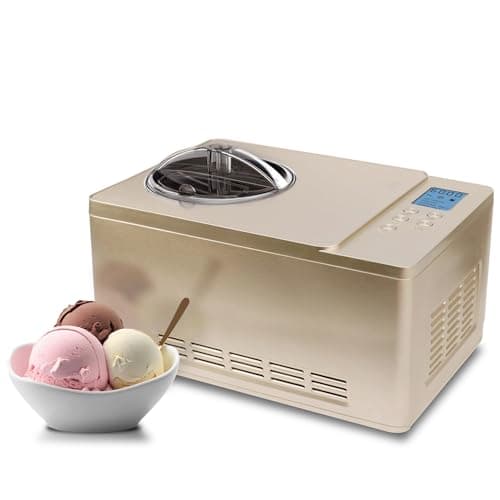
Whynter ICM-220CGY is the only machine we cover that does the whole job. It incubates yogurt at 104 to 110 F per the manufacturer, then churns the result frozen in the same 2.1-quart bowl, with no pre-freeze, 180 watts, a manufacturer rating of 55 dBA — the quietest published figure in the category — and motor protection that stops the paddle when the mix thickens, which is a sensible feature on a stiff base. The honest problems: America's Test Kitchen did not rate this model, so there is no independent verdict on its output; it is 16.75 inches wide, the widest compressor here; it weighs 24.25 pounds; and the incubator is useful to a genuine minority. If you buy your yogurt, you are paying for a wider, less-reviewed version of the ICM-201SB.
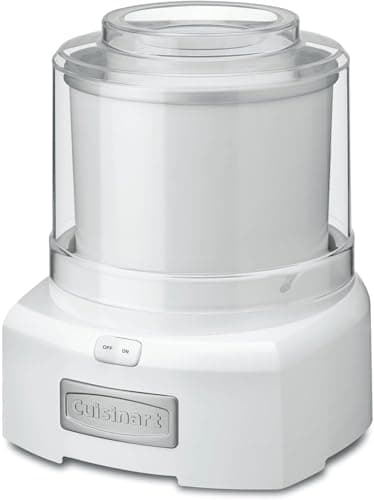
Cuisinart ICE-21P1 is the answer for almost everyone. Buy a tub of yogurt, sweeten and flavor it, churn it. It was ATK's best canister-style pick at $70 in June 2026, Dream Scoops measured its churn at roughly 15 to 20 minutes, and it has exactly one switch. The constraints are the familiar ones: a 16-to-24-hour pre-freeze and one batch per bowl.
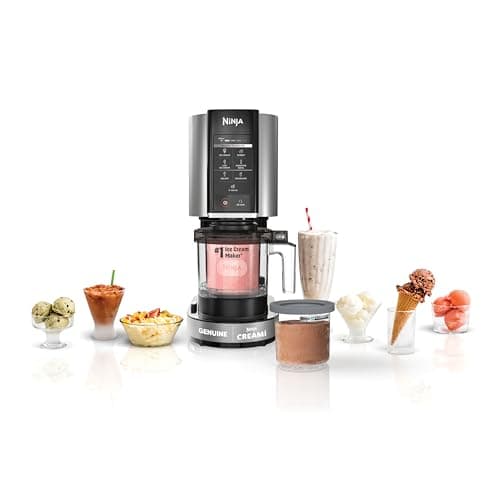
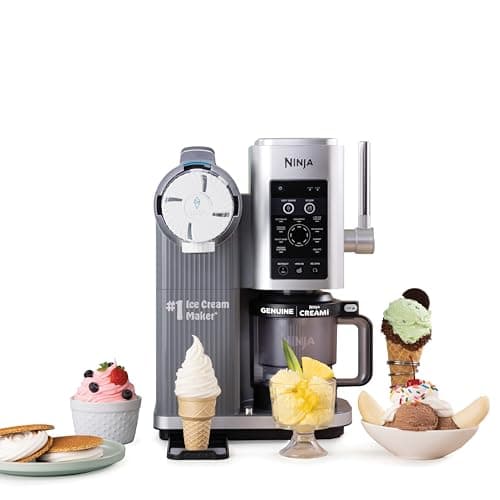
Ninja CREAMi NC301 suits froyo structurally, because shaving a frozen block does not care how stiff the base is — a thick strained yogurt that would labor a paddle goes through it fine, and frozen yogurt is one of its named programs. Limits: 16 ounces per spin, a pint that has to freeze solid overnight, 18.39 inches of height, and ATK's Recommended with Reservations verdict at $207.
Four technique notes that matter more than the machine
Strain the yogurt if it is thin. Excess whey is water, and water is ice. An hour in a sieve lined with muslin changes the texture of the finished dessert considerably.
Do not cut the sugar. Covered above, and it is the single most common mistake.
Chill the base thoroughly first. A base going in at room temperature wastes the machine's cold on cooling rather than freezing, which is a slow freeze and a coarse result — the mechanism behind icy homemade ice cream.
Eat it sooner than ice cream. Lower fat means it coarsens faster in the freezer, so froyo is genuinely a two-day dessert. What helps is in storing homemade ice cream.
The recipe to start from is our frozen yogurt recipe, and if you want the machine ranking for this specifically rather than the comparison, it is in the frozen yogurt roundup.
One thing a home machine will not give you
The frozen yogurt you buy in a self-serve shop is soft-serve: dispensed at a warmer temperature, aerated in a continuous machine, and served immediately. A home ice cream maker makes scoopable frozen yogurt, which is a different and firmer dessert.
You can get closer. Serve it straight from the machine rather than hardening it in the freezer, which is the one trick that works on any machine, or buy a machine with a dispensing mechanism. How far each route gets you is in how to make soft serve at home.