Sorbet contains no dairy at all, sherbet contains a small amount of milk or cream, and ice cream is built on dairy fat at roughly 10 to 16 percent butterfat. That single variable explains every difference between them, including which machine each one needs. Fat does enormous forgiving work in a frozen dessert: it coats ice crystals and masks a slow freeze. Take it out and the machine has nowhere to hide.
So the short version of the buying advice is: if ice cream is what you make, almost any machine works. If sorbet is what you make, freeze speed is the only specification that matters. Sherbet sits between the two, and is the easiest of the three to get right.
The three, defined without the folklore
Sorbet. Fruit puree or juice, water and sugar. No dairy, no egg, nothing fatty at all. Dense, intensely fruity, and the hardest of the three to make smooth.
Sherbet. The same fruit-and-sugar base with a small amount of milk or cream added — enough to soften the texture and lighten the color, not enough to make it taste like ice cream. In the US “sherbet” is a defined dairy category with a low milkfat requirement, which is why it reads as a fruit ice rather than a dairy dessert.
Ice cream. Cream and milk first, flavor second, typically 10 to 16 percent butterfat, with or without egg yolk as a thickener. The most forgiving to churn and the richest to eat.
One more that trips people up: sherbet is not sherbert, and neither is sorbet the same thing as granita, which is deliberately coarse and scraped with a fork rather than churned. If a smooth texture is not the goal, granita is the version you can make with no machine at all — see ice cream without a machine.
In a sorbet, sugar does the job fat does in ice cream
Ice Cream Nation puts a fruit sorbet at about 25 to 35 percent overall sugar, roughly 30 to 31 degrees Brix; Foodal gives a similar 20 to 30 percent window. That is not about sweetness — sugar depresses the freezing point, so it decides how much of your water is frozen solid at serving temperature. Ice Cream Nation is exact about both failure modes: too much sugar and “the level of sugar will prevent the sorbet from freezing properly”; too little and “the sorbet will freeze too hard” and the flavor tastes watered down.
Why fat changes what the machine has to do
Texture in any frozen dessert comes down to ice crystal size, and crystal size is set by how fast the mixture freezes while it is being agitated. Faster freeze, more crystals, smaller each one, smoother result.
Butterfat interferes with that chain in a helpful way. It physically coats crystals, carries flavor, and keeps a mixture smooth even when the freeze was slower than ideal. So in ice cream a mediocre machine produces a perfectly good dessert. In a sorbet, every crystal the machine grows is a crystal you taste directly, which is why the sorbet roundup ranks machines in a different order from the main roundup.
Sherbet's small dose of dairy buys back a useful fraction of that forgiveness, which is the practical reason sherbet is a good first fruit-based batch: it tastes like a sorbet and behaves more like ice cream.
Air: the second variable, and it runs the other way
Air in a frozen dessert is called overrun, and the three want different amounts. Ice cream wants a reasonable amount — it is what makes a scoop light and scoopable. A sorbet wants as little as possible: whipped full of air it goes pale, tastes thin, loses the sharp fruit edge that is the entire point, and collapses into foam as it warms.
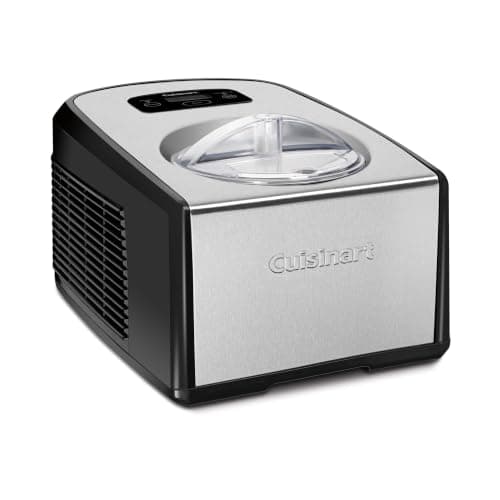
This is where paddle design stops being a detail. The Cuisinart ICE-100 ships with two paddles, one for ice cream and one for gelato, and the gelato paddle is shaped to move the mixture rather than aerate it. Gelato and sorbet want the same thing from a paddle, so that low-air option is the right tool for both — which is the whole reason a machine with no sorbet program leads this page. The arithmetic is in overrun explained, and the fat side of the same argument is in gelato versus ice cream.
What to look for if you make all three
- Freeze speed above everything. Ice Cream Science measured the Lello 4080 at 17 minutes 30 seconds and the freezer-bowl Cuisinart ICE-70P1 at 28 minutes 30 seconds. Eleven minutes is a long time to be growing crystals in a mixture that is mostly water.
- A low-air paddle, or a way to stop early. Overrun rises with churn time, so a timer is a crude version of the same control.
- Honest capacity, under-filled. Less mixture against the same cold freezes faster. Ice Cream Science's optimal fills — 900 milliliters for the 2-quart ICE-70P1, 700 for the 1.5-quart Lello — matter twice as much on a fat-free base.
- Nothing else. Mix-in dispensers, hardness sensing and program counts do not move the needle on any of the three.
The three picks, and what is wrong with each
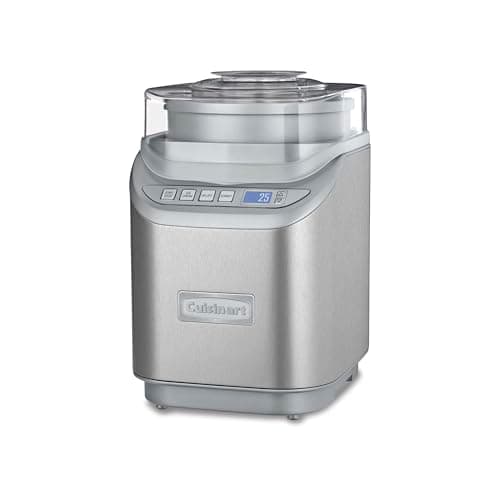
Cuisinart ICE-100 is the one machine here that does all three properly: a continuously refrigerating compressor so the freeze rate holds to the end of the churn, plus the low-air paddle for the fruit ices. America's Test Kitchen recommended it in June 2026 at $343 and Dream Scoops calls it the best value alternative to a several-hundred-dollar Italian machine. The costs are real: 28 pounds, 16.73 inches deep, still only 1.5 quarts.
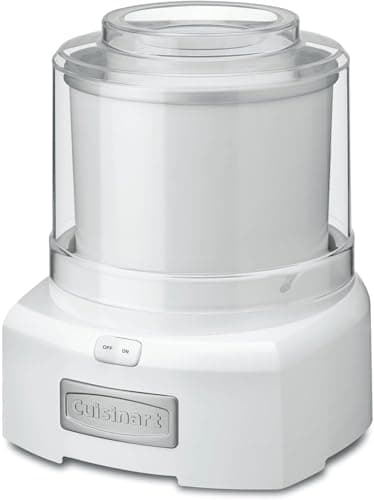
Cuisinart ICE-70P1 is the budget route and the only machine here with a named setting for each of the three textures, plus a countdown timer. Ice Cream Science rates its output the best of any canister machine it reviews. The problem is the one this page is about: at a measured 28 minutes 30 seconds it is the slowest freeze we can cite, and on a sorbet that is its worst enemy. Under-fill it to about 900 milliliters and it is genuinely good.
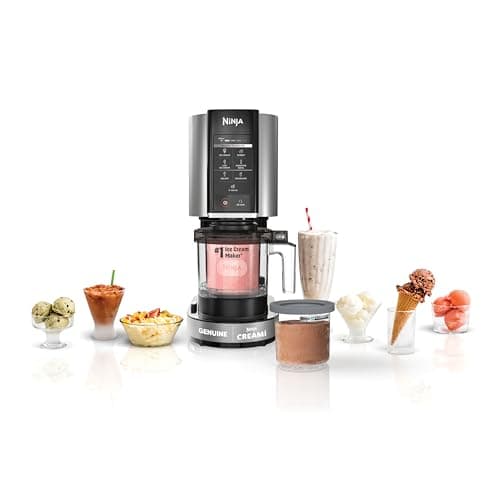
Ninja CREAMi NC301 cheats usefully. It does not churn a liquid; it shaves a block that is already frozen solid, which puts in very little air and lets whole-fruit purees through that would stall a churning paddle. Sorbet is one of its seven named programs. The limits are the family's usual ones: 16 ounces per spin, the pint must freeze solid overnight, 18.39 inches of height, and ATK placed it in Recommended with Reservations at $207 in June 2026.
Start with the base, not the machine
For all three, the recipe does more work than most buyers expect. A sorbet lives or dies on its sugar concentration, as above. A sherbet wants just enough dairy to soften the texture without muddying the fruit. An ice cream base is a choice between a cooked custard and an uncooked Philadelphia style, and that choice changes the result more than any program button.
The three starting points on this site: the sorbet recipe, built to sit inside the 25-to-35 percent sugar window; the no-fail vanilla, which is the batch that goes wrong least; and custard versus Philadelphia base, which explains the fork in the road. If what you actually want is a dairy-free scoop rather than a fruit ice, that is a third category again — coconut and oat fat behaves far more like butterfat than like water, and the dairy-free roundup is the page for it.