No, you do not need to buy stabilizers to make excellent homemade ice cream — but you do need to do the job they do, which is controlling water. Four things already in a normal kitchen handle it: sugar, egg yolk, nonfat dry milk powder and a spoonful of alcohol. A bag of gum blend is an optional refinement, not a requirement, and it will not rescue a batch that froze too slowly.
The reason commercial ice cream is full of them is a logistics problem you do not have. Commercial product contains guar gum, locust bean gum, mono- and diglycerides and similar ingredients because it has to hold its texture through weeks of distribution, warehouse storage, a supermarket freezer and your car. Your ice cream has to survive three days in one freezer. Those are not the same brief.
What a stabilizer actually does
It binds free water so that water cannot migrate and form large ice crystals. That is the whole function, and it explains every symptom it prevents.
- It slows recrystallization. Small ice crystals gradually merge into larger ones, especially through any cycle of slight warming and refreezing, and large crystals are what you feel as grittiness. A stabilizer makes the water less mobile, so the merging happens more slowly. The full mechanism is in why your homemade ice cream is icy.
- It keeps texture consistent in the tub. Freezer-door storage, a warm kitchen, a lid left off — a stabilized product shrugs off what a home batch does not, which is why storing homemade ice cream is mostly a water-management exercise.
- It helps hold air. Commercial ice cream can be up to half air by volume, and holding that much air in place for weeks needs help. A home batch holds much less air anyway, which is covered in overrun explained.
The honest trade
No stabilizers is the reason homemade ice cream tastes better than what you buy and the reason it does not keep as well. It is best in the first two or three days and noticeably worse after a week. That is a trade worth making rather than a problem to engineer away — which is also why we do not tell anyone to buy a gum blend as a first step.
The four kitchen levers, in order of effect
Each of these does part of a stabilizer's job with something you probably already own.
- Sugar. It depresses the freezing point, so less of the water in your base freezes at any given temperature. Less frozen water means fewer and smaller crystals, and a softer scoop. This is the single biggest lever and the one most often under-used in a recipe someone has tried to lighten.
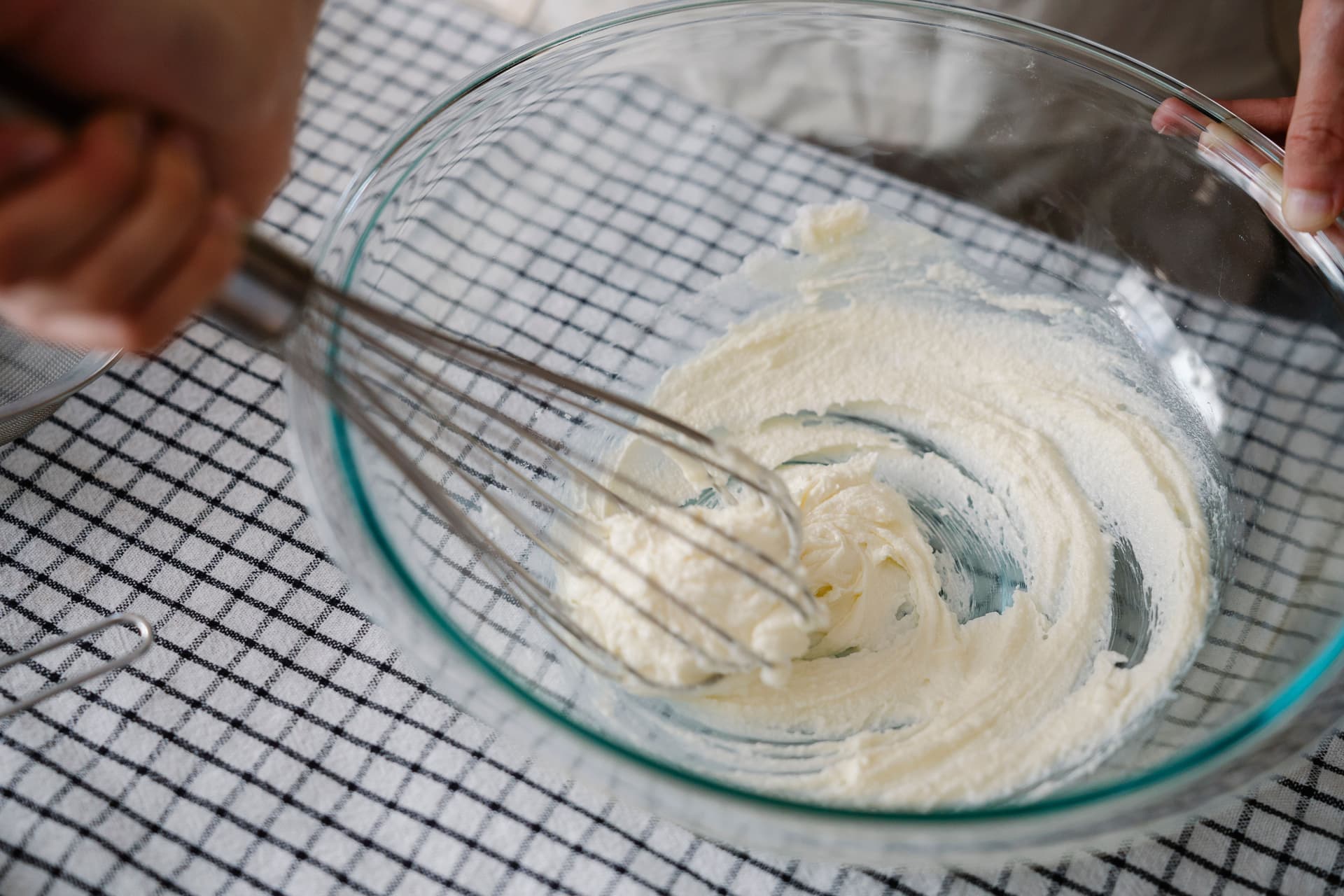
- Egg yolk. Lecithin in the yolk emulsifies, and the proteins bind water. That is the real difference between a custard base and a cream-only one, worked through in custard versus Philadelphia base.
- Nonfat dry milk powder, a tablespoon or two. This adds milk solids — more protein and lactose binding more water — without adding liquid that then has to be frozen. It is what commercial manufacturers do and it noticeably reduces iciness. The shopping list is in ice cream maker ingredients.
- A tablespoon or two of alcohol. Vodka, bourbon or a liqueur in a 1.5-quart batch keeps the result softer, because alcohol depresses the freezing point strongly. Go much beyond that and the mixture will not set in the machine at all.
The lever that beats all four
Crystal size is set mostly by how fast the base freezes, and that is a machine property rather than a recipe one. Freeze quickly and you get many tiny crystals; freeze slowly and a few large ones grow at the expense of the rest. A stabilizer is, in effect, insurance against a slow freeze — so the faster your machine, the less you need.
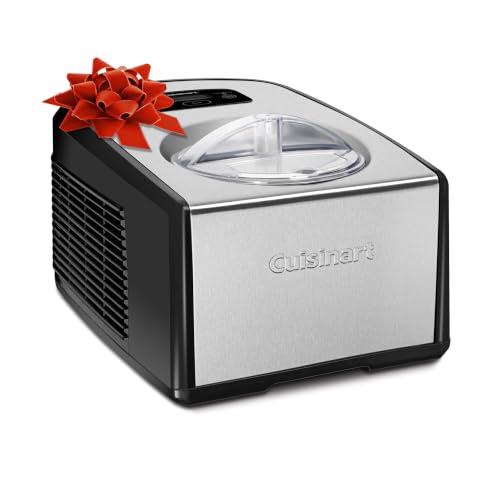
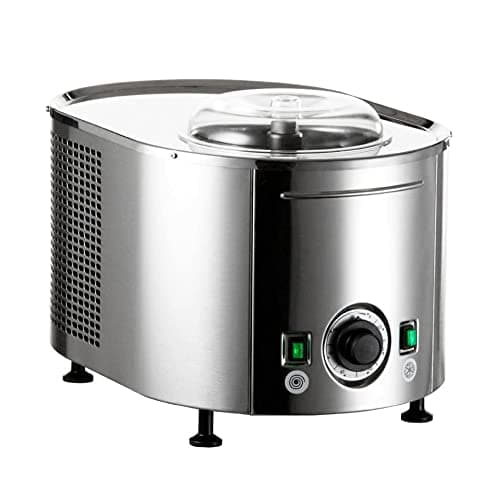
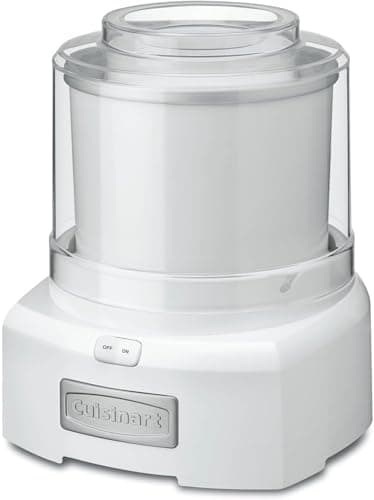
This is why the figures matter. Ice Cream Science measured the Lello 4080 freezing a batch in 17 minutes 30 seconds, the fastest cited anywhere on this site, and reports extremely smooth, dense output. A compressor machine such as the Cuisinart ICE-100 holds its temperature from the first minute to the last, where a canister bowl warms as it goes. If your ice cream is icy on a canister machine, the cheapest fix is not a gum blend — it is chilling the base properly and under-filling the bowl, per how long to chill ice cream base and compressor versus freezer bowl.
When buying a stabilizer blend does make sense
Three cases, and they are all narrow.
- You are making lean or dairy-free bases. Butterfat coats ice crystals and masks a slow freeze. Take the fat out — a sorbet, a low-fat gelato, an oat or almond base — and there is nothing buffering the water, which is why dairy-free machines and sorbet are the hardest cases.
- You genuinely store batches for a week or more. If a tub routinely has to last, a stabilizer is doing exactly what it is for.
- You are chasing a specific commercial texture. That chewy, slow-melting quality in some shop ice creams is gums, not technique, and no amount of yolk will reproduce it.
Outside those, a well-sugared custard base churned properly in a cold machine will beat a stabilized one on flavor every time, because gums add body and nothing else.
What a stabilizer will not fix
It will not fix a base that went into the machine warm. It will not fix an overfilled bowl, because too much mixture against a fixed amount of stored cold freezes slowly by definition. It will not fix a bowl that was not frozen long enough — see how long to freeze an ice cream maker bowl. And it will not fix grainy or crumbly results, which usually have a different cause entirely, diagnosed in grainy or crumbly ice cream.
If your ice cream comes out rock hard rather than icy, a stabilizer is also the wrong tool: that is an air and sugar problem, and the fixes are in why homemade ice cream is rock hard. Start with the base and the machine, in that order, and treat gums as the last five percent.