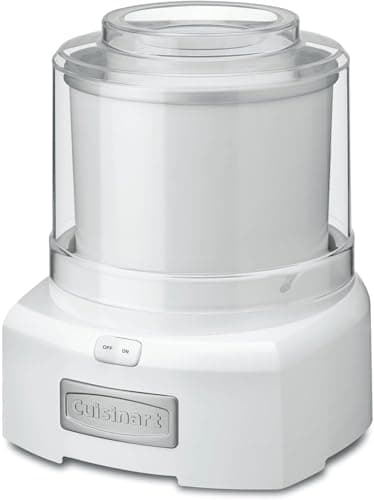
Freeze a Cuisinart canister bowl for 16 to 24 hours and a KitchenAid attachment bowl for at least 24 hours, both at the back of the freezer and both completely dry before they go in. Overnight is usually not quite enough: twelve hours produces a bowl that churns badly and then gives up halfway. If you cannot hear liquid moving when you shake it, it is ready.
The time is only part of the answer, though, and it is the part people already know. Three other things decide whether a bowl is actually cold enough.
Why it takes that long
A canister bowl is a double wall with a sealed gel coolant between the layers, and it is not storing cold air — it is storing a phase change. The gel has to go from liquid to solid all the way through, and the energy that takes is far more than simply chilling something to the same temperature. A freezer removes that energy slowly through the bowl's own insulation, which is why a bowl designed to keep cold in is also slow to take cold on.
That stored phase change is the entire cold budget for your batch. Once it is spent, the churn is over, which is also why a freezer-bowl machine cannot make a second batch the same day. The contrast with a machine that makes cold continuously is drawn out in compressor versus freezer bowl.
The shake test
Lift the bowl and shake it next to your ear. If you hear liquid sloshing, the gel has not fully frozen and it needs longer, whatever the clock says. A fully frozen bowl is silent and noticeably heavier-feeling in the hand. This takes three seconds and is more reliable than any amount of counting hours.
The three things that matter more than the hours
- The bowl must be bone dry. Any water left on the inside wall freezes into a frost layer, and frost is an insulator sitting between the stored cold and your base. Dry it properly with a towel, not by air-drying for ten minutes.
- Put it at the back, not in the door. A freezer door swings into a warm kitchen several times a day and is the warmest, most temperature-unstable part of the appliance. The back of the bottom shelf is the coldest and steadiest.
- Your freezer may not be cold enough. Domestic freezers should sit at 0 F. A freezer packed to the walls circulates air poorly, and a freezer at 10 F will take far longer than 24 hours to set the gel solid. If batches keep failing, check the temperature with a thermometer before blaming the machine.
What each manufacturer actually specifies
Cuisinart canister machines (ICE-21, ICE-30, ICE-70) specify 16 to 24 hours. The KitchenAid KICA0WH attachment specifies at least 24 hours, which is the longest on this site and worth noting if you assumed an overnight would do — details in our KitchenAid attachment review. Spin machines such as the Ninja CREAMi do not have a bowl at all, but need the pint of base itself frozen solid overnight, which is the same planning in a different place.
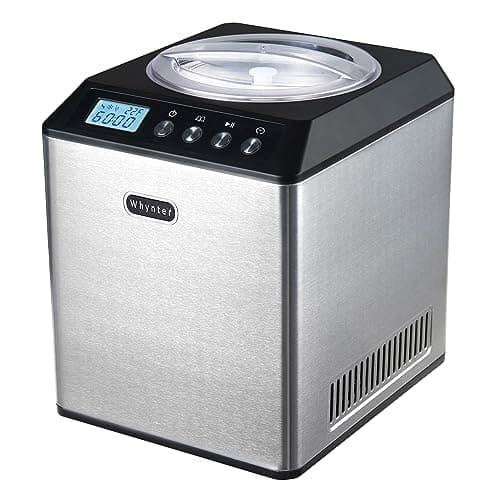
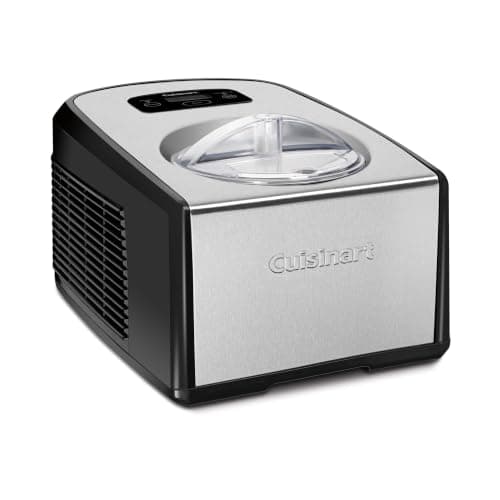
Compressor machines need none of this. The Whynter ICM-201SB and Cuisinart ICE-100 refrigerate their own bowls on demand, which is exactly what their price premium buys, and why they also run batches back to back. Ice-and-salt bucket machines need no freezer involvement either; they make their cold from ice and rock salt at the point of use.
Keeping the bowl ready, and what that costs
The practical answer most owners land on is to simply leave the bowl in the freezer permanently. Then ice cream becomes a same-day decision rather than a tomorrow decision, which is the single biggest change you can make to how often you actually use the machine.
The cost is freezer space, and it is real: a 1.5-quart canister takes a meaningful slice of a domestic freezer shelf, and a 2-quart one more. Decide that before buying the bigger machine. And if you want two flavors in one evening, the answer is a second bowl, which is the cheapest useful accessory in the whole category — far cheaper than the compressor machine that solves the same problem.
Can you freeze it for too long?
No. A bowl can live in the freezer indefinitely with no harm to the coolant; it simply cannot get any colder than your freezer. Two cautions that are not about time: never put a gel bowl in a dishwasher or in hot water, which risks the sealed coolant wall, and let it come up slightly before washing rather than running warm water onto a bowl straight from -0 F. The full routine is in how to clean an ice cream maker.
If the bowl was frozen and the batch still failed
Then the bowl was probably not the problem. The usual culprit is a base that went in warm, because a machine removes a fixed amount of heat and a warm base spends the budget before thickening starts — see how long to chill an ice cream base. The second is over-filling, since more mixture against the same stored cold freezes more slowly. Work through ice cream maker not freezing, and if you want the whole first-batch sequence in order, how to use an ice cream maker has it.