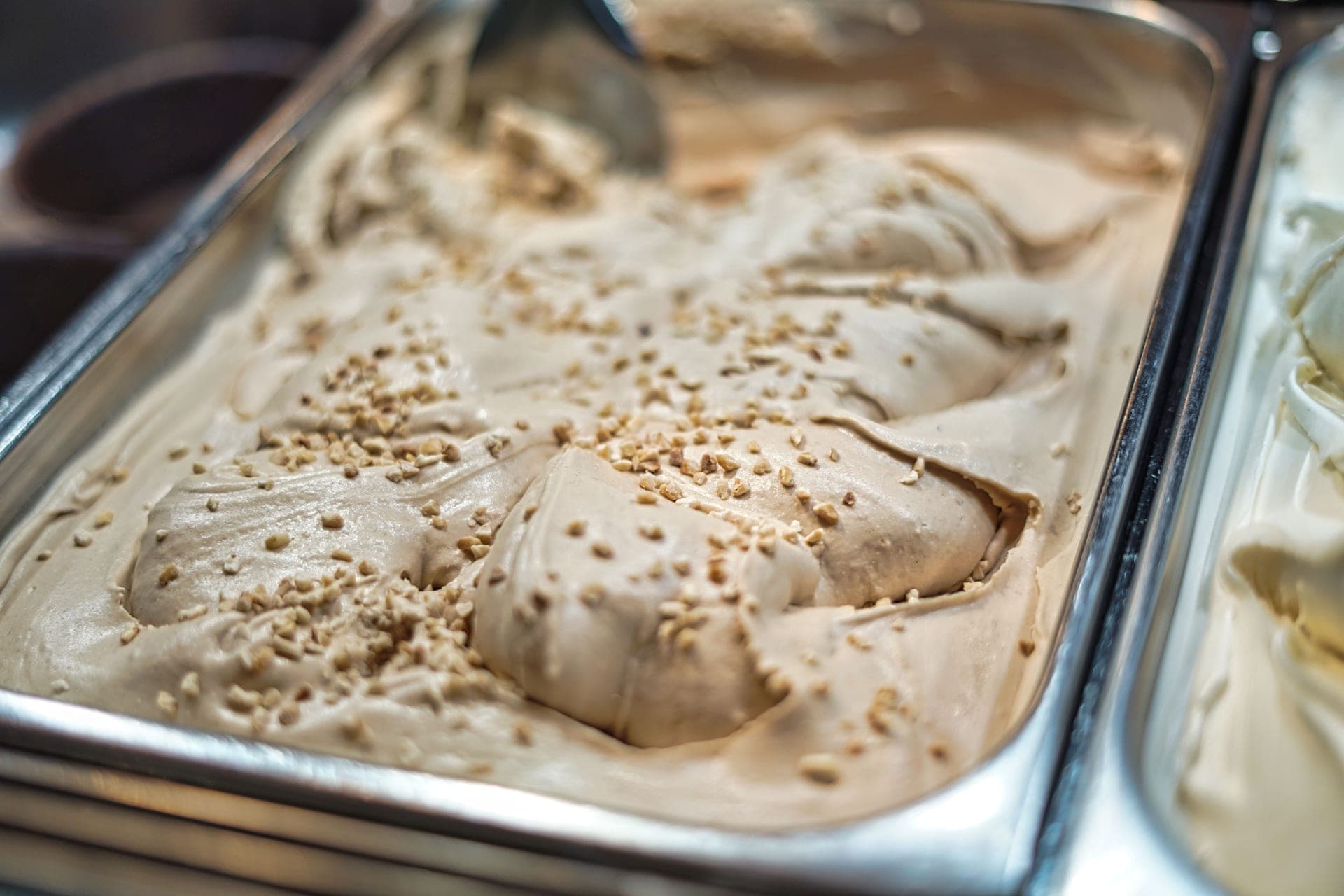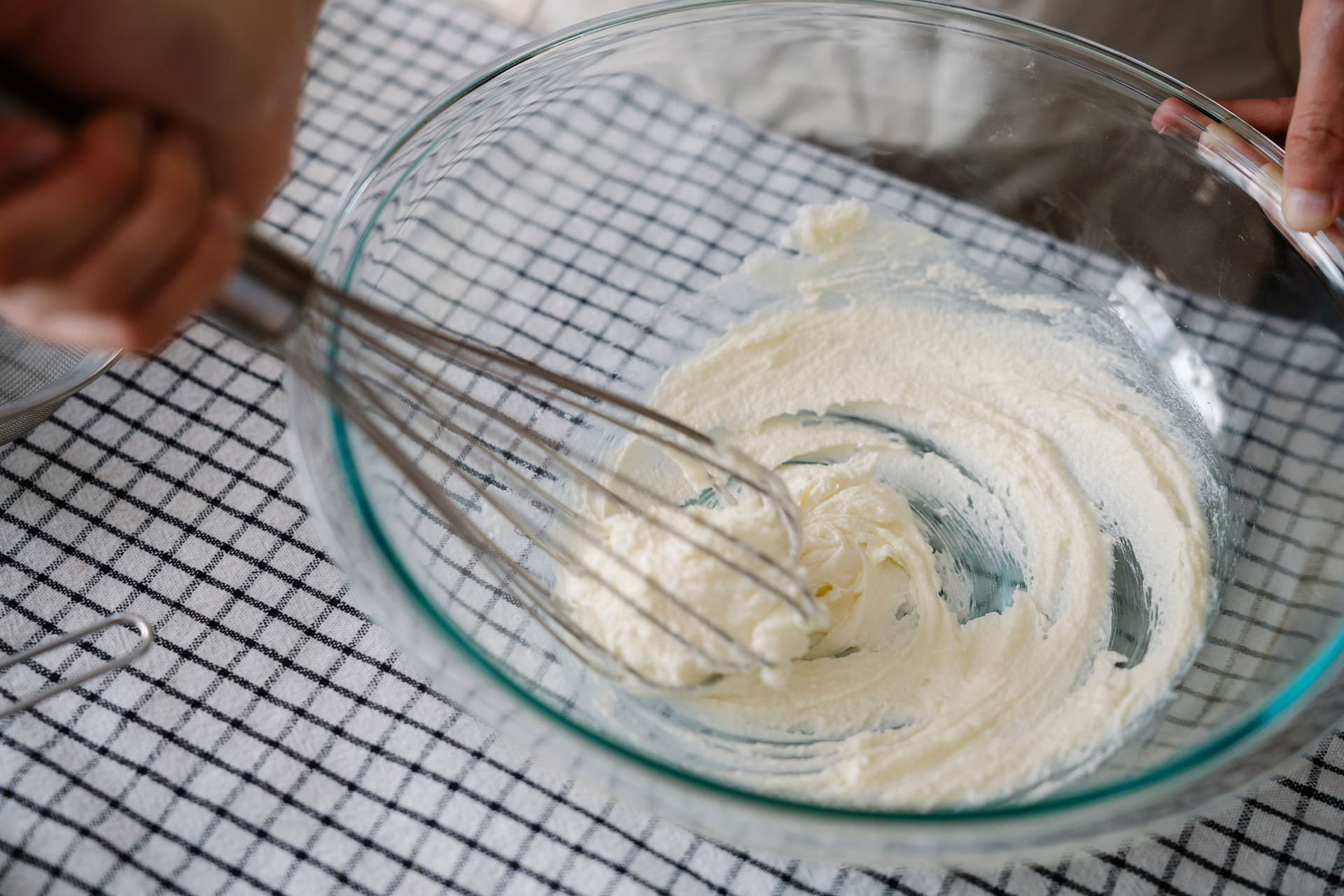
The machine is not your main problem. If you take one thing from this page: dairy-free ice cream succeeds or fails on the fat in the base, and a $70 Cuisinart ICE-21P1 with a well-built coconut base will beat a $600 machine with a carton of almond milk every time. Buy the cheap machine and spend the attention on the recipe.
Why dairy-free is harder, literally
Dairy ice cream works because butterfat does two jobs at once: it physically interrupts ice crystals as they form, and the milk proteins and emulsifiers hold water in place so less of it is free to freeze into crystals you can feel.
Most plant milks have almost none of that. Commercial almond milk is largely water, oat milk is water plus dissolved starch, and rice milk is thinner still. Churn them and you get something closer to a granita: crystalline, hard, and grainy the next day.
The fix that matters most
Use full-fat canned coconut milk or coconut cream as the base, not a carton of plant milk. Coconut fat is solid at fridge temperature and behaves much like butterfat: it interrupts crystals and carries flavor. This single substitution is a bigger improvement than any machine upgrade on this page. Cashew cream, blended smooth, is the other genuinely good route.
Where the machine does help: speed
Freeze speed is the one lever the machine controls that matters here. The faster a base passes through the temperature range where crystals grow, the smaller they end up. That is why a compressor machine — which is pulling heat out continuously rather than spending a fixed cold budget — has a real advantage on a marginal dairy-free base, and why the Whynter ICM-201SB is on this list despite nothing about it being dairy-specific.
It is also why the fast canister machines do well. Dream Scoops measured the Cuisinart ICE-21 at 15 to 20 minutes, which is quick, and quick is what you want. A slow machine gives crystals more time to grow, which a dairy-free base can least afford.
Why the Creami is unusually suited to this
A thin oat or almond base is exactly what a churning machine handles worst and a spin machine does not mind at all. Freeze it solid — it will freeze into a hard, crystalline block, which would be a disaster in any other context — and then the blade shaves those crystals down mechanically. The texture is created after freezing rather than during it, which sidesteps the whole problem.
The tradeoffs are the family's usual ones: 16 ounces per pint, one pint per spin, and the pint frozen overnight first. America's Test Kitchen rated the NC301 as Recommended with Reservations at $207 in June 2026 on exactly those grounds.
Building a dairy-free base that works
- Fat: full-fat canned coconut milk, coconut cream, or blended raw cashews. Aim for something that is genuinely creamy at fridge temperature, not merely opaque.
- Sugar: do not cut it. Sugar lowers the freezing point, which is what keeps the result scoopable. Dairy-free bases need this more than dairy ones, not less. A spoonful of golden syrup or glucose alongside the sugar helps further.
- Add a little starch or gum. A teaspoon of cornstarch cooked into the base, or a small pinch of xanthan or guar gum, replaces some of what milk proteins were doing. This is the closest thing to a cheat code in dairy-free ice cream.
- A tablespoon of neutral alcohol (vodka) lowers the freezing point further and keeps a coconut base from setting bone hard. Use it sparingly; too much and it will not freeze at all.
- Eat it sooner. Day one is much better than day four. See storing homemade ice cream.
The easier dairy-free win
If the goal is simply a frozen dessert without dairy, sorbet is a much easier target than imitation ice cream: fruit, sugar, water, and no fat to miss. It freezes well, it tastes like what it is rather than a substitute, and every machine on this page makes it happily. The recipe is at sorbet in an ice cream maker.
The Cuisinart ICE-100's second paddle, nominally for gelato, also suits low-fat fruit bases well — less air churned in means a denser, more intensely flavored sorbet.
Who should skip these
If dairy-free is an occasional requirement for one guest rather than how you eat, do not buy a machine for it. Any machine you would otherwise buy will make a coconut-based batch when you need one. And if a hard, icy first attempt has already put you off, the diagnosis is in why homemade ice cream is rock hard — it is almost certainly sugar and fat, not the machine.