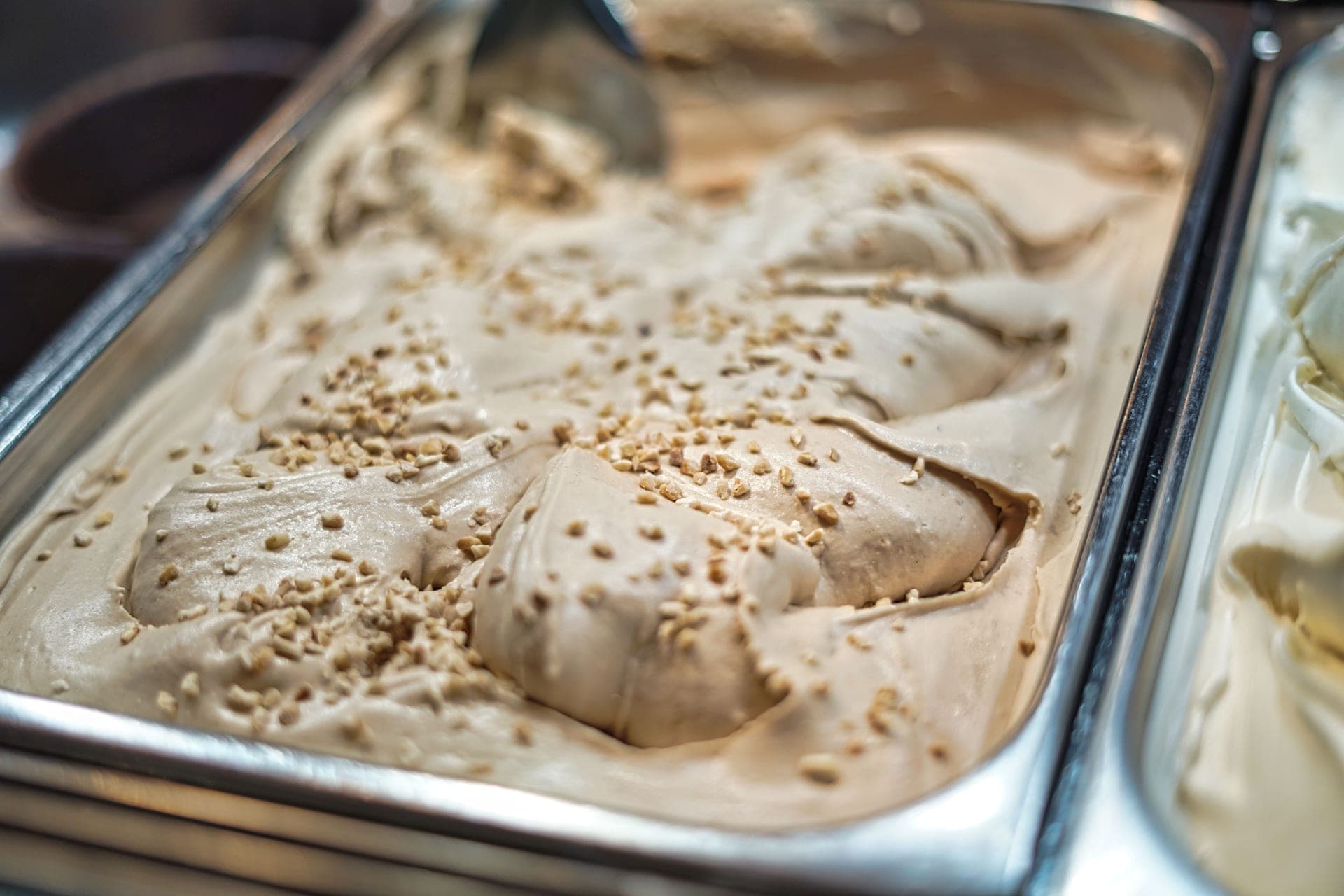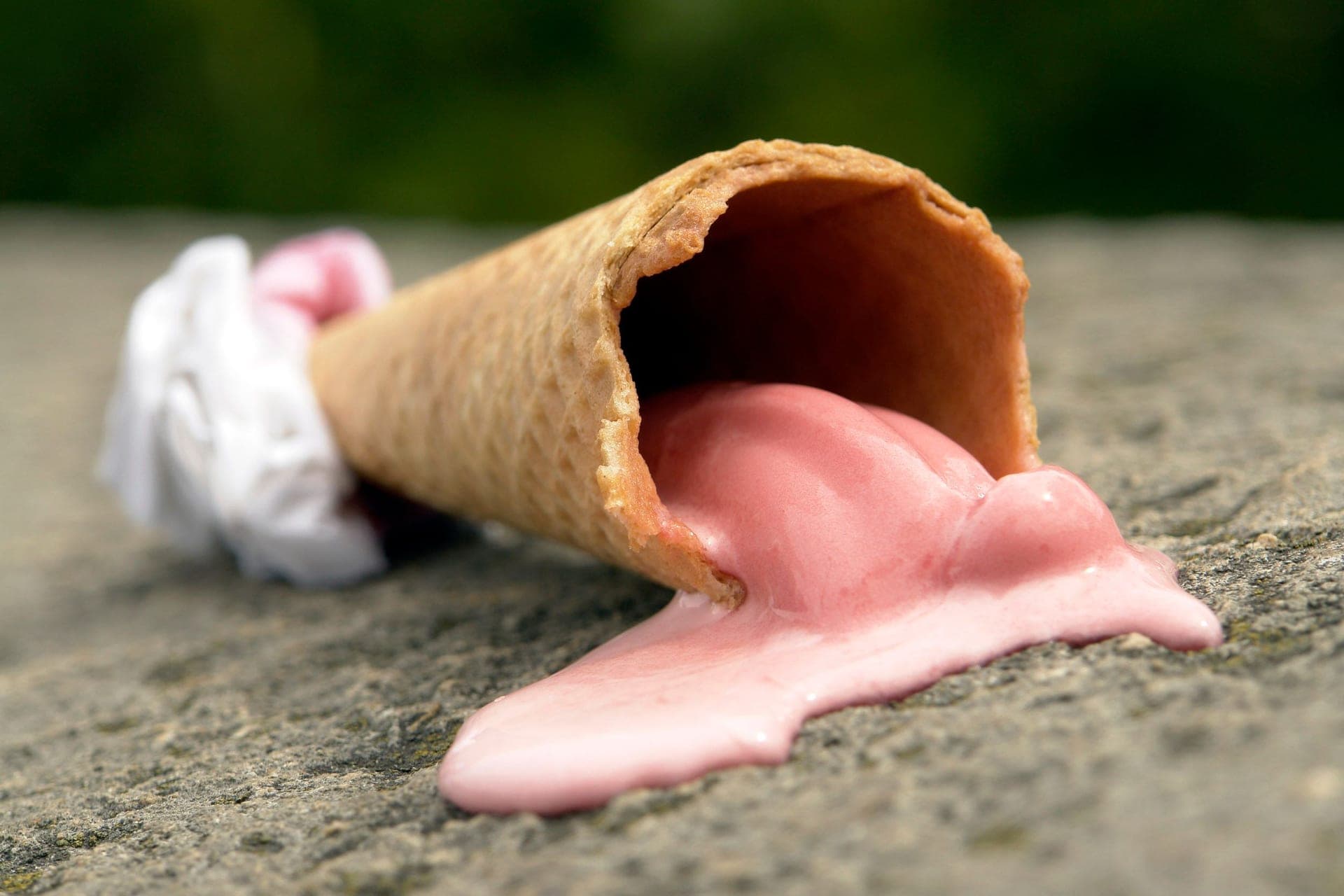
Icy ice cream means the ice crystals in it are large enough for your tongue to detect individually. Making them smaller is the entire craft, and there are six things that make them large. They are listed here in the order they are usually to blame.
This page recommends no products, deliberately. None of these is fixed by a different machine, and selling you one to solve a recipe problem would be bad faith.
1. The base went in warm
By a wide margin the most common cause, and the most avoidable.
A freezer bowl holds a fixed amount of cold. If it spends the first fifteen minutes cooling your base from room temperature, the mixture spends far longer in the crystal-growth temperature range, and the crystals get large before the machine can do anything about it.
Fix: chill the base at least four hours, ideally overnight. Same recipe, same machine, dramatically different result.
2. Not enough fat
Butterfat physically gets in the way of crystals forming and growing. Take it out and there is nothing interrupting them.
This is why low-fat, dairy-free and frozen yogurt recipes are all harder: less fat, more water. Carton plant milks are the extreme case, being mostly water with almost nothing to contribute.
Fix: more cream, or full-fat dairy where you were using low-fat. For dairy-free, use full-fat canned coconut milk or blended cashew cream rather than a carton plant milk — see the dairy-free guide.
3. Not enough sugar
Sugar lowers the freezing point, which keeps some water liquid at freezer temperature. Less dissolved sugar means more water free to freeze, and more water freezing means bigger crystals.
Cutting the sugar to make ice cream “healthier” is the single most common self-inflicted cause of iciness, and the effect is larger than people expect.
Fix: keep the sugar the recipe specifies. If you must reduce it, add a tablespoon of corn syrup or glucose per quart: invert sugars depress the freezing point effectively without adding much perceived sweetness.
The pattern behind the first three
Fat, sugar and freeze speed are three ways of solving the same problem. You want as little free water as possible, and you want what water there is to freeze as fast as possible. Everything below is another version of that.
4. Too much water in the add-ins
Fruit is roughly 90 percent water. A pound of strawberries added to a base is a large quantity of water that will freeze into shards.
Fix: macerate the fruit in sugar for 30 minutes, strain it, and simmer the resulting syrup to reduce it before adding it back. That concentrates the flavor and removes the water. The method is in the strawberry ice cream recipe.
The same applies to alcohol-free flavoring liquids, fruit juices and unstrained yogurt. If it is mostly water, it will freeze like water.
5. The freeze was too slow
Speed is the one variable the machine controls. The faster the mixture passes through the crystal-growth range, the smaller the crystals end up.
Slow freezing usually comes back to causes 1 and 2 rather than to the machine itself, but three other things cause it: overfilling the bowl, a bowl that was not frozen through, and a warm kitchen.
Fix: fill to two thirds, not more. Freeze the bowl 16 to 24 hours at the back of the freezer, and shake it before use — if you hear liquid inside the double wall, the gel has not set. See ice cream maker not freezing.
6. It has been in the freezer too long
If it was smooth on day one and icy on day six, nothing went wrong with the batch. That is recrystallization: small crystals merging into larger ones over time, accelerated every time the container warms slightly and refreezes.
Commercial ice cream resists this because of stabilizers you do not have.
Fix: press parchment directly onto the surface before the lid goes on, store it at the back of the freezer rather than the door, use a shallow container, and do not leave the tub out while you eat. Full detail in storing homemade ice cream.
The one real upgrade: a custard base
If you have fixed all six and still want better, change the base rather than the machine. Egg yolks bind water so less of it is free to crystallize, and they emulsify the fat — which is why a French-style custard base resists iciness far better than an eggless one, both fresh and after several days.
Custard versus Philadelphia has the method.
The checklist
- Base chilled at least 4 hours?
- Full-fat dairy, not reduced?
- Sugar as the recipe wrote it?
- Fruit macerated and reduced, not added raw?
- Bowl frozen 16 to 24 hours and filled only two thirds?
- Eaten within three days, stored with parchment on the surface?
Six yeses and it will not be icy. If it is instead rock hard rather than icy, that is a different problem — see why homemade ice cream is rock hard.