Every ice cream recipe you will ever read is adjusting four variables. Once you know what they are, you stop following recipes blindly and start understanding why a batch worked or did not.
The four variables
1. Fat
Butterfat physically interrupts ice crystals as they form. More fat means smaller crystals, which is what your tongue reads as smooth. Ice cream is typically 10 to 18 percent butterfat, and it is the ingredient people cut first and regret.
This is why dairy-free and low-fat versions are harder: there is less interrupting the water. See the dairy-free guide for how to compensate.
2. Sugar
Sugar sweetens, and it also lowers the freezing point. That second job is the one nobody realizes. Dissolved sugar keeps some of the water liquid at freezer temperature, which is why ice cream is scoopable while a block of frozen milk is not.
Cut the sugar substantially and you get a brick. That is not a flavor problem, it is physics, and it is the subject of why homemade ice cream is rock hard.
3. Air
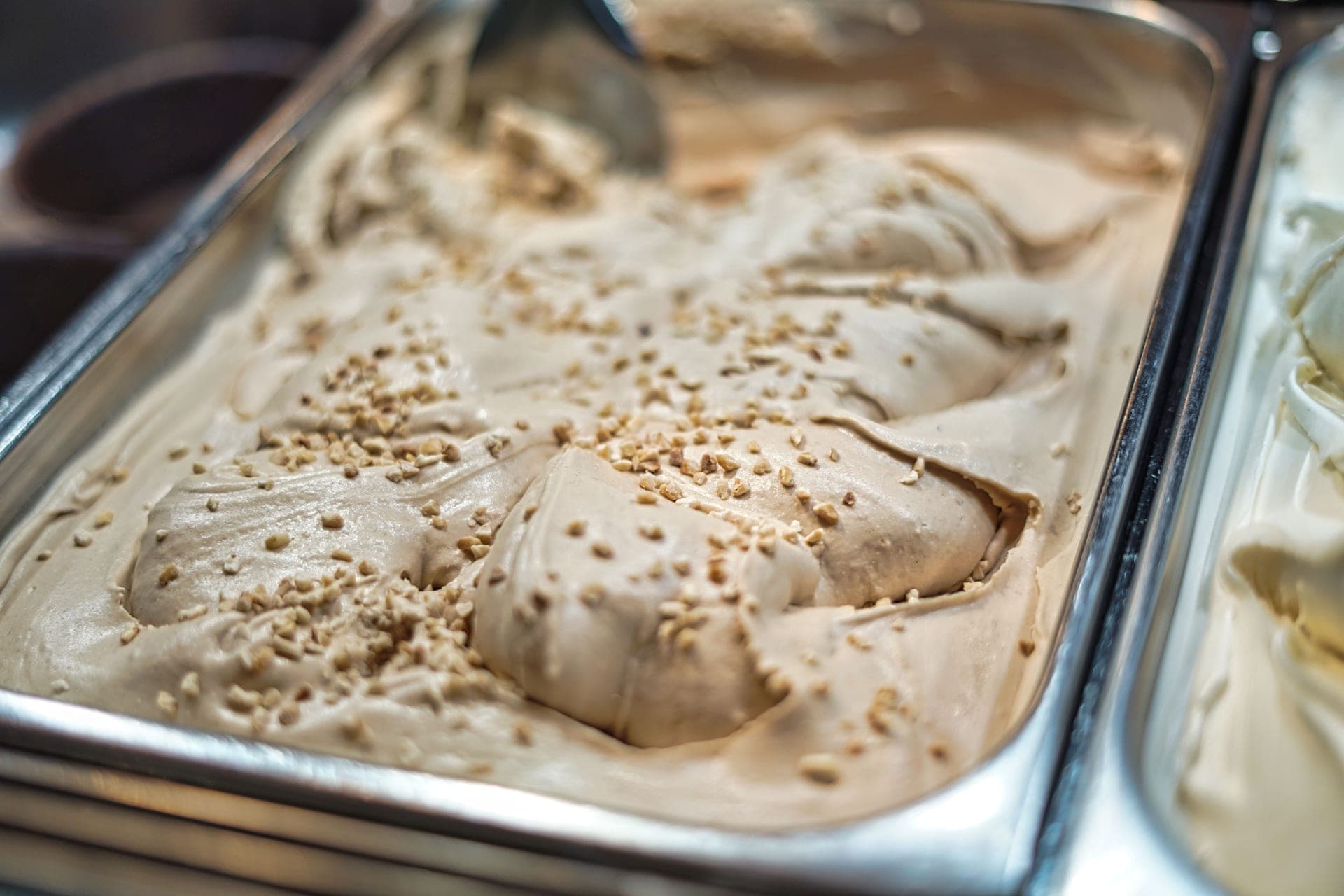
The air churned into ice cream is called overrun, and it does more than lighten the texture: it is why ice cream is soft enough to scoop. Commercial ice cream can be up to half air by volume. Yours will have considerably less, which is why homemade is denser and also harder out of the freezer.
This is the variable most worth understanding properly — overrun explained.
4. Freeze speed
The faster a mixture passes through the temperature range where crystals grow, the smaller they end up. This is the one variable the machine controls, and it is why a machine beats stirring a tub by hand.
It is also why Ice Cream Science's fastest machine — the Lello 4080 at a measured 17 minutes 30 seconds — is the one they describe as extremely smooth and dense.
Everything else follows from these four
Egg yolks? They bind water so less of it is free to crystallize, and they emulsify the fat. Cream cheese in a Creami recipe? Fat plus a stabilizing protein. Corn syrup in a sorbet? Freezing-point depression. A tablespoon of vodka? The same. Straining yogurt? Removing water. Once you see the four variables, every trick in every recipe is one of them.
The process, start to finish
Step 1: Build a base
Two families. Philadelphia style is cream, milk, sugar and flavor, stirred cold — no cooking, nothing to curdle. Custard style cooks egg yolks into the dairy, giving a smoother, richer, longer-keeping result. The full comparison is in custard versus Philadelphia.
For a first batch, Philadelphia. Fewer ways to fail.
Step 2: Dissolve the sugar properly
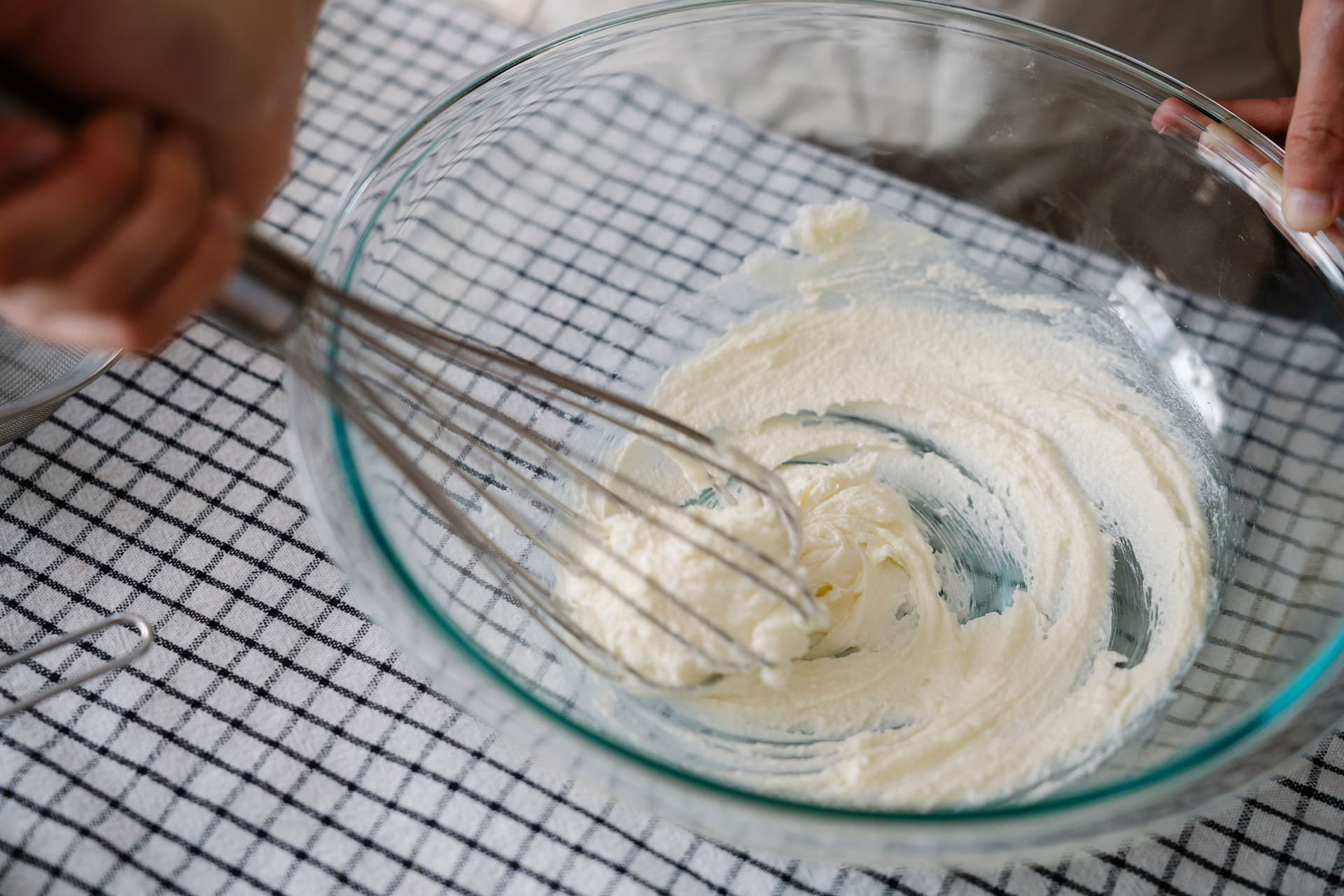
Whisk the sugar into the milk, not into the cream, and keep going until you cannot feel grains on the bottom of the bowl. Undissolved sugar is a common cause of a gritty batch and a sweet layer at the bottom of the container.
Step 3: Chill the base thoroughly
Four hours minimum, overnight is better. This single step causes more failed batches than everything else combined. A freezer bowl holds a fixed amount of cold; spend it cooling a room-temperature liquid and there is nothing left to freeze with.
Step 4: Churn, and stop at the right moment
Fill to no more than two thirds, because the mixture expands. Stop when it looks like thick soft serve and the paddle leaves a ridge that holds for a second before slumping. On a canister machine that is usually around twenty minutes — Dream Scoops measured 15 to 20 on the Cuisinart ICE-21.
Churning past that point does not firm it up. It warms the mixture by friction and beats in extra air, giving a foamier and less flavorful result. See how long to churn.
Step 5: Harden, or do not
Eat it immediately for soft serve, which is genuinely excellent and what most people miss out on. For scoopable ice cream, transfer it to a container, press parchment directly onto the surface to exclude air, and freeze for two to four hours.
Doing it without a machine
Three routes, all real.
No-churn: whipped cream folded into sweetened condensed milk, frozen. Adds the air first and lets the freezer do the freezing. Genuinely good — the recipe is here.
Ice in a bag: shake a sealed bag of base inside a bag of ice and salt for ten minutes. Works, costs nothing, and is the best thing to do with children.
Freeze and stir: put the base in a shallow tray and stir vigorously every 30 minutes for three hours. Tedious, and icier than a machine, but it does work. All three are compared in ice cream without a machine.
The four common failures and their real causes
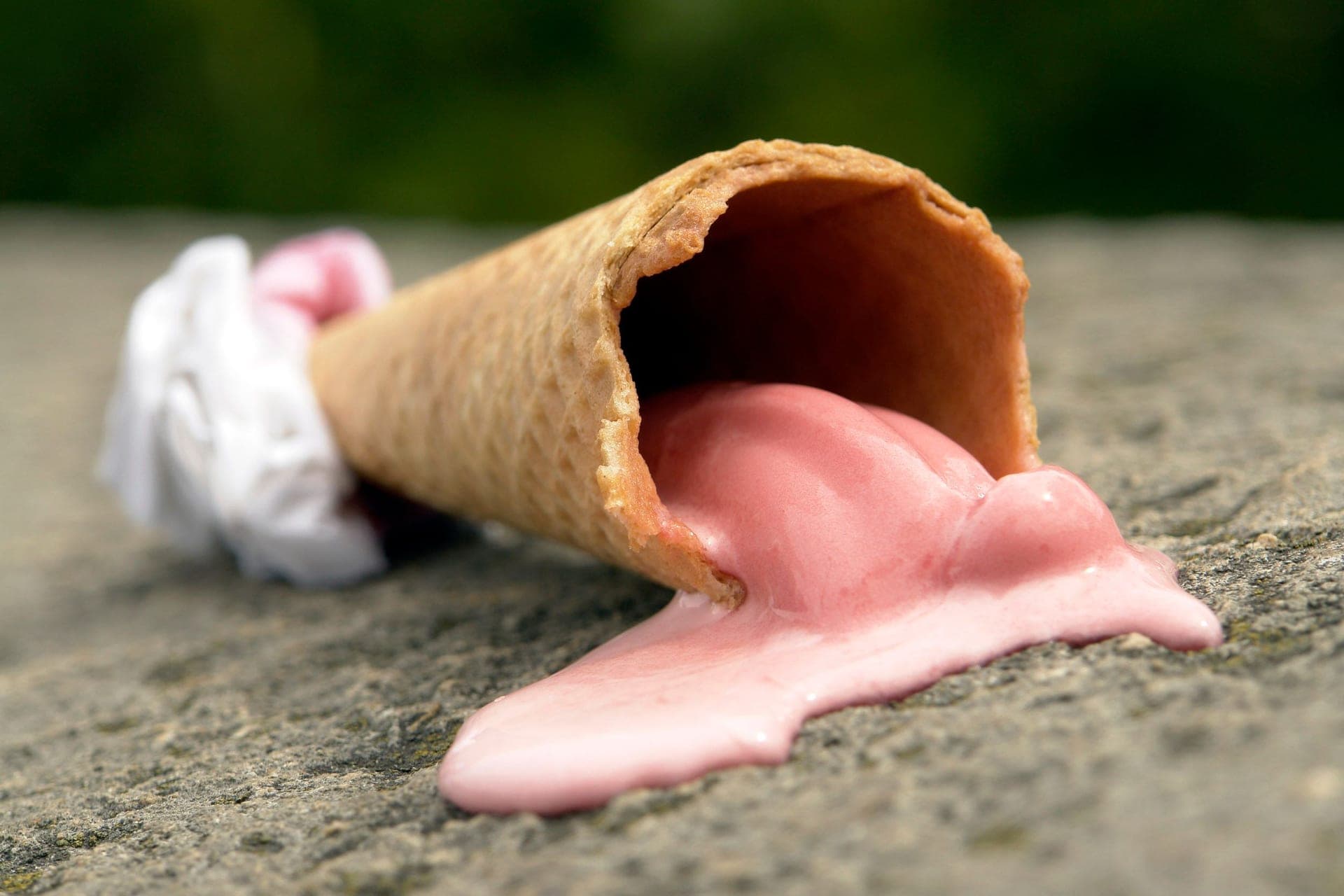
- Still liquid after 40 minutes: warm base, or a bowl that was not frozen through. See not freezing.
- Icy and crunchy: too little fat, too little sugar, or too slow a freeze. See why it is icy.
- Rock hard from the freezer: too little sugar, or too little air churned in. See why it is rock hard.
- Grainy or greasy: undissolved sugar, or over-churned to the point where the fat began to separate. See grainy or crumbly.
Notice that none of those is fixed by buying a better machine. Which is the most useful thing on this page.
Your first batch
Make the no-fail vanilla. Four ingredients, no stove, works in any machine. Once you know what your machine does with a known-good base, everything after that is diagnosable rather than mysterious.
If you have not bought a machine yet, start at how to choose an ice cream maker.