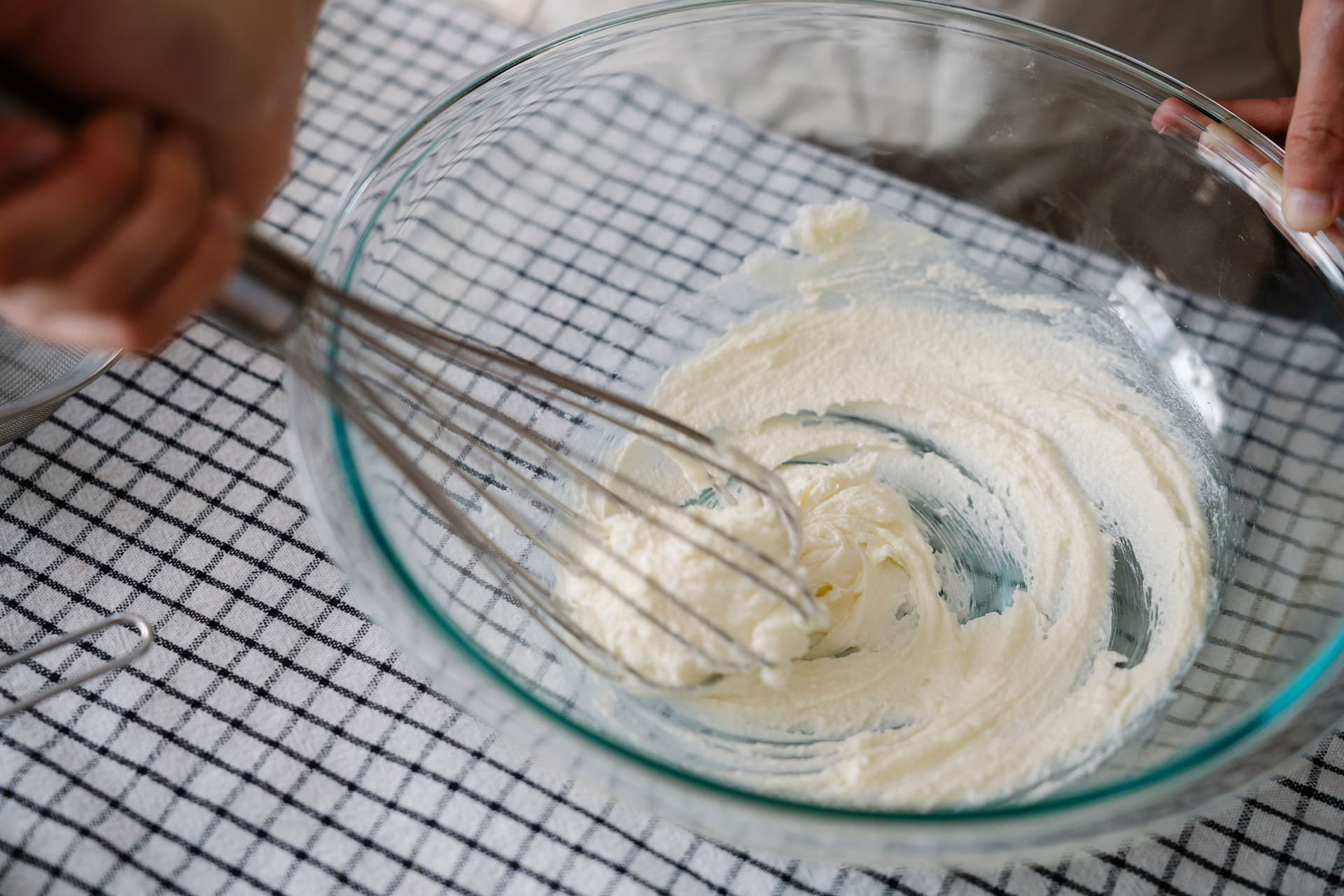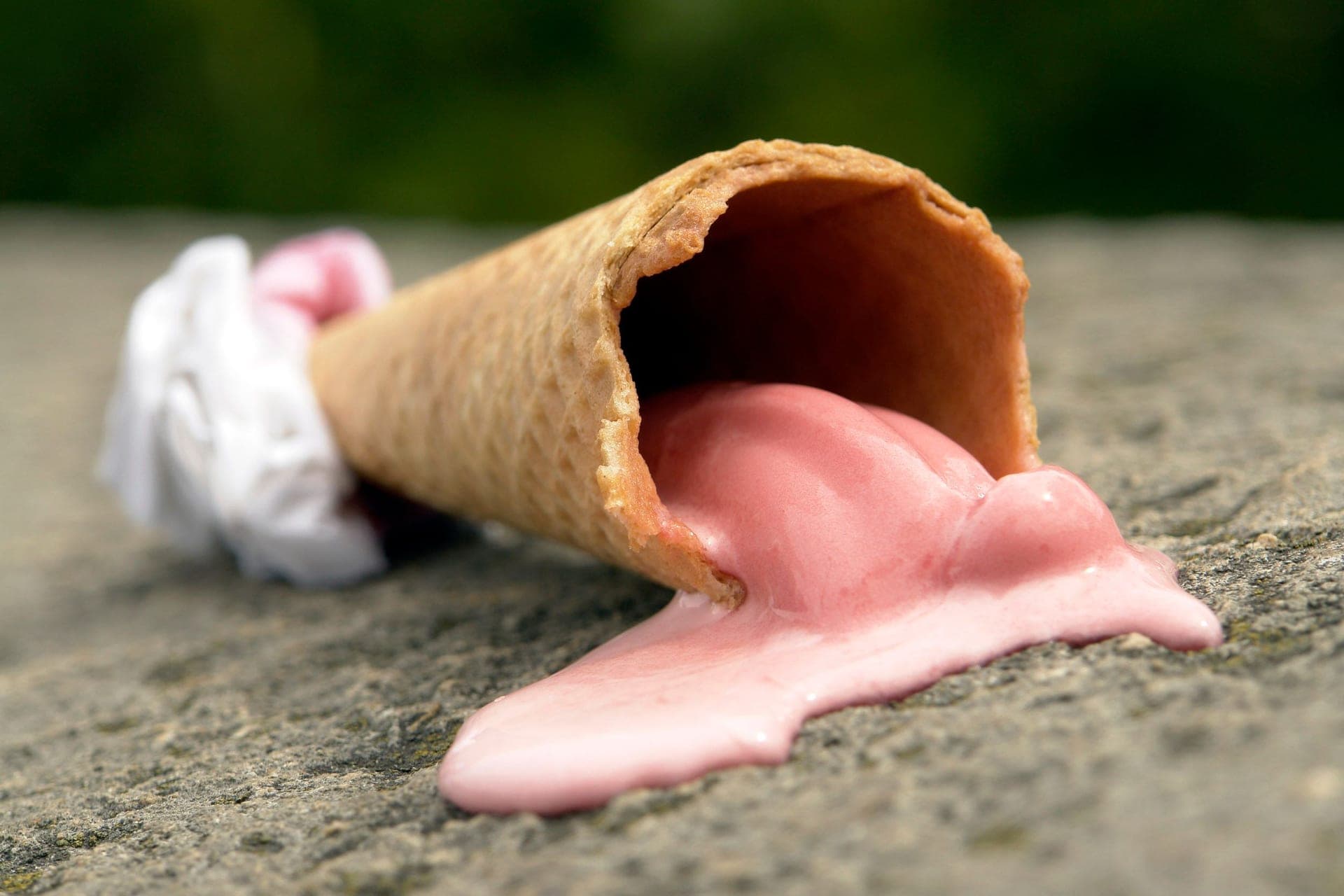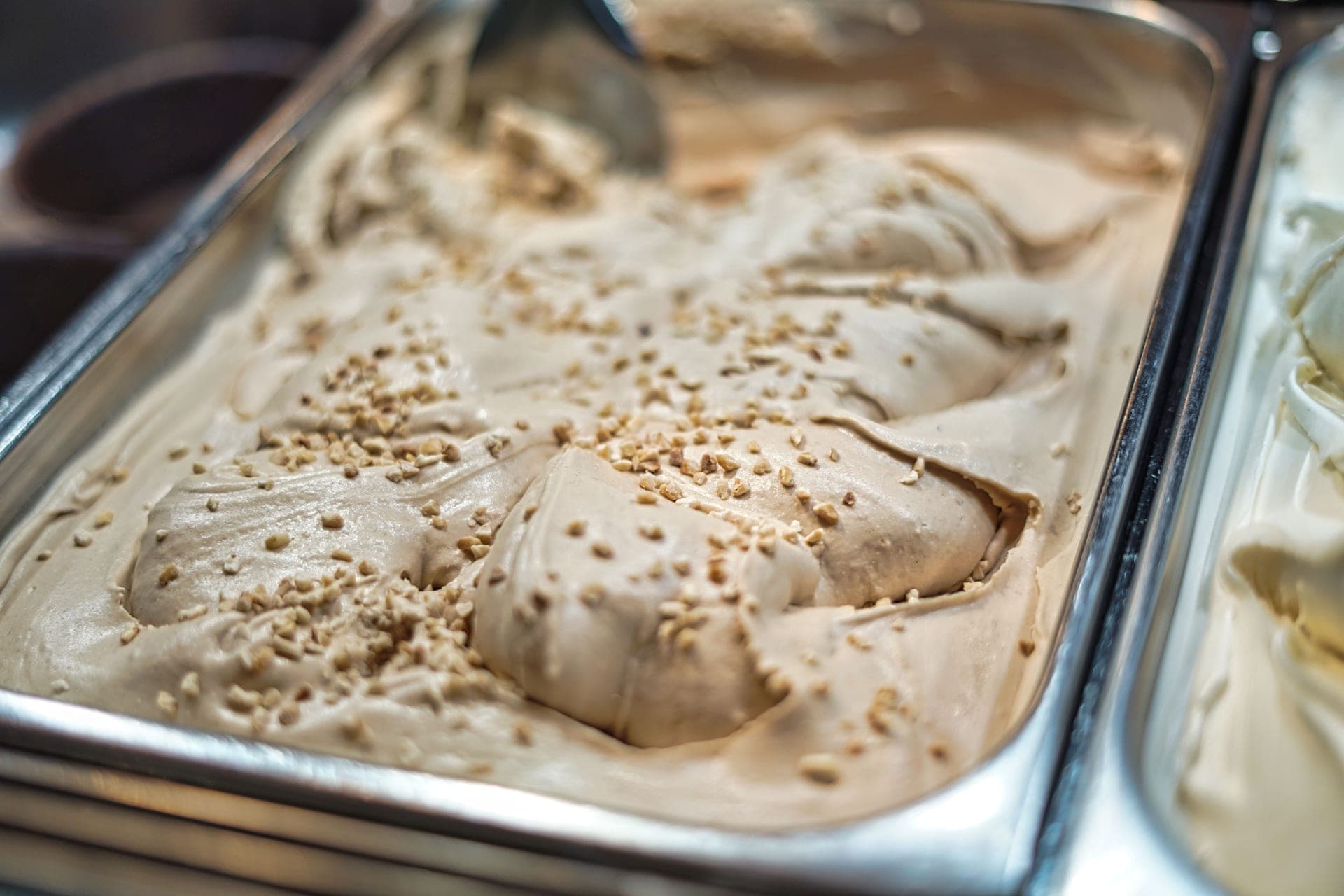
You do not need an ice cream maker to make ice cream. You do need to replace what one does, which is keeping the mixture moving while it freezes so ice crystals stay small. Four methods manage that to different degrees.
1. No-churn: the best method by a distance
Whip cold heavy cream to stiff peaks, fold it into a can of sweetened condensed milk, freeze. That is the entire technique.
It works because it splits the machine's two jobs. You add the air first by whipping, and the freezer does the freezing afterwards, with the whipped structure holding the air in place. Condensed milk is the other half: milk with most of the water removed and a lot of sugar added, so there is less free water to freeze and a lower freezing point.
Result: genuinely good. Lighter and foamier than churned ice cream, noticeably sweeter, with a distinct condensed-milk note. Makes about 1.5 quarts, which is more than most machines.
Best for: strong flavors that balance the sweetness — coffee, cookies and cream, dulce de leche, peanut butter. Less good for delicate fruit or plain vanilla.
The full recipe and method is here.
2. Ice cream in a bag: the best ten minutes
Seal a base in a small bag, put it inside a larger bag of ice and rock salt, and shake for eight to ten minutes. The salt lowers the meltwater's freezing point, producing a brine well below 32 F, and the shaking does what a paddle would.
Result: real ice cream, a bit icier than churned because hand shaking is less efficient than a paddle. One serving per bag, eaten immediately.
Best for: children, a hot afternoon, and finding out whether you enjoy the process before buying anything. It costs the price of a sandwich bag.
The full method, including protecting your hands.
A note on what these two have in common
Neither method requires a 24-hour wait. That is genuinely notable, because every affordable machine does: a freezer bowl wants 16 to 24 hours and a Ninja CREAMi pint has to freeze overnight. If your objection to buying a machine is the planning rather than the money, no-churn and the bag method are the two things that actually solve it, alongside a compressor machine costing $310 or more.
3. Freeze and stir: works, and it is a chore
Pour the base into a shallow metal tray, freeze, and stir vigorously with a fork or whisk every 30 minutes for about three hours, breaking up the crystals forming at the edges each time.
Result: acceptable. Distinctly icier than churned or no-churn, because intermittent stirring cannot match continuous agitation. Better if you use a rich, high-fat base.
Best for: when you have a base already made and no other option. Not a method to choose deliberately, given that no-churn is less work and better.
One improvement worth knowing: use the shallowest, widest metal container you have. Shallow freezes faster, and faster freezing means smaller crystals.
4. Frozen-fruit blitzing: good, but it is not ice cream
Frozen banana, or frozen berries plus a little cream, blitzed in a food processor until smooth. Often called nice cream.
Result: a genuinely nice frozen fruit purée with the texture of soft serve. It is not ice cream and it does not pretend to be — there is little or no dairy fat, and it tastes of the fruit.
Best for: a fast, fruit-forward frozen dessert. Eat it immediately: it refreezes into a solid block.
Do not try to use a food processor or blender as a substitute for a spin machine on a dairy block. A frozen-solid block of cream will not process cleanly and you risk the motor. That job needs an 800-watt purpose-built machine.
The ranking
- No-churn — best result, largest batch, least work.
- Ice cream in a bag — best experience, tiny batch, free.
- Frozen fruit blitz — good dessert, different food.
- Freeze and stir — works, most effort, worst texture.
When to stop and buy a machine
Three signals.
You want it less sweet. No-churn's sweetness is structural — the condensed milk is doing the texture work — so there is no dial to turn. A churned base has one.
You want delicate flavors. Fresh fruit, mint, high-quality vanilla. Condensed milk covers them.
You are doing this weekly. Twenty minutes of churning with no whipping and no washing-up beats folding by hand every time.
At that point America's Test Kitchen's best canister-style pick was $70 in June 2026, which is a modest price for removing all three limitations. Start at how to choose an ice cream maker.