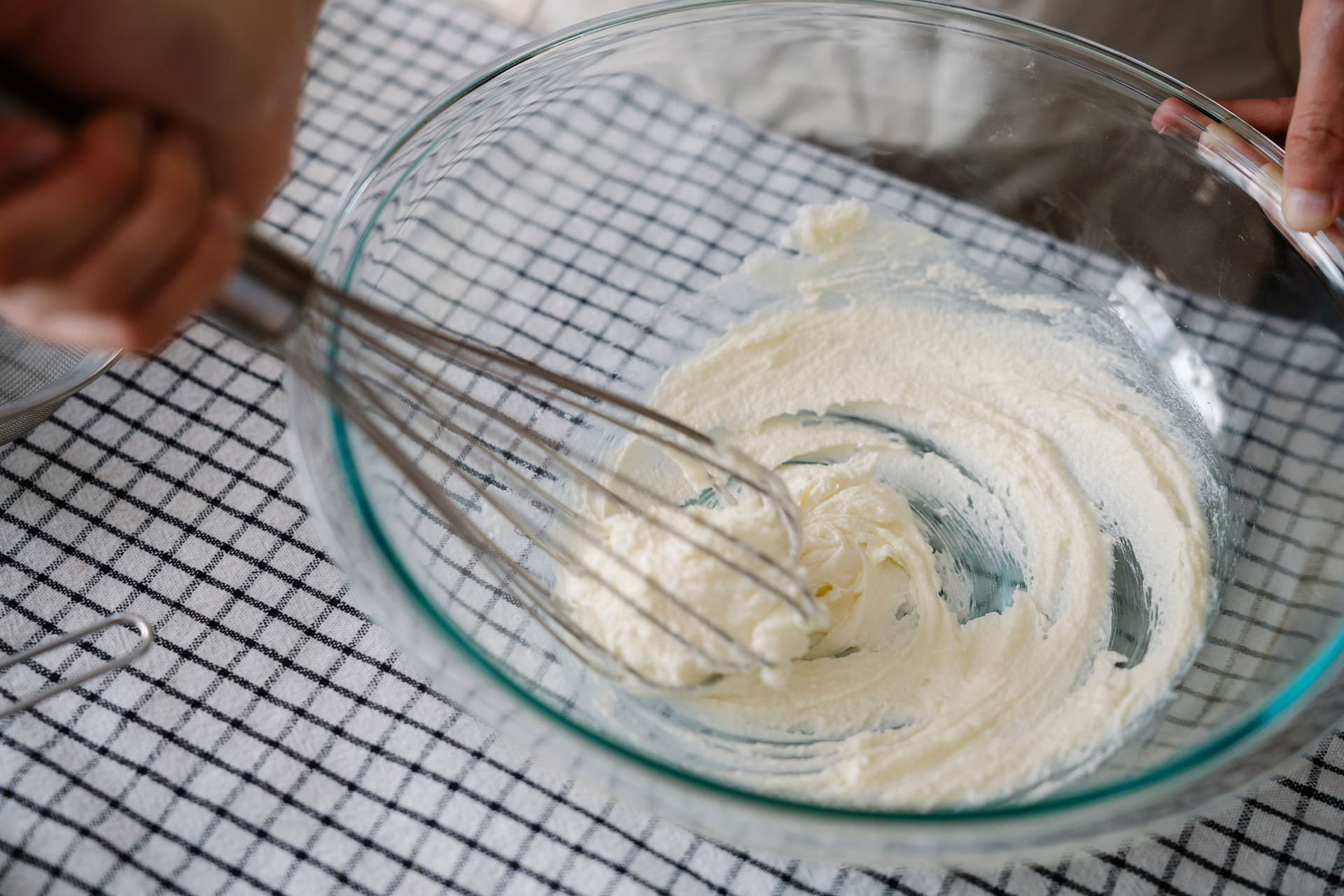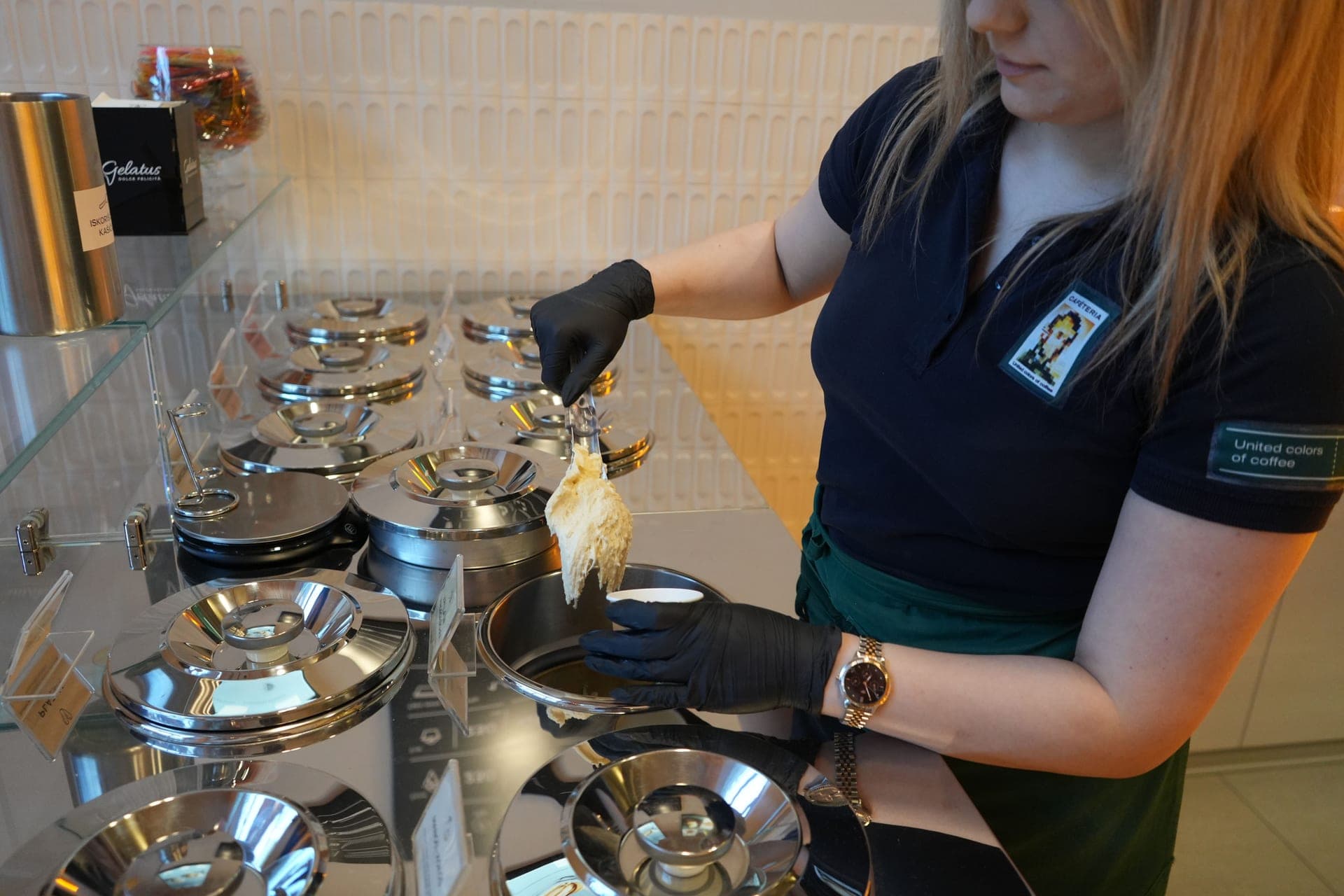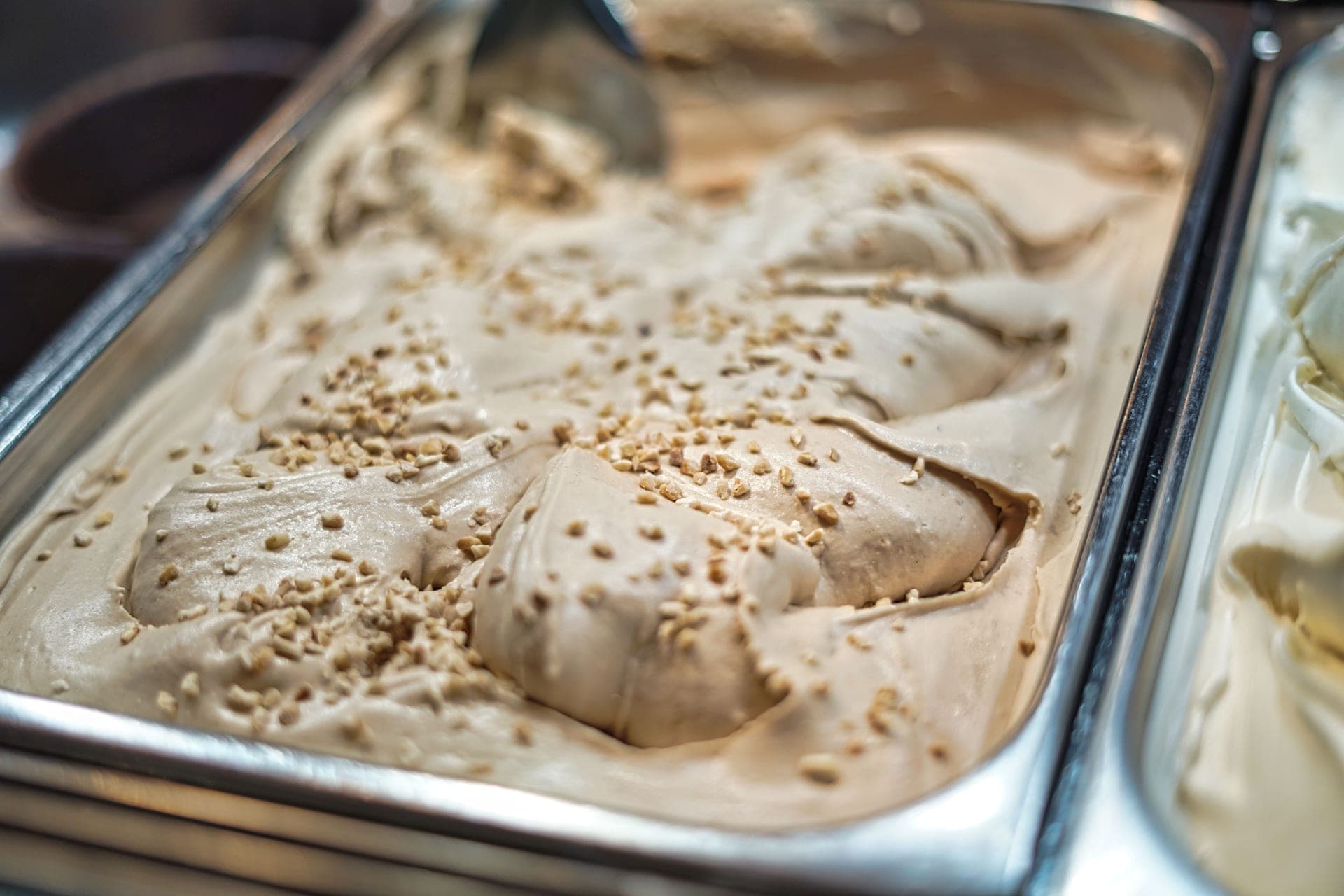
Stop when the mixture looks like thick soft serve and the paddle leaves a ridge that holds its shape for about a second before slumping back. That is the answer, and it overrides every number below, because the right churn time changes with your kitchen temperature, how cold your base was, how full the bowl is and how cold the bowl got.
The ridge test
Watch the surface as the paddle passes. Three stages:
- Liquid. The surface closes up immediately behind the paddle. Not ready, not close.
- Thickening. A shallow trail appears and fills in within a second or two. Getting there.
- Done. The paddle leaves a defined ridge that stands for a second before slumping, and the mixture climbs slightly up the paddle. Stop here.
It will look softer than you expect — roughly the consistency of thick cake batter or supermarket soft serve. That is correct. The freezer does the rest.
Why churning longer makes it worse
Past the done point, two things happen and neither is good. Friction warms the mixture, because the paddle is doing work against something increasingly stiff. And more air keeps going in, giving a foamier, less flavorful result — see overrun explained.
Churning does not firm ice cream up. Only the freezer does that. An extra ten minutes of churning gets you warmer, airier ice cream, which is the opposite of the intention.
Times by machine type
Published and measured figures, as starting expectations rather than targets:
- Cuisinart ICE-21P1 (freezer bowl, 1.5 qt): 15 to 20 minutes, measured by Dream Scoops, who describe it as one of the fastest machines.
- Cuisinart ICE-70P1 (freezer bowl, 2 qt): 28 minutes 30 seconds, measured by Ice Cream Science at a 900 ml fill.
- Lello 4080 (compressor): 17 minutes 30 seconds, measured by Ice Cream Science at a 700 ml fill. The fastest freeze anyone has published.
- Compressor machines generally: 20 to 40 minutes, depending on batch size and the machine.
- KitchenAid attachment: 20 to 30 minutes to soft-serve consistency, per KitchenAid.
- Ice-and-salt bucket: 20 to 40 minutes. The Hamilton Beach 68330N stops itself when the mixture is stiff.
- Spin machines (Ninja CREAMi and similar): about 2 minutes, but this is not churning at all — the pint froze overnight first. See how a spin machine works.
If it has been 40 minutes and nothing is happening
Stop. More churning will not rescue it, and the diagnosis is almost always one of two things.
The base went in warm. A freezer bowl holds a fixed amount of cold; if it spent fifteen minutes cooling a room-temperature liquid there is nothing left to freeze with. Chill the base for at least four hours next time.
The bowl was not frozen through. Shake it before use: if you hear liquid moving inside the double wall, the gel has not set. It needs 16 to 24 hours at the back of the freezer, not in the door.
Full diagnosis in ice cream maker not freezing. Salvage option: pour the base into a container and freeze it, stirring hard every 30 minutes for three hours. You will get something edible, if icier.
Stopping early on purpose
Two good reasons to stop before the ridge test is fully satisfied.
Soft serve. Stop a couple of minutes early and eat it straight away. This is what commercial soft serve is, and skipping the hardening step is a legitimate choice rather than an incomplete batch — see the soft serve roundup.
Gelato. Less time means less air, and low overrun is what makes gelato gelato. A shorter churn on a milk-heavier base gets you a recognisably gelato-style result from any machine.
When to add mix-ins
In the last minute, or by hand afterwards. Never at the start: chunks sink, they make the motor work harder, and the paddle pulverizes them.
On a spin machine, use the dedicated Mix-in program after the main spin rather than freezing inclusions into the block.
After the churn
Transfer to a container, press parchment or plastic directly onto the surface to exclude air, and freeze for two to four hours for scoopable ice cream. Longer than about four hours and it will be hard enough to want five minutes on the counter before serving.
Storage rules are in storing homemade ice cream.