Cuisinart's freezer-bowl machines — the ICE-21P1, ICE-30BCP1 and ICE-70P1 — all work the same way, so one recipe covers them with a scaling adjustment. What people get wrong is not the ingredients, it is the volumes and the order of operations.
The fill rule
Two thirds, never more. Rated capacity is the point at which the expanding mixture climbs out of the bowl, not the amount to pour in. Ice Cream Science puts the optimal fill on the 2-quart ICE-70P1 at 900 milliliters — under half its rating. If you have been filling to the top and wondering why it overflows and comes out soft, that is why.
Scaling correctly for each bowl
The recipe above is sized for a 1.5-quart bowl. For the 2-quart ICE-30, increase everything by about a third. For the 2-quart ICE-70, use it as written, because its optimal fill is close to 900 milliliters regardless of the rating.
Do not double a recipe to “make the most” of a bigger bowl. Overrun means the volume grows by 20 to 50 percent during churning, and there is no room for that if you started at the brim. The concept is worth ten minutes: overrun explained.
Start the machine, then pour
This is the Cuisinart-specific detail that matters most and it is buried in the manual. Fit the bowl, fit the paddle, switch the machine on, and pour the base in through the spout while the paddle is already turning.
Pour into a stationary frozen bowl and a layer of base freezes solid onto the wall before the paddle starts. That layer then insulates the rest of the mixture from the cold it needs, and the batch churns slowly and unevenly. It is a thirty-second habit that measurably improves results.
Getting the bowl right
16 to 24 hours, at the back of the freezer. The door is the warmest part of a freezer and it is where the bowl usually ends up.
Test it by shaking. If you can hear liquid sloshing inside the double wall, the gel has not frozen through. A bowl that is cold on the outside and soft in the middle will not freeze a batch.
Keep it in the freezer permanently. The single most useful habit with any canister machine. Do this and the pre-freeze wait stops existing, for the cost of one shelf. It is also why we recommend the ICE-21P1 so freely — see the full review.
Buy a second bowl if you want two flavors in a day. A canister machine cannot run consecutive batches, and a spare bowl is far cheaper than upgrading to a compressor for that one capability.
The three failures, and their causes
Still liquid after 40 minutes. The base was warm, or the bowl was not fully frozen. Not the machine's fault, and not fixable mid-batch — chill the base and start again. Full diagnosis in ice cream maker not freezing.
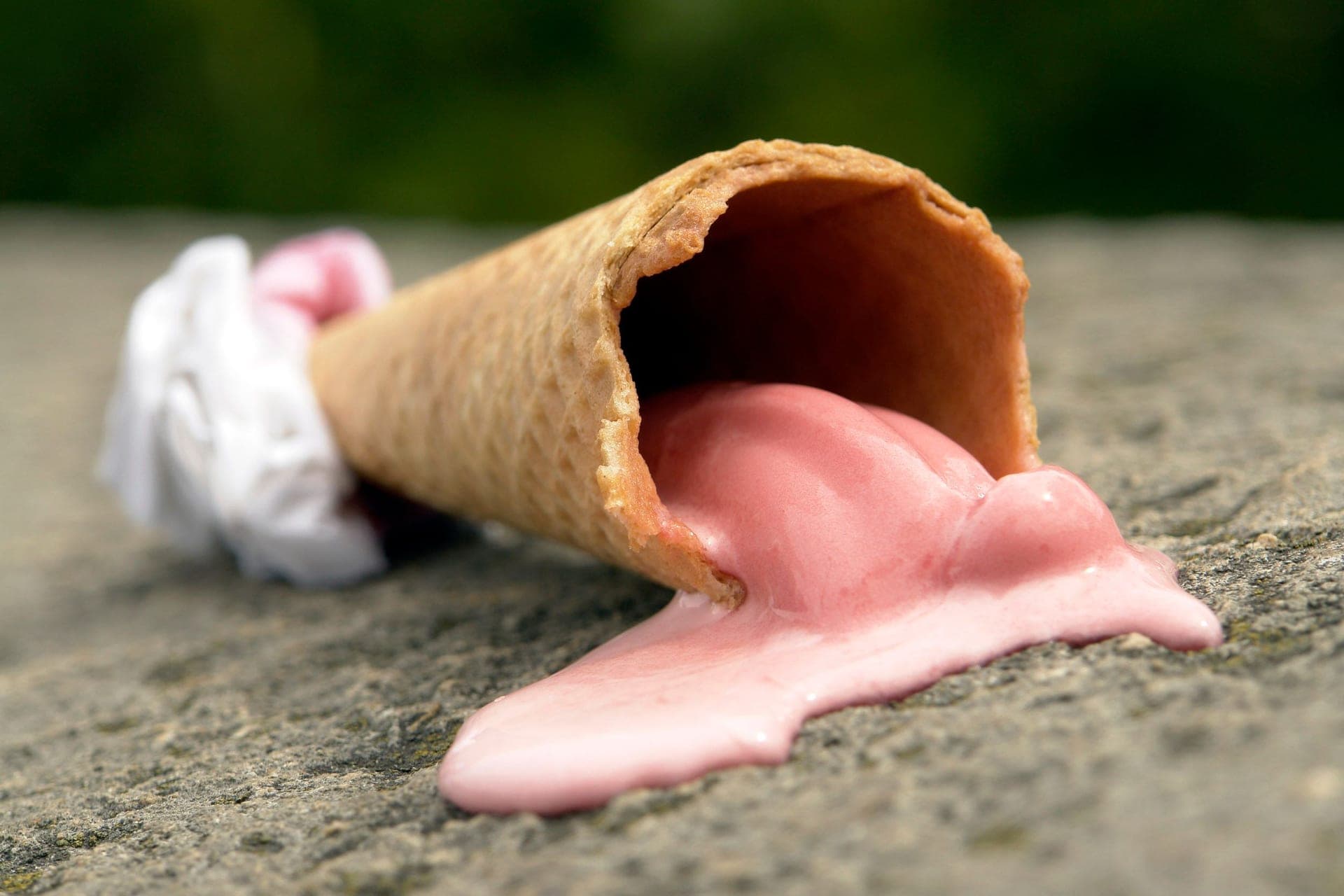
Overflowed. Overfilled. Two thirds next time.
Icy texture. Usually too little fat or too little sugar, or a slow freeze caused by one of the two problems above. See why homemade ice cream is icy.
Flavors from the same base
- Coffee: steep 2 tablespoons coarse ground coffee in the warmed milk for 20 minutes and strain.
- Mint chip: 1 teaspoon peppermint extract in place of half the vanilla, with finely chopped dark chocolate folded in at the end.
- Cookies and cream: fold crushed cookies in during the last minute.
- Richer: switch to a custard base with five egg yolks — see custard versus Philadelphia.