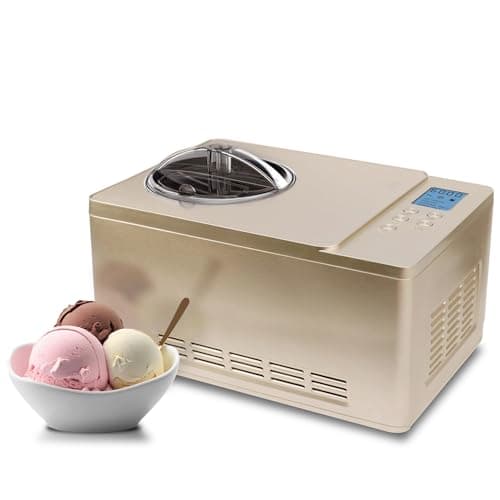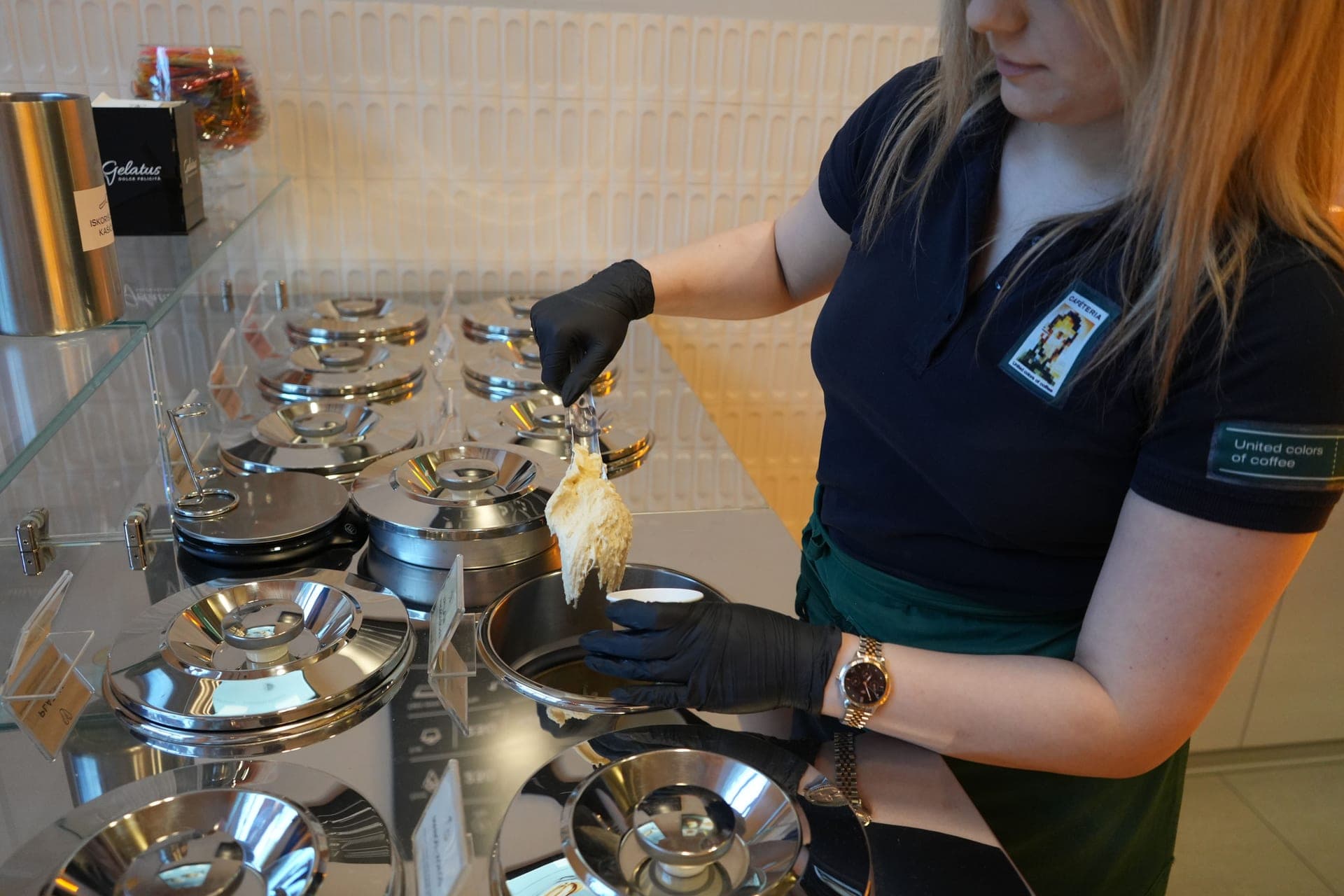
Published wattages in this category run from 12 W to 800 W, and you should not choose a machine on the number. A 60-watt Cuisinart ICE-21 makes better ice cream than plenty of machines drawing five times as much, and the 100-watt Lello 4080 makes the best on this site. Wattage tells you what kind of work the machine does, which is genuinely useful — just not as a quality score.
Here is what the number means in each of the three cases where it appears.
The published figures
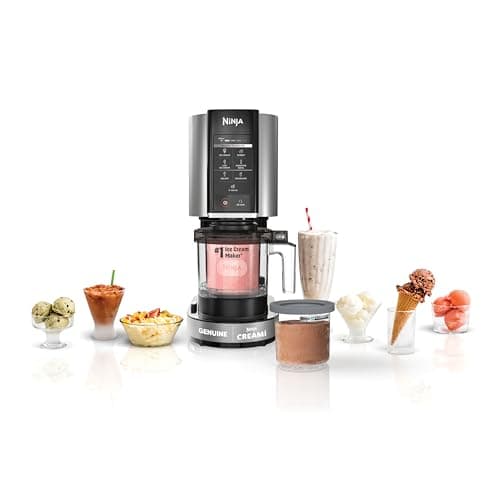
- Ninja CREAMi NC301 and NC701 — 800 W. The highest here.
- Ninja CREAMi Deluxe NC501 — 800 W, 120 V, 6.67 A.
- Cuisinart ICE-100 — 288 W (compressor).
- Cuisinart FastFreeze ICE-FD10 — 250 W per Target's spec panel.
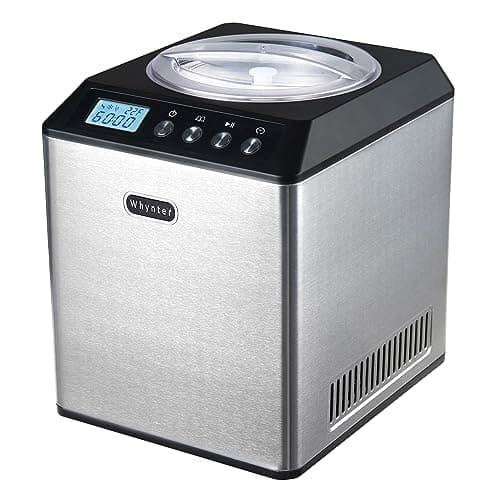
- Whynter ICM-201SB and ICM-220CGY — 180 W (compressor).
- Breville Smart Scoop — 150 W (compressor).
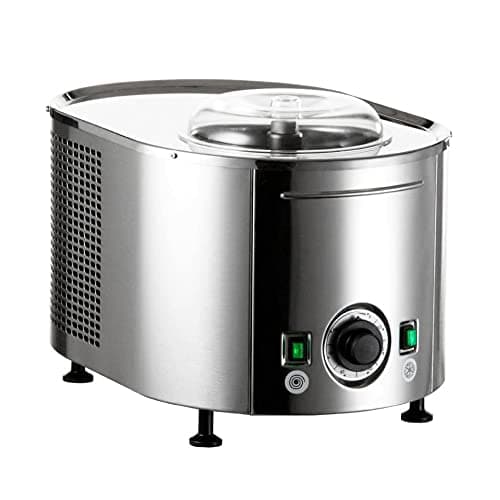
- Lello 4080 Musso Lussino — 100 W (compressor).
- Hamilton Beach 68330N — 80 W (bucket motor).
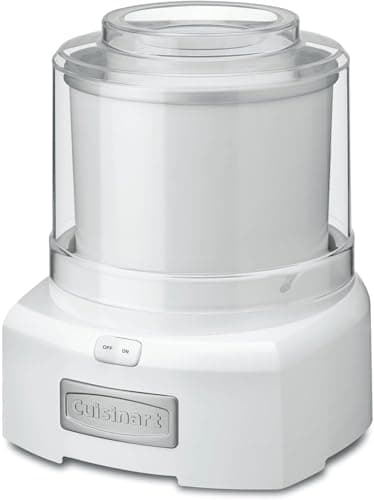
- Cuisinart ICE-21P1 — 60 W (freezer bowl).
- Nostalgia ICMP600WD — 50 W, 120 V / 60 Hz (bucket motor).
- DASH My Pint — 12 W. The lowest here.
- nutribullet Chill, Cuisinart FastFreeze Max ICE-FD50 — not published by the manufacturer, and we will not estimate.
Why the ranking looks upside down
The highest wattage belongs to a machine that makes 16 ounces, and the lowest compressor wattage belongs to the best machine on this site. That is because watts measure the work being done, and the three machine types do completely different work. Comparing a spin machine's 800 W with a compressor's 100 W is like comparing a drill with a refrigerator.
Freezer-bowl machines: 12 W to 60 W, and it is just a stirrer
A canister machine does no cooling at all. The cold is stored in the bowl wall, frozen for 16 to 24 hours beforehand, so the motor's only job is to turn a paddle slowly through a thickening mixture. Sixty watts is plenty, and the Cuisinart ICE-21P1 at 60 W was America's Test Kitchen's best canister-style pick at $70 in June 2026.
Where low wattage does bite is at the very bottom. The DASH My Pint's 12-watt motor will stall on a very stiff mix, which is a real limitation rather than a theoretical one. Below roughly 25 watts, a thick, well-churned base is genuinely more than the motor can turn. Above that, more watts in a canister machine buys you nothing.
Compressor machines: 100 W to 288 W, and most of it is refrigeration
Here the figure covers a sealed refrigeration circuit as well as a paddle motor, which is why the numbers are higher — and why they still are not a quality signal. The Lello 4080 draws 100 W and delivers the fastest measured churn anywhere on this site at 17 minutes 30 seconds, with Ice Cream Science reporting extremely smooth, dense, creamy output. The Cuisinart ICE-100 draws 288 W, nearly three times as much, for 1.5 quarts.
An efficient compressor and good insulation beat raw draw every time. What the number is useful for is running cost and circuit load: a compressor machine running 25 minutes at 180 W uses roughly 0.075 kWh, which is a fraction of a cent of electricity. Nobody should choose an ice cream maker on power consumption, and the full cost arithmetic that does matter is in what homemade ice cream costs per batch.
Spin machines: 800 W, and this is where watts earn their keep
A Ninja CREAMi is the one machine type where the number genuinely predicts capability. It does not churn a liquid — it drives a blade down through a pint frozen rock solid and shaves it into particles. That is heavy mechanical work on a solid, repeated for every spin, and 800 watts is what it takes.
This is why the unpublished figures matter more here than elsewhere. nutribullet does not publish a wattage for the Chill, which means you cannot compare its motor strength against the CREAMi directly — a real gap when the whole job is brute force on a frozen block. It is one of the points in CREAMi versus nutribullet Chill. Cuisinart does not publish one for the FastFreeze Max either, while the smaller ICE-FD10 lists 250 W per Target.
What to judge a machine on instead
Four specs that actually predict your experience, in order: whether it needs a pre-freeze (the single biggest difference in how often you will use it), real working capacity rather than the rated figure, whether the bowl comes out for washing, and measured churn time where any lab has published one. Those are the four we rank on throughout how to choose an ice cream maker.
Wattage is worth one glance, for one purpose: if a machine draws under about 25 watts, expect it to struggle with a stiff mix. Everything above that, ignore the number and read the measured results in the main roundup.