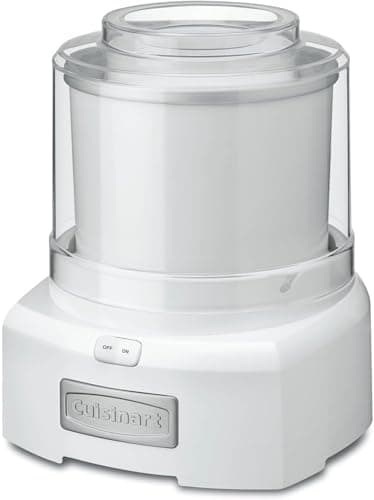
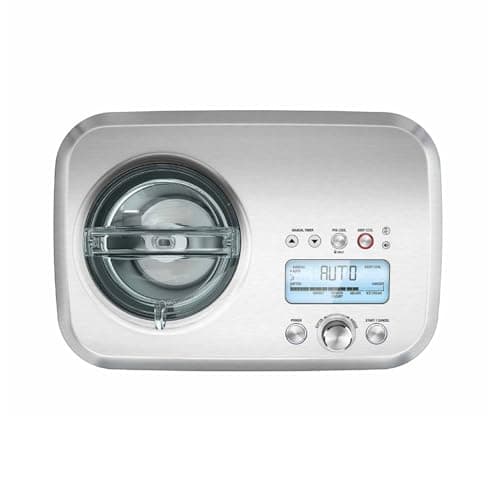
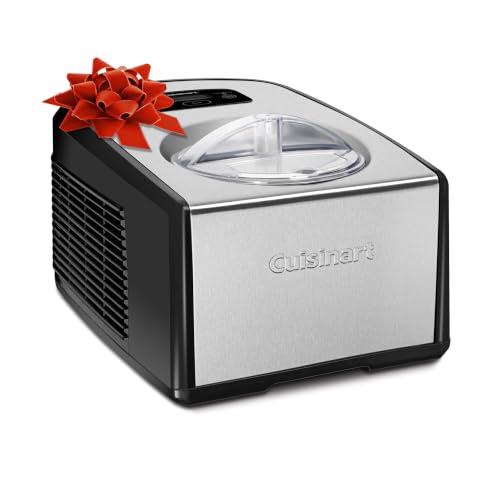
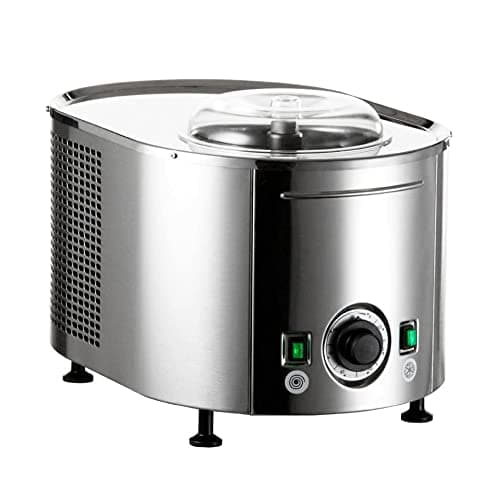
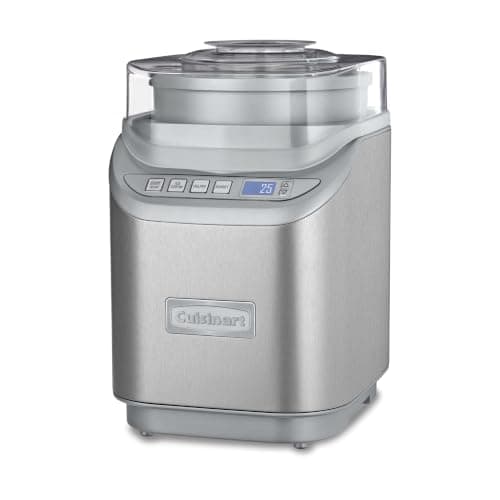
Buy the Breville Smart Scoop BCI600XL. It is the only machine in our registry that treats firmness as a setting rather than a guess: twelve hardness levels running from soft serve to hard scoop, with the machine deciding when it has got there. The budget pick is the Cuisinart ICE-70P1, whose countdown timer and three texture programs give you the same control in a cruder form, for a fraction of the money.
What “hard” actually means
Three separate things, and they stack. Density, which is the inverse of how much air is whipped in. Crystal size, which is set by how fast the mixture freezes. And serving temperature, which is set by what you do after the machine finishes. A scoop shop wins on all three; a home kitchen usually wins on none.
The good news is that the third one is free. Ice cream straight from any machine comes out at soft-serve consistency, and it is supposed to — the firming happens in the freezer afterwards. Two to four hours in a shallow container, covered, with the surface pressed flat, is the step that turns a soft churn into a hard scoop. Our storage guide covers the container, the depth and the covering, all of which matter more than people expect.
Density is mostly overrun
Overrun is the percentage of air churned into the mix. Commercial soft serve can run very high; dense premium ice cream runs low. A machine with a low-air paddle (the Cuisinart ICE-100's gelato blade) or adjustable hardness (the Breville) gives you a lever on it; a one-switch machine does not. Overrun explained is the full version, and it is the single most useful concept on this site for anyone chasing scoop-shop texture.
Colder is better, and only one maker publishes the number
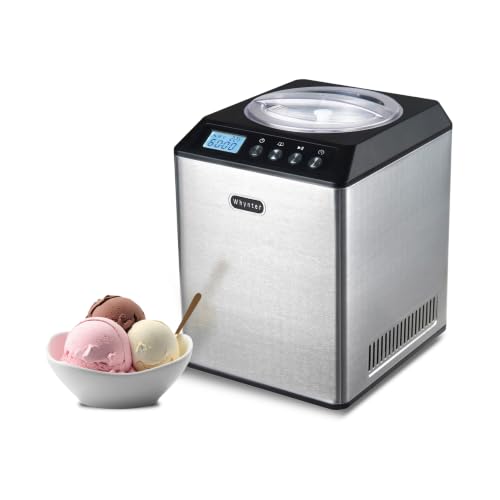
Faster freezing produces smaller ice crystals, which is physically what smooth, dense texture is. Whynter publishes a cooling range down to -31 F on both its compressor machines, which is the only such figure any manufacturer in our registry puts in writing — and the Lello 4080's 17 min 30 s measured churn, the fastest published figure we have seen, is the same principle expressed as time.
We do not estimate cooling temperatures for machines whose makers do not publish them, so this page ranks on what is documented. The full list of self-refrigerating options is in the compressor roundup.
What the machine cannot do
A firm scoop needs a base built for it. Too much sugar and the mixture never fully hardens, because dissolved sugar lowers the freezing point; too little and it sets into something you cannot get a spoon into. Fat does the opposite of what people assume — it keeps ice cream softer and smoother, not harder. And alcohol in any quantity will stop a batch setting altogether.
A small amount of stabiliser is the professional answer to holding structure through the hardening step and through the inevitable partial thaws of a home freezer door. The stabiliser guide covers which and how much, and the ingredients guide explains the fat and sugar balance that sits underneath all of it.
The opposite problem
If your homemade ice cream already comes out of the freezer too hard to serve, you do not need anything on this page — you need the guide on ice cream that freezes too hard, which is usually a sugar, fat or sweetener problem rather than a machine one. And if the texture is coarse rather than firm, the icy-ice-cream guide works through the causes in order. Every price on this page is a live Amazon figure with the date it was read beneath it; check the button before treating the ranking as a price order.