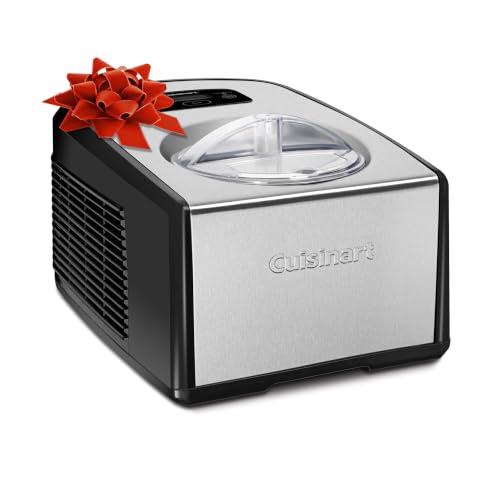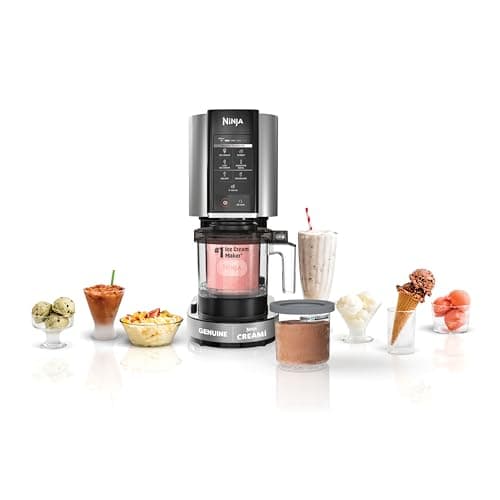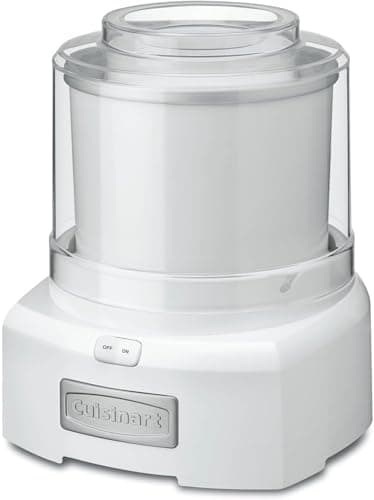
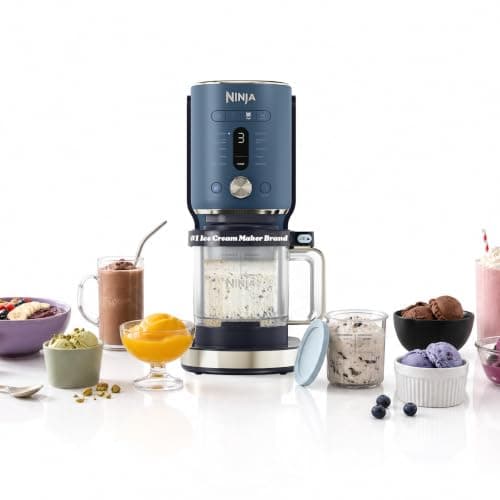
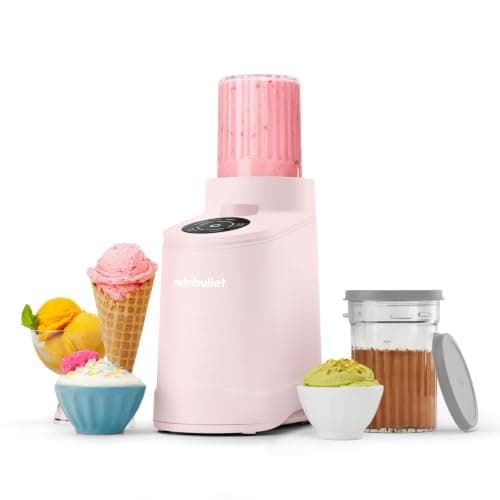
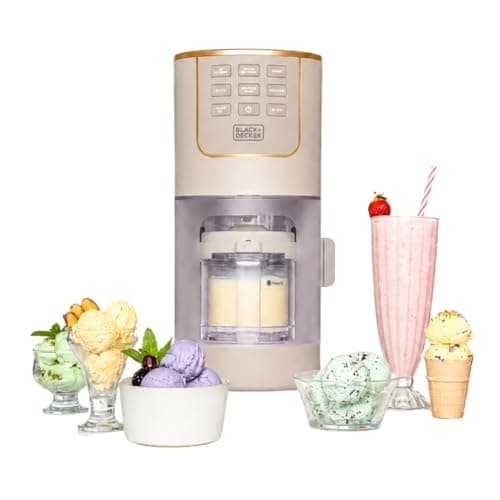
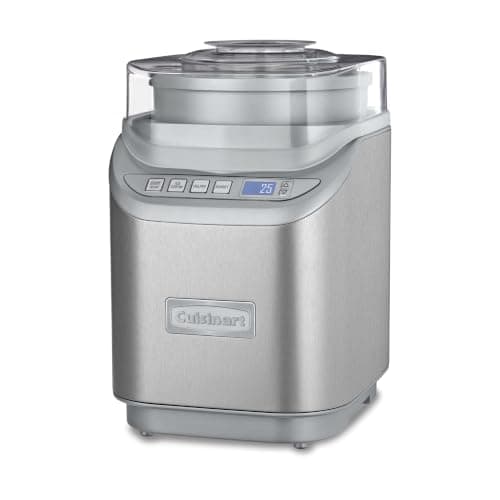
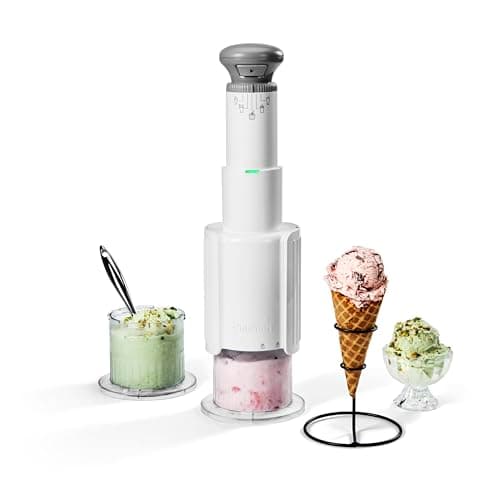
Buy the Ninja CREAMi XL Deluxe Gen 2 (NC601). A fruit dessert is the hardest thing you can ask a machine to freeze — no fat, little sugar, mostly water — and a spin machine is the only mechanism that expects a rock-hard input. Its sorbet, smoothie bowl and dairy-free programs are the three that matter here. The budget pick is the Cuisinart FastFreeze Max ICE-FD50, the cheapest machine on this page with a sorbet mode on the panel.
Why fruit is harder than cream
Ice cream stays scoopable because fat interrupts the ice structure and dissolved sugar lowers the freezing point of the water. A fruit base has very little of the first and only what the fruit brought of the second, so it freezes into something much closer to solid ice. That is why banana nice cream made in a food processor tastes great for ninety seconds and turns into a brick in the freezer.
Two mechanisms respond differently to that. A churner has to freeze the base from liquid, and a watery base freezes coarse. A spin machine starts from the frozen block and shaves it, which turns the problem into the design brief. For fruit, the second approach wins clearly.
The method change that fixes everything
Blend the fruit into a base first, then freeze that. Do not try to feed a machine loose frozen chunks. Purée the fruit with a splash of liquid — milk, coconut milk, yogurt or juice — pour it into the pint or the bowl, and freeze it as a solid block. A tablespoon of fat or a spoonful of sugar per pint changes the texture out of all proportion to what it does to the nutrition.
Which fruits actually work
Bananas are the reference case, because they are high in starch and pectin and freeze creamy rather than icy; mango and avocado behave similarly. Berries, citrus and melon are mostly water and will give you a granita unless you add something — a little cream, coconut milk or a cooked sugar syrup. Pineapple and kiwi contain enzymes that thin dairy bases, so cook them briefly first if you are mixing them with milk.
If the goal is a clean fruit sorbet rather than a creamy nice cream, the sorbet roundup is the better page, and our sorbet recipe has the syrup ratios that keep it scoopable. If you want that fruit base dispensed as a soft swirl instead, the Dole Whip roundup is the page for it.
The blender question
A food processor or high-powered blender will make banana nice cream today, free, with nothing to buy. It is a genuinely good answer and we say so. What it will not do is hold texture — the result has to be eaten immediately, because there is no air structure to keep it soft in the freezer.
A spin machine is the upgrade: a pint you can keep, re-spin and serve over several days. Ice cream maker versus blender makes that comparison properly, and it is the honest version of whether you need to spend anything at all.
Expect the first pass to look wrong
A pure fruit base very often comes out of its first spin powdery rather than creamy. This is the normal behaviour of a lean base, not a fault. Add a splash of liquid and run the machine's second pass — BLACK+DECKER calls it Re-Spin, Ninja calls it re-spin — and it comes together. Any pint machine without that function is the wrong machine for fruit.
For the churned route, the fix is different: do not over-fill, keep the base refrigerator-cold going in, and stop the machine when it thickens rather than running the full program. Ice Cream Science puts the optimal fill on the 2-quart ICE-70P1 at about 900 ml, and a watery fruit base is exactly the case where that matters. More on the underlying physics in why homemade ice cream turns icy.