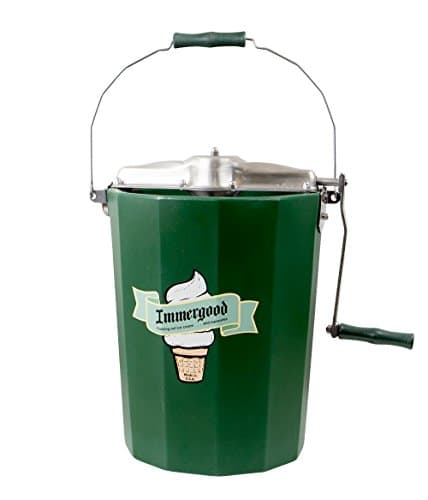
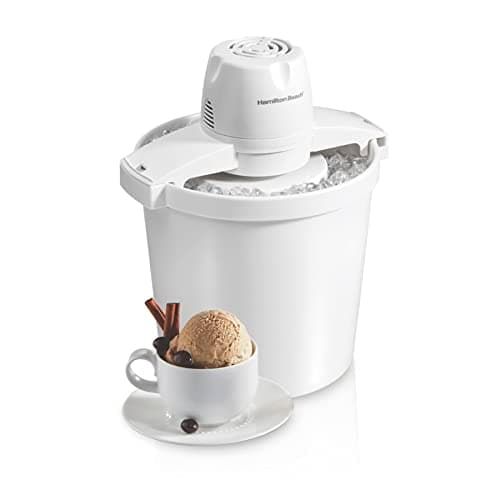
Buy the Immergood 6 qt hand crank if the point is the ritual: stainless steel, a leakproof tub, six quarts in one go, and a handle rather than a motor. It is the machine that gets handed to the next person when your arm tires and handed down when you are done with it. The budget pick is the Hamilton Beach 68330N — four quarts, an 80 W motor doing the cranking, and the lowest price on this page by a wide margin.
Why ice and salt works at all
Ice alone sits at 32 F, which is not cold enough to freeze a sweet, fatty cream base. Adding rock salt depresses the freezing point of the water around the canister, so the brine can drop well below 32 F while staying liquid — and a liquid touches every inch of the canister wall in a way a few ice cubes never could. That brine is the refrigeration unit. It costs about a dollar and lasts one batch.
The ratios matter more than people expect, and getting them wrong is the usual reason an old-fashioned batch stays soupy. Our salt-ratio guide has the numbers by machine type. Use rock salt or coarse kosher salt; never use the calcium chloride sold as ice melt.
What an old-fashioned batch actually costs
Every batch has a consumables bill a freezer-bowl machine does not. A bag of ice and a box of rock salt per batch is the trade you make for never waiting 24 hours for a bowl to freeze. For two or three summer parties a year that is nothing. For weekly ice cream it adds up fast, and the cost-per-batch guide shows where the crossover sits.
Capacity is the real reason to buy one
This is the only category in which four to six quarts is normal. A compressor machine makes 1.5 to 2.1 quarts and then needs to be emptied and restarted; a canister machine makes one batch and then needs 16 to 24 hours before it can make another. A six-quart bucket feeds a reunion in a single sitting, which no countertop machine will do at any price.
That is also the catch. Six quarts of melting ice cream is a problem unless there are twenty people to eat it, and the machine itself is bulky, loud and happiest outdoors. If you are feeding four, the family roundup is the better page; if you are feeding twenty, the big-batch roundup compares these same machines on volume alone.
Wooden bucket or plastic?
Mostly it is a look. The Nostalgia ICMP600WD wraps real wood slats around a plastic insert and uses an aluminum canister, and it is the machine people picture when they picture an ice cream freezer. The Hamilton Beach uses a plain plastic bucket and costs a fraction as much. The ice cream is identical, because the brine does the work.
Wood does need care — it should not be left soaking or stored wet — and the Immergood's all-stainless tub sidesteps that entirely, which is part of why it is the one to keep. The direct comparison between the two electric buckets is laid out in Nostalgia versus Hamilton Beach.
The old-fashioned feel without the mess
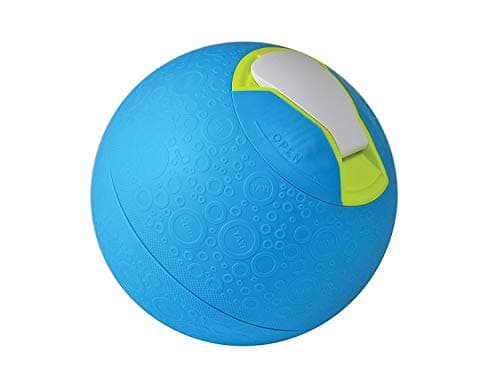
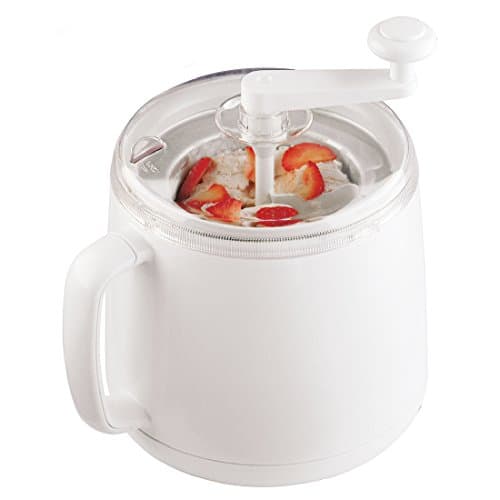
Two machines here give you the hand-made part without the brine. The Donvier 837450 is a 1-quart manual canister: you freeze the Chillfast cylinder overnight, then turn a handle every few minutes for under twenty minutes. No motor, no ice, no salt, and it is dishwasher safe on the top rack. The YayLabs SoftShell ball keeps the rock salt but turns the churning into a game the children play on the lawn, which is a different kind of old-fashioned and covered in full in the ice cream ball roundup.