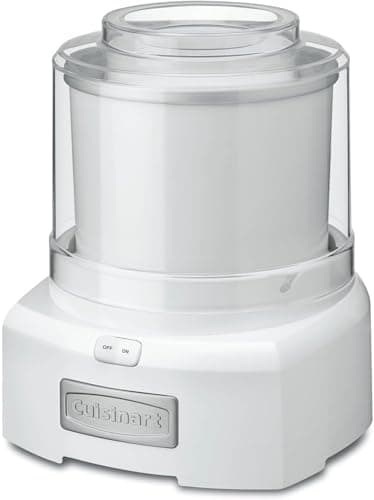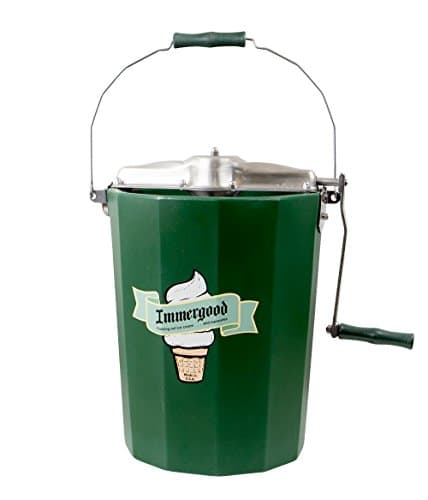
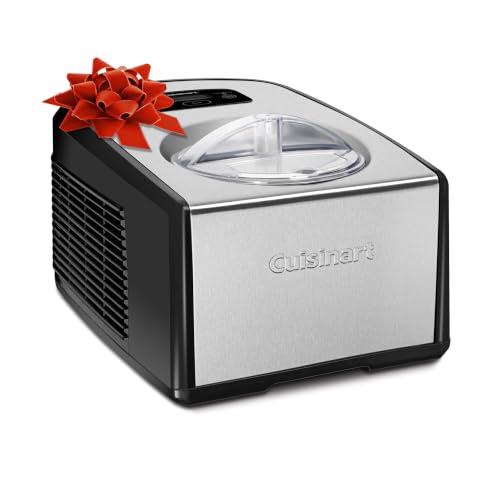
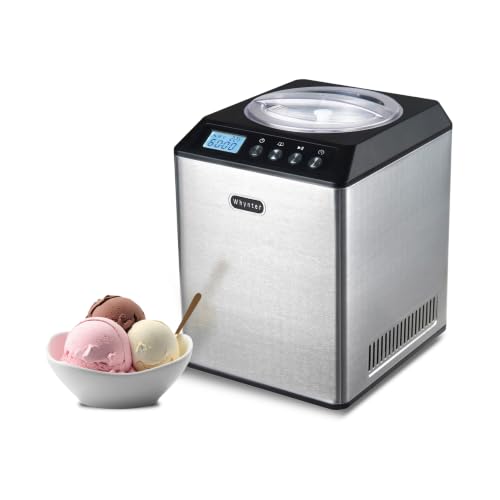
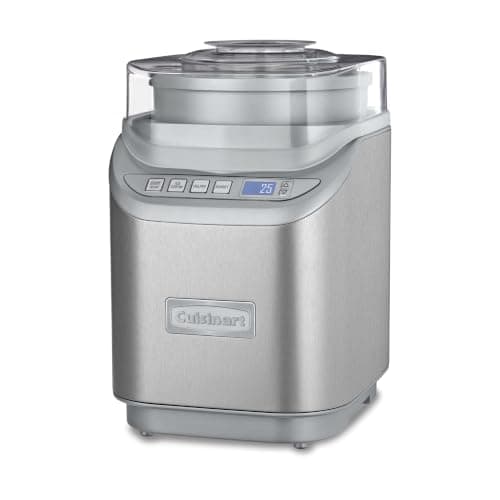
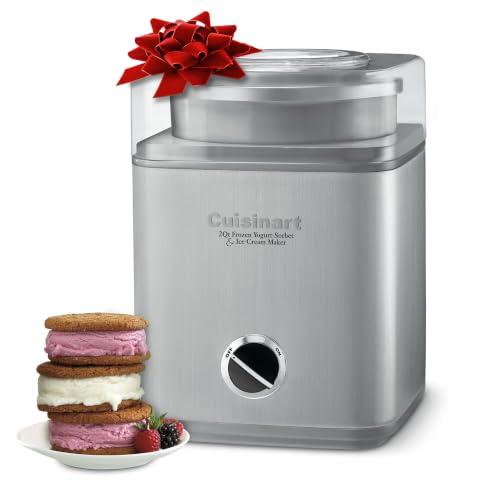
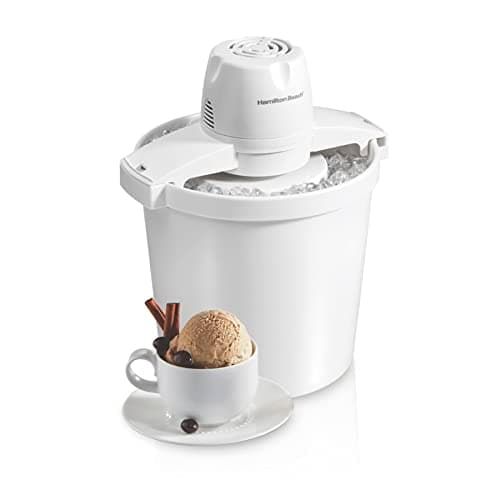
Buy the Cuisinart ICE-100. It is the best electric ice cream maker for most households because it removes the only genuine annoyance in the category: there is no bowl to remember to freeze, so the decision to make ice cream and the act of making it can happen on the same evening. The budget pick is the Hamilton Beach 68330N — the cheapest machine on this page by a wide margin, and the only one that makes four quarts, provided you are willing to buy ice and rock salt each time.
What “electric” buys you, and what it does not
Electric is a statement about the paddle, not about the cold. Every machine here plugs in and turns the dasher for you, which is the difference between twenty minutes of attention and twenty minutes of cranking — the case for the other approach is in our hand-crank roundup, and it is a better case than it sounds.
What electric does not tell you is where the cold comes from, and there are exactly three answers. A canister machine stores cold in a gel-filled bowl you freeze for 16 to 24 hours. A bucket machine borrows it from ice and rock salt you pack around the canister on the day. A compressor machine makes its own, continuously, like a tiny freezer with a paddle in it.
The spec that explains the price
Power draw tracks the mechanism, not the quality. The Hamilton Beach bucket motor draws 80 W, the Cuisinart canister machines 60 W, and the ICE-100 compressor 288 W. That tenfold spread is not the paddle working harder — it is the refrigeration unit. You are paying for the watts that make cold, which is why the only machines here that need nothing frozen in advance are also the expensive ones.
Why the compressors rank first
On finished texture the three mechanisms are much closer than their prices suggest. Ice Cream Science rates the canister-based ICE-70P1 as producing excellent, smooth, creamy ice cream with very few coarse bits, and America's Test Kitchen recommended three Cuisinart canister machines in the same June 2026 review as its compressor picks. Nobody should buy a compressor expecting a different dessert.
You buy one expecting a different schedule. The ICE-100 and the Whynter ICM-201SB will run a second batch immediately after the first, which no canister machine can do until its bowl has spent another 16 to 24 hours in the freezer. If you have ever abandoned a plan because the bowl was not frozen, that is the whole argument, and the compressor roundup goes through it machine by machine.
The electric bucket, which is better than its reputation
The Hamilton Beach 68330N is the cheapest route to a genuinely large batch of ice cream in this registry: four quarts for about the price of a nice dinner out, with an 80 W motor that runs 20 to 40 minutes and stops itself when the mixture stiffens. The consumables are the catch — ice and rock salt every single time — and so is the noise and the puddle of brine. For a July porch with eight people on it, none of that is a problem. For a Tuesday, all of it is.
The 6-quart wooden-bucket version of the same idea is covered in the big-batch roundup, and the running-cost comparison between ice-and-salt and a freezer bowl is laid out in the salt-ratio guide.
Which electric machine, in one paragraph
One or two people, no patience: the ICE-100. A family that wants two quarts at a time and does not mind planning a day ahead: the ICE-70P1, or the ICE-30BCP1 if the timer and texture programs do not interest you. A crowd, outdoors, once or twice a summer: the Hamilton Beach. Someone who wants the biggest batch that needs no pre-freeze at all: the Whynter ICM-201SB at 2.1 quarts.
Prices here move week to week and especially in late November. Every figure on this page is a live Amazon price stamped with the date it was read, so check the button rather than the paragraph before you commit, and see the cost-per-quart page if you want the running-cost arithmetic rather than the sticker.