Buy the FastFreeze Max if your real constraint is counter space and your real portion is a pint. It is 6 inches wide, 6 inches deep and 6.84 pounds per Target's spec panel, which makes it the only machine on this site you can honestly describe as putting away in a cupboard without effort, and it makes a genuine dessert for two rather than the single small cup its half-pint sibling manages. Do not buy it expecting speed. The name refers to the spin; the base still has to be frozen solid first, exactly like a Ninja CREAMi.
This review is built from manufacturer and retailer specification panels, because no testing lab we are willing to cite has rated this model. We say so up front rather than in a footnote, and our methodology explains how that constrains the scores.
What it is, mechanically
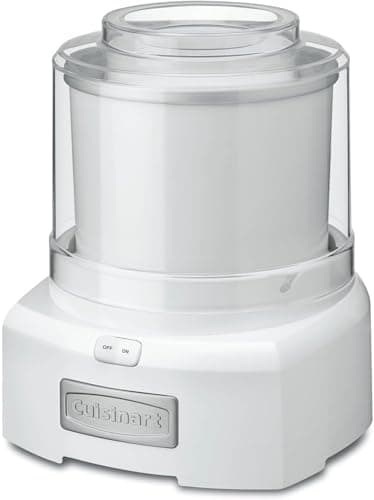
The FastFreeze Max is a spin machine, which is the newest of the categories in our types explainer. It does not churn a liquid base against a cold wall the way a Cuisinart ICE-21P1 does. Instead you fill a cup with your mixture, freeze it solid, lock it under the machine, and a blade shaves the frozen block into something smooth. That is the same principle as the CREAMi, and the physics of it are set out in how the CREAMi works.
The consequence is the part buyers miss. A spin machine moves the waiting rather than removing it. There is no freezer bowl to pre-freeze, so nothing permanent lives in your freezer, and the spin itself takes minutes rather than twenty. But the base has to be frozen through before any of that happens, so a spin machine is still a yesterday decision. What it buys you is that the frozen thing in your freezer is the dessert itself, not an empty bowl waiting for one.
The published numbers
Read off Target's spec panel for the ICE-FD50 on October 19, 2026, with the Sur La Table listing as a second check:
- Power: 350 watts.
- Dimensions: 16.38 inches high, 6 wide, 6 deep.
- Weight: 6.84 pounds.
- Capacity: 1 pint per cup, with two 1-pint cups included. Extra cups are sold separately in a pack of two as the ICE-FD50EC2.
- Programs: five presets — ice cream, sorbet, milkshakes, slushies and mix-ins. Target also lists sherbet and frozen yogurt among its capabilities.
- Cleaning: the cups are dishwasher safe; the base is spot or wipe clean.
- Warranty: three-year limited, which is the same term Cuisinart puts on the far more expensive ICE-100.
Two of those figures do more work than the rest. 350 watts is a real number and it matters on a spin machine, because the motor's entire job is driving a blade through a solid block of ice; a weak motor stalls or produces a coarse, powdery result. For scale, Ninja publishes 800 W on the NC501 and NC701, and nutribullet publishes no wattage at all for the Chill. The Max sits below Ninja and above the unspecified.
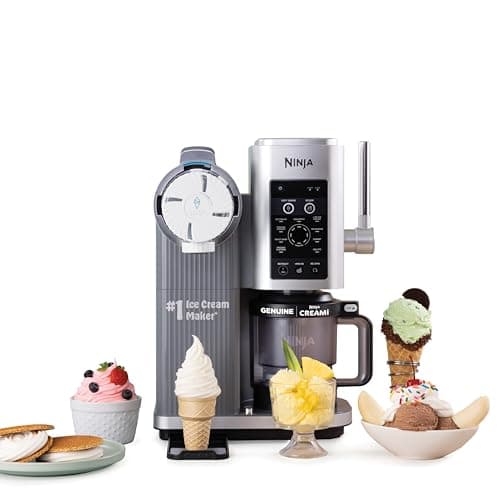
And 6 inches of width is the reason to consider this machine over anything else. The CREAMi NC301 platform is 9 to 9.5 inches wide and 22 pounds at the top of the range. The Max occupies a strip of counter narrower than most food processors and weighs less than a full kettle, which means it can live in a cupboard and still get used. That is a more honest kind of convenience than a mode list.
No independent testing exists for this model
America's Test Kitchen's June 2026 ice cream maker review does not include the ICE-FD50, and Ice Cream Science's machine reviews do not cover it. That means nobody we are willing to cite has measured its texture, its spin time or how it handles a hard base. We have not invented a verdict to fill the gap: the texture and value scores on this page are held deliberately mid-range because the evidence is specification only, and that is a statement about our evidence rather than about the machine.
The ICE-FD10 problem, stated honestly
The Max is the second machine on this platform, and the first one did badly. America's Test Kitchen placed the half-pint FastFreeze ICE-FD10 in its Not Recommended tier in June 2026, and measured its working capacity at 0.25 quart — one small cup. Target's panel for that model gives 250 watts and three half-pint cups.
You should weigh that two ways, and we think both are fair. Against the Max: it is the same basic mechanism from the same manufacturer, and a poor verdict on the platform is a genuine warning. In the Max's favor: the single loudest complaint about the FD10 was capacity, and the Max is a direct answer to exactly that complaint — a 1-pint jar is four times the working volume, and 350 watts is 100 more than the FD10 had to work with. A pint is dessert for two people. A quarter-quart is a tasting portion.
What the Max does not fix is the planning. Target's panel for the FD10 specifies the base frozen 24 hours in advance, and the Max asks for the same frozen-ahead workflow. If the problem you are trying to solve is “I want ice cream in forty minutes from a standing start,” neither of these machines solves it and a compressor does — compressor versus freezer bowl is the page for that.
Against the CREAMi, which is the real decision
Almost everyone considering a FastFreeze Max is also considering a Ninja. The two machines do the same thing, so the comparison comes down to four published facts.
Side by side
| Spec | 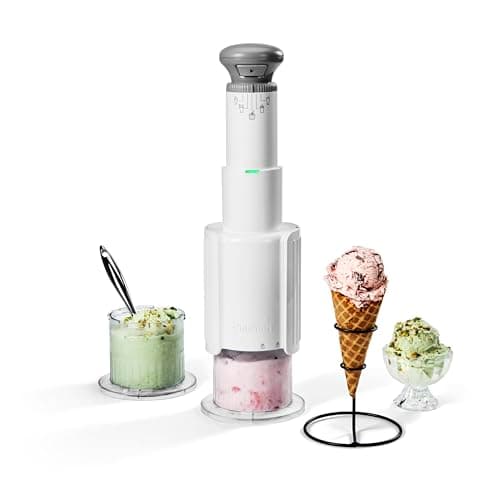 | 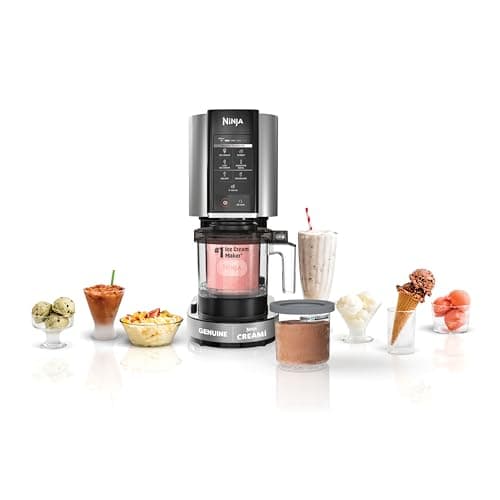 |
|---|---|---|
| Mechanism | Spin / blade, frozen base | Spin / blade, frozen base |
| Capacity | 1 pint per cup, two cups included | 16 oz pint |
| Published power | 350 W (Target) | Ninja publishes 800 W on the NC501 |
| Programs | 5 presets | 7 one-touch |
| Width | 6" | Wider and heavier |
| Weight | 6.84 lb | Heavier than the Max |
| Warranty | 3-year limited | 1 year limited |
| Independent testing | None we can cite | None in ATK's June 2026 round |
| Recipe ecosystem | New and small | The largest of any spin machine |
| Price |
The honest read: the Max wins on footprint and warranty, the CREAMi wins on motor power, program count and the recipe community, which on a spin machine is a bigger practical advantage than it sounds. Spin machines live or die on base recipes — the mixture has to be built to be shaved rather than churned — and the CREAMi has thousands of tested ones. Which CREAMi to buy sorts that range out, and CREAMi alternatives is the page that places the Max among its rivals.
Who should buy it
Three buyers, specifically. Someone with no counter space, because 6 inches wide and under 7 pounds is a genuinely different proposition from every other machine here. A household of one or two, where a pint is the right portion and a 1.5-quart tub would be eaten over a week and go icy in the process — see storing homemade ice cream for why that matters. And someone who wants portion control, because the two cups mean two flavors sitting ready, each one a finished dessert rather than a serving cut from a tub. The one-person roundup and small-spaces roundup are the pages where it competes hardest.
Who should not
Anyone feeding a table. A pint is two servings, and a second cup means a second overnight freeze, so a family dessert on this machine is a two-day project. Anyone who wants one tub in the freezer rather than jars. And anyone for whom price per quart is the deciding number: the ICE-21P1 was ATK's best canister-style pick at a listed $70 in June 2026 and makes 1.5 quarts a batch, which is roughly six times the volume for less money — that trade is laid out in the under-$100 roundup and budget versus premium machines.
We also would not buy it for the slushie and milkshake programs alone. They are real and they work on the same frozen block, but a blender does both for a fraction of the price, as ice cream maker versus blender argues. Treat them as a bonus on a dessert machine, not as the reason to buy one.
Verdict
A sensible correction of a machine that needed one. The FastFreeze platform's problem was never the idea, it was the half-pint cup, and a 1-pint jar with 100 extra watts behind it is the right fix. Six inches of counter width and a three-year warranty are both genuinely good, and at pint scale the frozen-ahead workflow is a fair trade rather than a chore, because what is waiting in your freezer is dessert rather than an empty bowl.
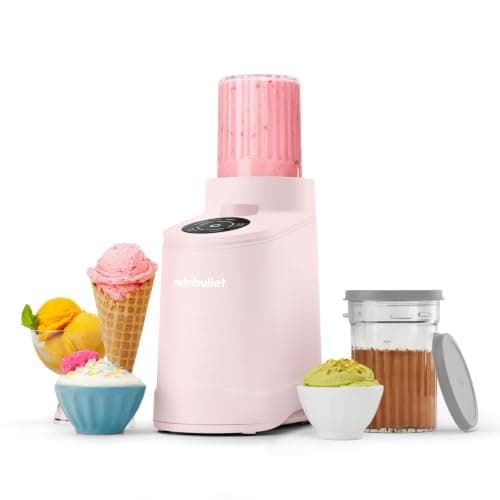
The reservations are real and we are not going to soften them: no independent lab has rated this model, the previous machine on this platform was Not Recommended by ATK, and the price per quart is poor against a canister machine. We would recommend it to a one or two-person household that is short of space and sure a pint is enough, and we would point anyone else to the main roundup. If the appeal is the pint format rather than the brand, cross-shop it against the nutribullet Chill and read the 2-in-1 roundup for the dessert-and-drinks angle.