Buy the FastFreeze only if a single half-pint cup is genuinely the portion you want, and look hard at the Max before you do. This is the smallest machine we cover and the one with the clearest single reason not to buy it: America's Test Kitchen put it in the Not Recommended tier of their June 2026 equipment review, and the figure behind that verdict is a working capacity of a quarter of a quart. That is one cup of ice cream.
What it actually is, because it is not what it looks like
Every other small machine on this site freezes a bowl and then churns liquid inside it. The FastFreeze inverts that. You fill a half-pint dessert cup with your mixture, freeze the cup solid, then lower a motorized wand into the frozen block and let a 250-watt motor shave it into ice cream. Target's spec panel is explicit about the sequence: treats in three minutes, with the base pre-frozen 24 hours in advance.
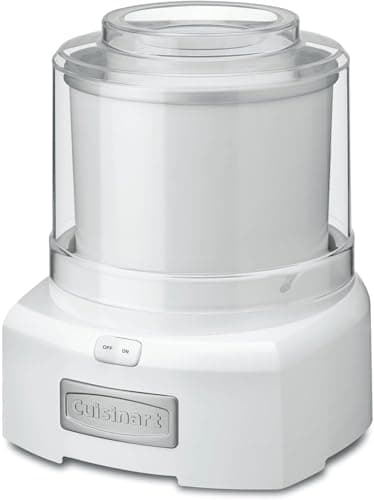
Mechanically that puts it in the same family as a Ninja CREAMi rather than with the Cuisinart canister machines it shares a brand with. Nothing is churned. A frozen solid is cut into something scoopable, which is why the texture question on a machine like this is about blade speed and block hardness rather than about freeze rate.
The five programs — ice cream, milkshakes, slushies, sorbet and mix-ins — are variations in how the wand runs, not refrigeration settings. There is no compressor in here and nothing gets cold. Your freezer did that part.
The numbers that decide it
From Target's spec panel, read on October 5, 2026: 250 watts, 4.3 pounds, and a tall thin footprint of 16.24 inches high by 8.82 wide by 4.41 deep. Three half-pint cups with lids come in the box. It is in stock there, which matters more than usual on this page — see the section on variants below.
Two of those numbers are genuinely good. 4.41 inches deep is narrower than a bag of flour; this is the only machine we cover that will stand in a cupboard rather than occupying counter. And 250 watts through a wand into a frozen block is real force for a machine of this size, which is what lets it process a solid rather than a slush.
The number that undoes the rest is the one America's Test Kitchen recorded: a working capacity of 0.25 quart. Our scoring rubric at methodology weighs capacity against a real household, and against a four-person table a quarter-quart machine simply does not score.
The 24 hours it does not save you
The pitch is speed, and three minutes of spinning is genuinely fast. But the mixture still has to be frozen solid first, which Target puts at 24 hours. So the planning burden is identical to a freezer-bowl machine: you decide today and eat tomorrow. What you are buying is not spontaneity, it is a smaller object. If spontaneity is what you want, the only mechanism that delivers it is a compressor — see compressor versus freezer bowl.
What we can and cannot tell you about the texture
No laboratory we are able to read has published a texture assessment of this machine. America's Test Kitchen rated it and declined to recommend it, but the figure they published is the capacity, not a smoothness score, and Ice Cream Science's machine reviews do not cover it. So we are not going to tell you how smooth it is, because we would be making it up. What we can tell you is what the mechanism implies, which is more useful than a borrowed adjective.
A machine that shaves a frozen block has one characteristic failure mode and it is not iciness: it is crumbliness. The first pass through a very hard block comes out powdery rather than creamy, because the blade is cutting dry crystals instead of working a plastic mass. The CREAMi family answers that with a re-spin button, and the published fixes are the same on any block-shaving machine: let the cup sit out for a few minutes before processing, add a spoonful of liquid, or run it twice. Our guide to grainy or crumbly ice cream covers the diagnosis in full, and it applies directly here.
The other implication of the mechanism is that your base recipe matters more than usual. Sugar and fat both soften a frozen block, so a lean, low-sugar mixture freezes harder and shaves drier. A machine with this little working volume gives you no room to correct a batch halfway through, so get the base right before it goes in the freezer.
The Max is the version of this that makes sense
Cuisinart also sells the FastFreeze Max, model ICE-FD50, and it is the same idea scaled to a portion a household recognizes. Sur La Table's spec panel, read October 5, 2026, lists two 1-pint cups in the box against the small machine's half-pint cups, the same five programs including sorbet, and a 3-year limited warranty.
Side by side
| Spec | 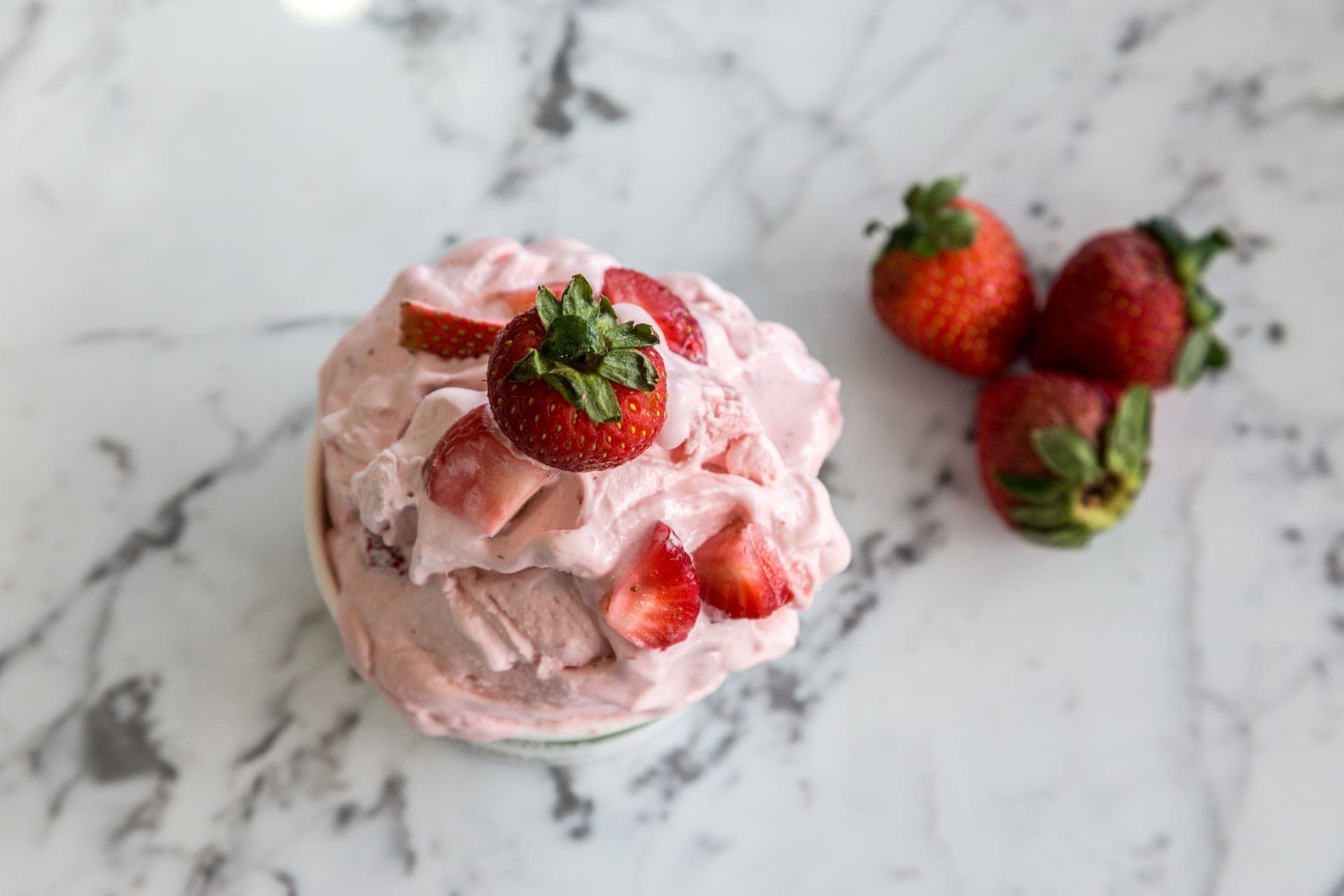 | 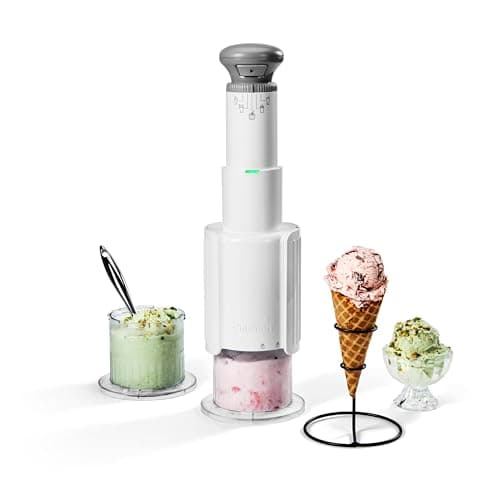 |
|---|---|---|
| Cup size | 0.5 pint | 1 pint |
| Cups included | Three (Target) | Two (Sur La Table) |
| Programs | 5 | 5 |
| Pre-freeze | 24 hours (Target) | Frozen ahead |
| Power | 250 W (Target) | Not listed by the retailer |
| Weight | 4.3 lb (Target) | Not listed by the retailer |
| ATK June 2026 | Not Recommended | Not rated |
| Warranty | 3-year limited | 3-year limited |
| Price |
Doubling the cup is the whole argument. A pint is a dessert for two people, or one person twice; a half-pint cup is one serving with nothing left over. Nobody independent has tested the Max that we could read, so we are not claiming its output is better — the mechanism is the same and so, presumably, is the texture. What changed is the only specification that was actually failing.
Which FastFreeze you will actually find
This line is unusually confusing to shop, and it is worth two paragraphs because it determines what arrives at your door. Cuisinart lists the base ICE-FD10, a Deluxe Bundle, and a 250th Celebration limited-edition version of the same small machine, alongside the larger Max. When we checked on October 5, 2026, Cuisinart's own product page for the plain ICE-FD10 did not resolve, while Target still had the model in stock with full specifications.
Amazon's FastFreeze listings currently lead with the Max and with the limited-edition color of the small machine rather than the plain ICE-FD10, which is why the buy link on this page is a search rather than a single product. Check the model code and the cup count on the listing before you order: ICE-FD10 is the half-pint machine and Target lists it with three cups, while the Celebration Edition of the same machine is listed with two. ICE-FD50 is the pint. Everything that reads like an accessory pack — and there are several — is spare dessert cups, not a machine.
What else a hundred dollars buys
This is the honest heart of the review, because the FastFreeze competes badly in its own price bracket.
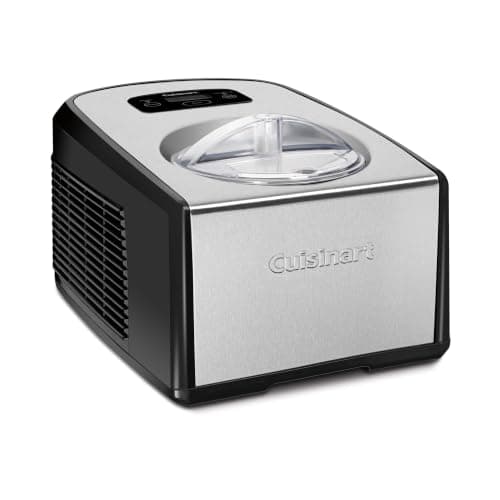
- A 1.5-quart freezer-bowl machine. The Cuisinart ICE-21P1 won ATK's best canister-style award at $70 in June 2026 and makes roughly six times as much ice cream per batch. Same 16-to-24-hour planning, far more dessert. It is the default recommendation in the beginners roundup for exactly that reason.
- A cheaper single-serving machine. If one portion is genuinely the goal, the DASH My Pint does the same job with a frozen bowl and a 12-watt motor for considerably less money.
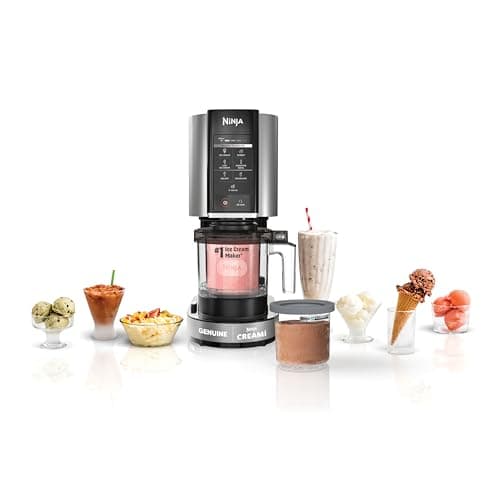
- A CREAMi. If the appeal is frozen-ahead pints you spin on demand, the Ninja CREAMi is the mature version of that workflow — 16-ounce pints, seven programs and a re-spin function that fixes a crumbly first pass.
The one case where the FastFreeze wins outright is storage. At 4.41 inches deep it is the only machine here that genuinely disappears between uses, and for a studio kitchen or a dorm that is not a small thing. If you want sorbet specifically, note that it has a sorbet program and that the sorbet roundup explains why a fat-free mixture is the one case where shaving a frozen block competes well with churning.
Verdict
A clever machine sold at the wrong size. The mechanism works, the footprint is genuinely class leading, and 250 watts is enough motor for the job — but a quarter-quart working capacity is why America's Test Kitchen did not recommend it, and no amount of program count fixes the portion. If the FastFreeze idea appeals, buy the Max and get a pint. If the price is what appeals, buy a canister machine and get a quart and a half. We would not recommend the half-pint ICE-FD10 to anyone except a single-occupant kitchen with no counter space, which is a real buyer but a narrow one. If you are still deciding whether to buy any machine at all, is an ice cream maker worth it is the better page to read first.