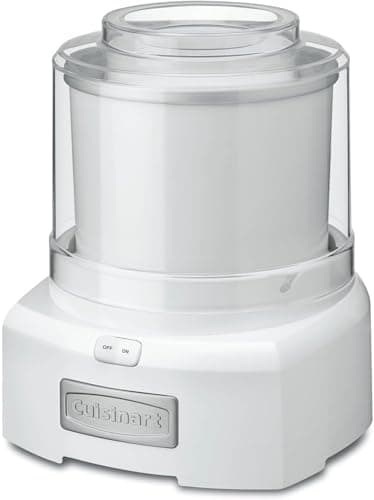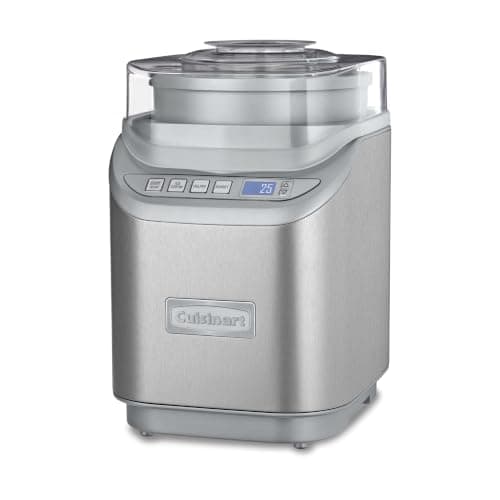
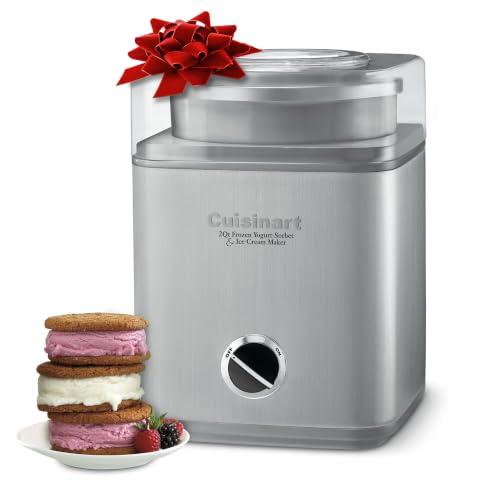
Buy the Cuisinart ICE-30BCP1. Under $150 it gives you the most finished ice cream for the money from the mechanism with the longest track record: a pre-frozen canister, a motor, and two quarts in about twenty-five minutes. America's Test Kitchen recommended it in its June 2026 equipment review. The budget pick is the Hamilton Beach 68330N, which makes four quarts in one batch for less money than almost anything else in the category, provided you accept buying ice and rock salt every single time.
The more useful thing to understand about this price band is that it is not a quality tier. It is the band where every mechanism in the category is available to you except one. Canister machines, electric ice-and-salt buckets, hand-cranked manual churns and frozen-pint spin machines all have a representative under $150. Choosing well here means choosing a mechanism, not finding the highest number of stars.
What we ranked on
Four things, in this order, and none of them is a star rating we invented:
- Published capacity against published price. Four quarts for $62 and one pint for $134 are not the same purchase, and no amount of program count closes that gap.
- What the machine asks of you before you can eat. Sixteen to twenty-four hours for a canister. Twenty-four hours for a pint. A bag of ice and a box of rock salt for a bucket. Nothing under $150 skips this step, so the honest question is which version of it you will actually remember to do.
- Whether anyone outside the brand has published a verdict. One machine here has a current testing-lab verdict, two more have an independent hands-on, and three have nothing at all. We say which is which on each card rather than filling the gap with adjectives.
- Whether the price is structural or a markdown. Four of these six sit under $150 on their regular price. Two only enter the band when they are discounted, which matters if you are reading this out of season.
What $150 buys that $100 does not
Exactly one thing, and it is a genuinely interesting one: the frozen-pint spin method. Under $100 the category is canisters, buckets and hand churns — every machine is a paddle that stirs a liquid as it freezes. The sub-$100 roundup covers that band in full and it is a surprisingly strong one. What it cannot give you is the other mechanism: a machine that takes a base you froze solid yesterday and shaves it into something creamy at high speed.
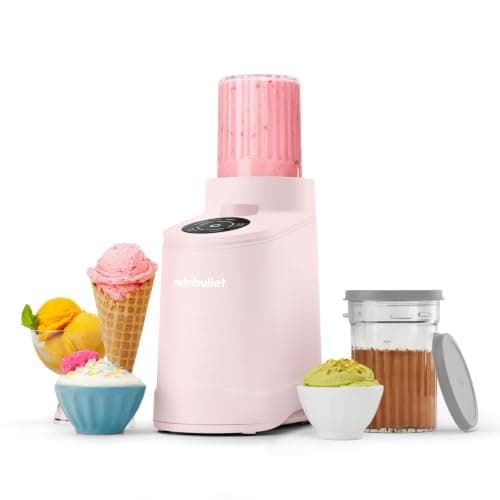
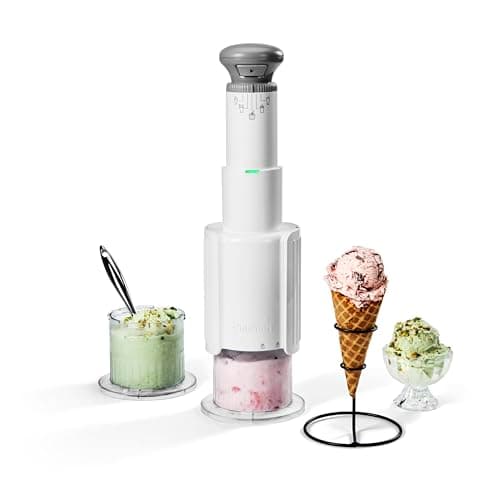
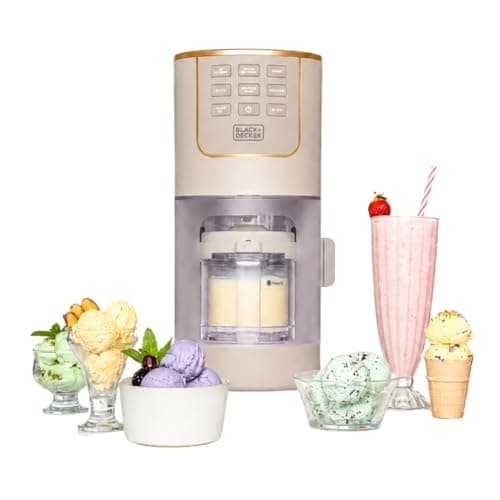
That is the Ninja CREAMi idea, and the $100 to $150 stretch is where it becomes affordable. The nutribullet Chill, the BLACK+DECKER Perfect Pint and the Cuisinart FastFreeze Max ICE-FD50 all do it. They make a pint rather than a quart, they take about three minutes of actual machine time, and they turn a lean, low-sugar or dairy-free base from a problem into the normal input. How the spin mechanism works applies to every one of them, not just to the Ninja.
The second, quieter thing $150 buys is capacity without compromise on the canister side. The ICE-30 is two quarts rather than one and a half, in brushed stainless rather than white plastic, and Ice Cream Science reports roughly seven years of use from one machine with the output still smooth and creamy.
The line nothing under $150 crosses
Self-refrigeration. No machine in this band contains a compressor, which means no machine in this band can turn a liquid base into ice cream on impulse. If your actual complaint about homemade ice cream is the planning rather than the price, nothing here fixes it and you should stop reading this page. The cheapest machines that refrigerate themselves sit in the under-$300 band, which is exactly where self-refrigeration arrives, and the compressor-versus-freezer-bowl guide is the honest version of that trade-off.
Everything else in the category is available to you under $150. That is unusual for a kitchen appliance band and it is the reason this page is worth having: you are not buying a compromised version of a better machine, you are picking which constraint you prefer to live with.
Choosing between the four mechanisms
A pre-frozen canister (ICE-30, Donvier) is the default for a reason. You get one to two quarts, the texture is the best in the band, and the cost is the lowest per quart of anything that does not involve salt. The constraint is freezer space: the bowl lives in there permanently if you want to stay ready, and it needs sixteen to twenty-four hours before each batch.
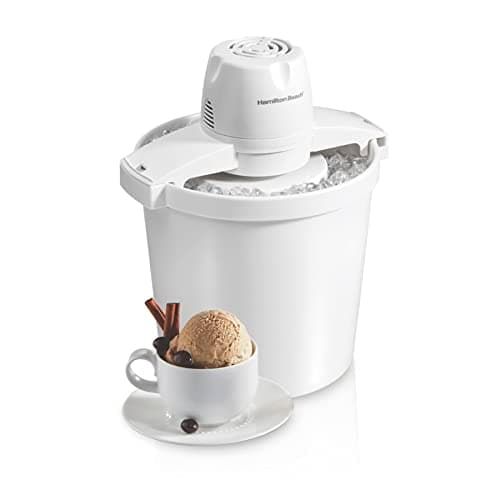
An electric ice-and-salt bucket (Hamilton Beach 68330N) is the only mechanism here that needs no advance freezing at all. Four quarts, no bowl in the freezer, and the motor stops itself when the mixture goes stiff. The constraint is consumables and mess: ice and rock salt every batch, salt water in the bucket, and a job best done near a sink or outdoors. It is a party machine, not a weeknight one.
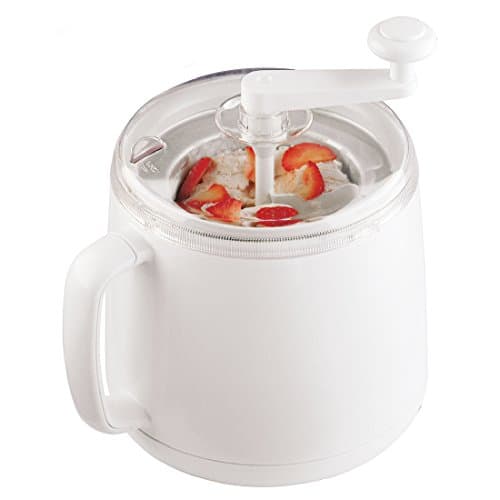
A hand-cranked manual churn (Donvier 837450) is the quiet outlier. No motor, no plug, no ice, no salt — freeze the Chillfast cylinder overnight, turn the handle every few minutes, and you have a quart in twenty minutes. Cool Tools' hands-on found it denser and creamier than a stand-mixer bowl precisely because hand-turning folds in less air. The constraint is that you have to be in the room for the whole batch.
A frozen-pint spin machine (nutribullet Chill, Perfect Pint, FastFreeze Max) is the newest mechanism and the one most people under $150 are actually shopping for. It is a pint at a time, which is a portion rather than a dessert for the table, and the twenty-four-hour freeze is per pint rather than per machine — so how many pints you own is the real limit on how often you use it. The pint-machine roundup ranks that sub-category on its own terms.
Three of these six are markdown entries
The nutribullet Chill lists at $199.99 and the BLACK+DECKER Perfect Pint at $169.99. Both sat under $150 when this page was built, and neither belongs to this band at full price. The other four do: the Cuisinart FastFreeze Max ICE-FD50 lists at $149.95, the ICE-30BCP1 at $99.95, and the Hamilton Beach and the Donvier carry no list price above what they sell for. Read the live price under each buy button rather than the ceiling in the headline — this category discounts hard in late November and then quietly returns to list.
The machine missing from this list, and why
The Cuisinart ICE-21P1 is America's Test Kitchen's best canister-style pick outright, listed at $70 in their June 2026 review, and on any ordinary day it would lead this page. Its Amazon listing carried no live offer when we refreshed prices for this build, which is why the ICE-30 leads instead. The ICE-21 is still the better buy at $70 if you find it in stock, and the ICE-21 against the ICE-30 is the comparison that decides it: the same mechanism, half a quart apart. If published evidence is what you want to shop on, the machines independent testers actually tested collects every verdict we can read — the ICE-30 appears on it, and so does the ICE-21.
Two other machines deserve a mention rather than a slot. The KitchenAid ice cream maker attachment sits in this band when it is available and is the best value in the category if you already own a compatible stand mixer, and worth nothing if you do not. The DASH My Pint is the cheapest way to test whether you like the hobby at all, but it is a single-serving novelty rather than a machine you keep.
What each one costs after you buy it
Price is not the whole number. A canister machine costs nothing per batch but takes up permanent freezer space, and a second bowl is the cheapest upgrade in the category if you want two flavors in a day. A bucket machine costs a bag of ice and a cup of rock salt every batch, which is real money over a summer. A pint machine costs extra pint containers, each of which needs its own twenty-four hours. The hand churn costs nothing at all except your arm. Our cost-per-batch guide works all four through with published figures rather than estimates.
Who should spend more, and who should not
Spend more if the planning is your real objection: a compressor machine is the only thing that fixes it and the cheapest honest one is roughly double this ceiling. Spend more if you need two quarts tonight and two quarts tomorrow, because every machine here needs to recover between batches.
Do not spend more if you are buying your first machine. The texture gap between a $100 canister machine and a $600 compressor is far smaller than the price gap, and most people who abandon homemade ice cream do it because of the planning, not the hardware. The beginner roundup makes that case in full, and is an ice cream maker worth it is the page to read before you buy anything at all.