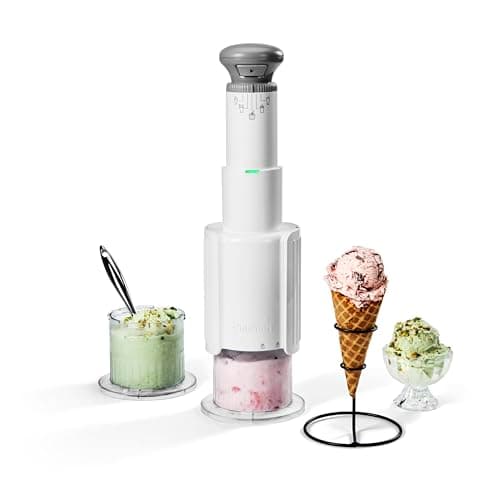
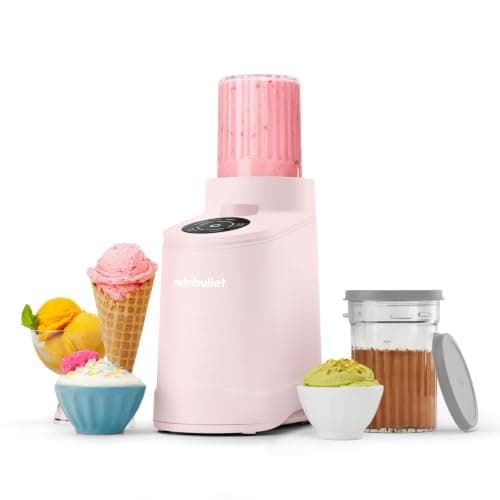
The Cuisinart ICE-100 includes the most useful accessory in the category — a second, gelato-specific paddle — because it is the only in-box extra that changes the dessert rather than the routine. Everything else worth having falls into one of two groups: a second container, so two flavors can be ready at once, and a lid that seals, so the first one survives a week in the freezer. Judge a box by those three things and most accessory bullet lists collapse.
This page answers a narrow question properly rather than re-ranking the whole category. If you are still choosing between mechanisms, start with the main roundup or how to choose an ice cream maker, then come back here to check what the winner actually ships with.
What counts as a useful accessory
Three tests. An accessory is useful if it changes the output, removes a wait, or survives contact with a real freezer.
- It changes the output. A second paddle is the only common example. The amount of air a paddle whips into the mixture is the difference between ice cream and gelato, which is covered in full in overrun explained.
- It removes a wait. On a freezer-bowl machine the wait is the 16-to-24-hour pre-freeze, and a second bowl is the only thing that shortens it. On a frozen-pint machine the wait is the overnight freeze, and a second pint does the same job.
- It survives the freezer. A storage lid that seals is why a tub tastes like ice cream on day five instead of like the freezer. Most machines do not include one, which is why storing homemade ice cream is mostly a container problem.
Things that look like accessories and are not: measuring scoops, recipe booklets, spatulas, and extra blades you never swap. A spare beater for a machine you can only run once a day changes nothing.
The honest basis for this ranking
Every in-box item below is read from the manufacturer or retailer specification panel cited at the foot of this page. We do not buy and unbox machines, so where a spec panel does not list an accessory, this page says so instead of guessing. Our full standard is on the methodology page.
Cuisinart ICE-100: two paddles is the whole argument
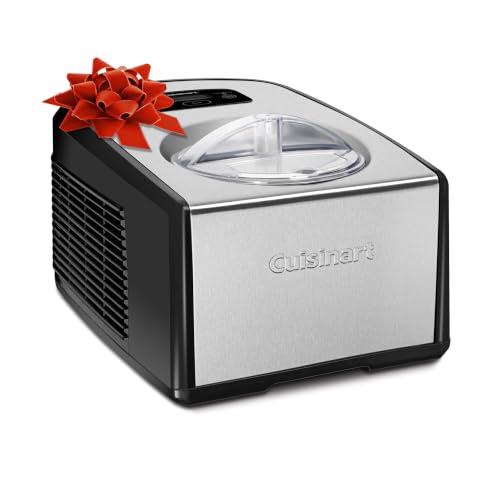
The ICE-100 ships with an ice cream paddle and a separate gelato paddle. That is not a marketing distinction. A gelato paddle turns more slowly relative to the mixture and folds in less air, so the same base comes out denser and tasting more intensely of itself. No other machine recommended on this site gives you that choice, and you cannot retrofit it.
The supporting accessories are good too: a 60-minute countdown timer and a 10-minute Keep Cool cycle that holds the finished batch at temperature instead of letting it slump while you find a container. America's Test Kitchen recommended the machine in June 2026 and listed it at $343, and Cuisinart covers it for three years in the US, which is unusually long here. Against that: 28 pounds, 16.73 inches of counter depth, and still only 1.5 quarts. The full writeup is in the ICE-100 review.
Ninja CREAMi XL Deluxe Gen 2: two tubs, and lids that are the point
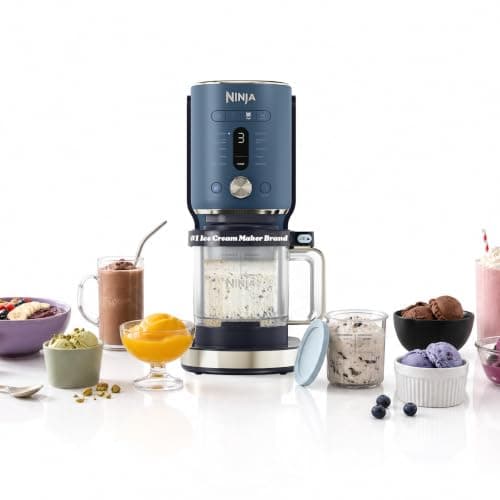
Two 24-ounce CREAMi XL tubs with storage lids, three cups each. On a spin machine the container is the machine: the base freezes solid in the tub, the blade shaves it, and you eat out of it or seal it and put it back. Two tubs mean two flavors can sit frozen at once, which is the single difference between a household with ice cream and a household that has to plan ice cream.
Ninja also publishes the full eleven-program list by name for this model, including a dedicated dairy-free program, which is more honest than a bare “11-in-1” badge. What it does not publish is a wattage figure, and no lab we can read has rated it, so there is no independent verdict on its output. See the NC601 review, and which Ninja CREAMi to buy if you are deciding between tub sizes.
The pint-jar machines: two cups, five programs, no lab verdict
The Cuisinart FastFreeze Max ICE-FD50 includes two 1-pint cups per the Sur La Table spec panel, five programs covering ice cream, milkshakes, slushy, sorbet and mix-ins, and a 3-year limited warranty — the same cover as Cuisinart's much larger machines. Two pint cups is the correct number for a two-person household, and the warranty is the best in this group.
The nutribullet Chill matches the two-container count with two 16-ounce cups and adds the accessory nobody lists as one: top-rack dishwasher-safe components on a machine that weighs 10.49 pounds and is 5.74 inches wide. Five presets against the CREAMi's eleven, no published wattage, and no independent testing. Both machines sit in the same honest position: the in-box kit is good, the third-party evidence is missing. The head-to-head is in nutribullet Chill versus Cuisinart FastFreeze.
Avoid the smaller FastFreeze ICE-FD10 on this basis alone: it includes three half-pint cups with lids, which sounds generous until you read America's Test Kitchen putting its working capacity at 0.25 quart and placing it in the Not Recommended tier in June 2026. Three containers of a portion nobody wants is not three accessories.
The three accessories you will buy anyway
No machine in this category ships with enough containers, and two of the most useful items in the whole category are sold separately.
- Spare CREAMi pints. Four 16-ounce pints with color-coded lids, compatible with the NC299AMZ, NC300 and NC350 series per Ninja. This is the accessory that fixes the machine's real limitation for a fraction of a second machine, and it is why it earns a slot on this page despite not being a machine at all. Check your model against Ninja's compatibility list first, because the XL 24-ounce tubs are a different part.
- A second freezer bowl. For any canister machine, the cheapest route to two flavors in one day. Whether it is worth it is argued out in do you need a second freezer bowl.
- Shallow airtight containers. Not sold by any machine maker, and the single biggest factor in whether week-old homemade ice cream is still good.
What ships bare, and when that is fine
The Whynter ICM-201SB includes no extra paddle and no second bowl. What it does include is a removable stainless steel bowl, which is a build decision rather than an accessory and is worth more than either: a fixed bowl means cleaning happens in place, with the machine on the counter. ATK named it their best self-refrigerating pick at $310 in June 2026 on 2.1 quarts and no pre-freeze. See the ICM-201SB review.
The KitchenAid KICA0WH is the opposite case: it is itself an accessory, and the compatibility note matters more than anything in the box. It fits all current KitchenAid stand mixers except the Artisan Mini 3.5-quart per the manufacturer, some tilt-head models need the adapter ring, and the bowl is hand-wash only. Two quarts with no new machine on the counter, if and only if the mixer is already there.
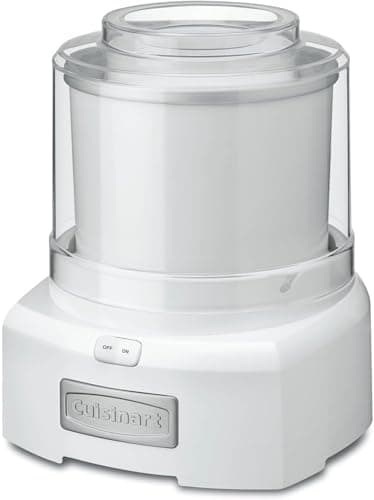
And the Cuisinart ICE-21P1, the machine most people here should actually buy, includes nothing but a bowl, a paddle and a lid. It was ATK's best canister-style pick at $70 in June 2026 anyway. A bare box on a $70 machine is a fair trade; a bare box on a $600 machine is not, which is the argument running through budget versus premium ice cream makers.
The decision in four lines
- You want gelato as well as ice cream: Cuisinart ICE-100, for the second paddle.
- You want two flavors ready at once: any two-container machine — the CREAMi XL Deluxe Gen 2, the FastFreeze Max or the nutribullet Chill.
- You already own a CREAMi: the 4-pack of pints, before anything else.
- You want the best machine and do not care about the box: the ICE-21P1 at $70, and spend the difference on containers.