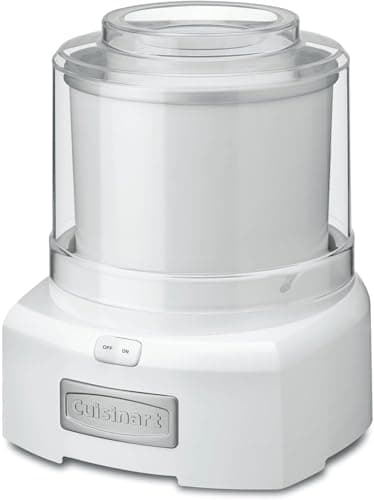
Never put a gel-filled freezer bowl in a dishwasher. Paddles, lids and dashers usually are dishwasher safe, almost always top rack only. Motor bases and compressor housings never are. So the real answer is that a canister machine is partly dishwasher safe, and the one part you most want to put in is the one part you must not.
The exception is worth knowing in advance, because it changes which machine you buy: a spin machine has no gel bowl at all, so almost everything that touches the ice cream goes in the dishwasher.
Why the freezer bowl is a hard no
A canister bowl is a double wall with a sealed liquid coolant between the layers. A dishwasher runs hot water and a heated dry cycle, and heating a sealed vessel full of liquid is exactly the condition that stresses the seal. A failed seal means coolant weeping into the insulation, a bowl that no longer freezes properly, and a part that is usually more expensive to replace than it feels like it should be.
The same logic rules out soaking it in hot water or leaving it in a sink of washing-up water. The correct method is undramatic: let it come up from freezer temperature for a few minutes, wash it in warm — not hot — soapy water by hand, rinse, and dry it completely before it goes back in the freezer. That last step is not fussiness: a damp bowl grows frost on the inner wall, and frost insulates your next batch from the cold you waited a day for. Full routine in how to clean an ice cream maker.
The KitchenAid rule, stated plainly
KitchenAid is explicit about the split on the KICA0WH attachment: the bowl is hand-wash only, while the dasher and drive assembly are dishwasher safe. That is the pattern across the whole category, written down. If a manufacturer does not say, assume the same division and hand-wash anything that stores cold.
The rules part by part
- Gel-filled freezer bowl — hand wash, warm water, never a dishwasher. Applies to every Cuisinart canister machine, the KitchenAid attachment and the DASH My Pint.
- Paddle, dasher, drive assembly — usually dishwasher safe, top rack. KitchenAid confirms this for its dasher and drive.
- Lid and ingredient spout — usually dishwasher safe, top rack. Check whether yours has an electronic component built in; a few do.
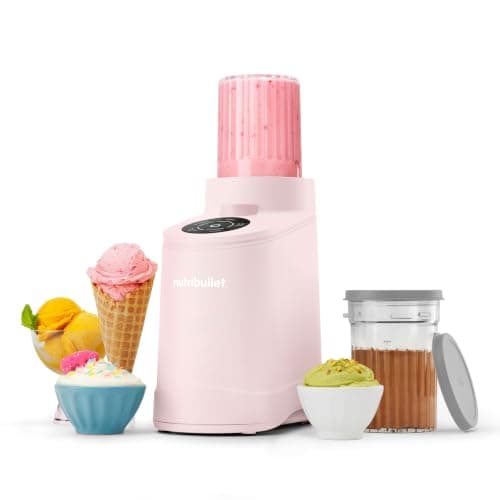
- Spin machine pints and lids — dishwasher safe. Ninja's spare CREAMi pints are sold as dishwasher safe, and nutribullet lists the Chill's components as top-rack dishwasher safe.
- Removable stainless compressor bowl — hand wash is the safe default; there is no gel to damage, but check your manual, and a stainless bowl washes in thirty seconds anyway.
- Motor base, compressor housing, bucket motor — never. Wipe with a damp cloth and keep water out of the vents.
- Wooden bucket — never. Rinse the salt off, wipe and dry it properly or the wood splits.
Why top rack only matters
The heating element in most dishwashers sits in the floor of the tub, so the bottom rack gets considerably hotter. Thin food-safe plastics that survive a top-rack cycle will warp on the bottom, and a warped paddle no longer scrapes the bowl wall properly — which is the one job it has, because scraping the frozen layer off the wall is how ice crystals stay small.
So a warped paddle is not only a cosmetic problem; it shows up in the texture of the ice cream. If your machine has started producing a coarser result than it used to, this is worth checking before anything else — alongside the other causes in grainy or crumbly ice cream.
The machines that are genuinely easy
Spin machines are the dishwasher winners, by design. There is no gel bowl in the system at all: the base freezes in a plastic pint, and the pint, the lid and the paddle all go in the dishwasher. The nutribullet Chill lists top-rack dishwasher-safe components, and Ninja sells its spare pints as dishwasher safe. Over a year of weeknight desserts, that is a real quality-of-life difference.
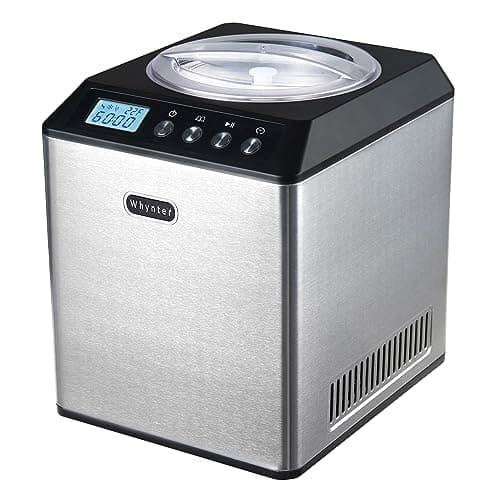
Compressor machines with a removable bowl are the next best thing. The Whynter ICM-201SB's stainless bowl lifts out, so washing is a sink job rather than reaching into a housing. The machines to avoid on this measure are fixed-bowl compressors, where cleaning happens in place around a motor — the Lello 4080 is the notable example, and it is a deliberate trade for all-stainless construction. The whole category is ranked on this in easiest ice cream maker to clean.
One extra rule for ice-and-salt machines
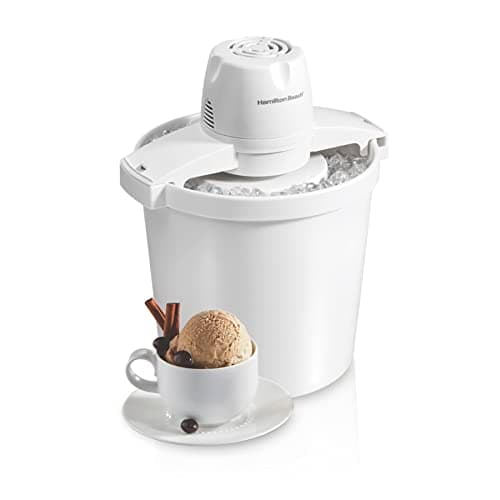
Bucket machines add a problem no other type has: salt water. Rock salt is corrosive to metal and will pit an aluminum canister and attack a motor mount if it is left to dry on. Rinse everything that met the brine the same day, including the outside of the canister and the bucket itself, and dry a wooden bucket thoroughly rather than leaving it damp.
Nothing from a bucket machine belongs in a dishwasher: not the canister, not the dasher, not the wood. Ratios and the reason salt is there at all are in how much salt an ice cream maker needs.